
Albanian food is the traditional home cooking of Albania, Kosovo and Albanian communities abroad: a Mediterranean and Balkan cuisine built on yogurt and white cheese, lamb, vegetables and beans, olive oil, bread and phyllo pies such as byrek. Tavë kosi, lamb baked under a yogurt and egg custard, is widely described as the national dish of Albania. Yogurt “appears in everything from soups and drinks to sauces and sides,” as Saveur put it, and byrek is “the street food of the Balkans,” in the words of AramcoWorld, which credits Ottoman rule with kebabs and the “liberal use of phyllo dough,” and ties with Italy for olives, tomato sauces and baked pasta. Other well-known Albanian dishes include byrek, fërgesë (baked peppers, tomatoes and cottage cheese) and, in the north and Kosovo, fli (TasteAtlas, Britannica).
This guide covers what makes Albanian food distinctive, the national-dish question, the iconic dishes you need to know, regional differences across Albania and Kosovo, Albanian food in America, and every recipe on our site grouped by type. Every recipe linked below is tested in our kitchen with prep times, full ingredient lists, and step-by-step instructions.What Is the National Dish of Albania?
Tavë kosi, lamb baked under a custard of yogurt and eggs, is widely called Albania’s unofficial national dish. Fërgesë, the baked pepper, tomato and cottage cheese dish of Tirana, is also described as one of Albania’s national dishes. Neither title is official: we found no law or government list that names a national dish, so the label comes from food writers and references.
TasteAtlas calls tavë kosi “the unofficial national dish of Albania,” traces it to Elbasan and dates it to the 15th century; today it is “enjoyed throughout Albania and Kosovo, as well as Turkey, where it’s known under the name Elbasan tava,” a version topped there with béchamel instead of kos. AramcoWorld also says the casserole “originated in Elbasan, Albania,” and Saveur called it “a dish beloved throughout Albania.” Our recipe: Tavë Kosi (Qingji i pjekur me kos).
TasteAtlas calls fërgesë Tirane “one of Albania’s national dishes,” a baked vegetable and cheese dish “originating from the capital of Tirana,” with versions made with liver or veal. Albania’s National Tourism Agency puts the two side by side: its Tirana culinary tour lists “tava e kosit, fërgesa Tiranase, and stuffed peppers.” Our recipe: Fërgesë (Peppers, Tomatoes and Cheese).
| Pjatë | Çfarë është | Where it comes from | What sources call it |
|---|---|---|---|
| Tavë kosi | Lamb, in many versions with rice, baked under yogurt and egg | Elbasan, central Albania | “The unofficial national dish of Albania” (TasteAtlas) |
| Fërgesë | Baked peppers and tomatoes with gjizë (cottage cheese) | Tiranë | “One of Albania’s national dishes” (TasteAtlas) |
| Fli (flija) | Thin batter layers baked one at a time and brushed with cream | Shqipëria Veriore dhe Kosova | Among “the most popular traditional Albanian dishes” in Kosovo (Britannica) |
Kuzhina Shqiptare me një vështrim
Duke kërkuar një vend aty pranë? Shfleto të gjitha Restorante shqiptare pranë jush, sipas shtetit dhe qytetit.
Albanian cuisine is the food tradition of Albania, Kosovo, North Macedonia, Montenegro, and the global Albanian diaspora, particularly the large communities in Italy (Arbëreshë), Greece (Arvanites), and the United States (about 228,500 people of Albanian ancestry by the U.S. Census Bureau, ACS 5-year estimates, 2020 to 2024, with the largest numbers in New York, Michigan, and Massachusetts). At its core, Albanian food is Mesdhetare: vaj ulliri në vend të gjalpit për shumicën e gatimeve, shumë perime, mish qengji dhe pule më shpesh sesa mish viçi, dhe kos i përdorur si salcë, marinadë, bazë supe dhe ëmbëlsirë. Është gjithashtu dukshëm BallkanikByrek i mbështjellë me petë (byrek/burek), mish i pjekur në skarë (qofte), speca të mbushur dhe tradita e kudondodhur e kafesë. Çfarë e dallon ushqimin shqiptar nga fqinjët e tij:- Më shumë perime. Albanian cooking leans heavily on peppers, tomatoes, eggplant, okra, and leafy greens, often combined with white cheese, gjizë (a fresh cottage-style cheese) or yogurt. The everyday side is sallatë fshati, a village salad of tomato, cucumber, pepper and onion under white cheese.
- Kosi si një përbërës hero. Tavë kosi, widely called the unofficial national dish (see above), is baked lamb in a yogurt-egg sauce that sets like a savory custard. Yogurt also goes into bread (kulaç me kos), soup (tarator), and is served alongside almost every meat dish.
- Më pak erëza të forta. Krahasuar me kuzhinën turke ose maqedonase, erëzat shqiptare janë të përmbajtura, me kripë, piper, rigon, nenexhik, paprika dhe shumë bimë të freskëta.
- Byrekët me fileto si grup ushqimor më vete. Byrek (ose pit) shfaqet në një duzinë formash me mbushje me spinaq, mish, djathë, presh ose kungull.
Rrënjët e Kuzhinës Shqiptare
Albanians generally consider themselves descendants of the ancient Ilirët, as Britannica notes, but the food on the Albanian table today was shaped mostly by later contact with neighbors and empires:- Ndikimet greke dhe italiane dominojnë bregdetin, vaji i ullirit, ushqimet e detit, prodhimet e freskëta, peshku i pjekur, gatimet e ngjashme me makaronat.
- Ndikimi osman (Ottoman rule lasted more than four centuries, Britannica notes) gave us byrek, baklava, qofte, sarma (stuffed grape leaves / japrak), kebab traditions, and the entire coffee culture.
- Fqinjët ballkanikë kontribuan tarator (supë e ftohtë me kastravec dhe kos), salca me piper në stilin e ajvarit dhe perime të ndryshme të mbushura.
- Inovacioni modern i diasporës, Kuzhinat shqiptaro-amerikane në Bronx, Detroit dhe më gjerë kanë përzier ndjeshmëritë italo-amerikane me recetat tradicionale, duke krijuar nënkulturën e tyre të ushqimit shqiptaro-amerikan.
Përbërësit thelbësorë në një kuzhinë shqiptare
Nëse doni të gatuani ushqim shqiptar, mbani në magazinë këto: Produktet e qumështit: kos në stilin grek (sa më i trashë aq më mirë), Djathë gjizë shqiptar (djathë i bardhë i freskët dhe i thërrmueshëm), gjalpë, qumësht i freskët. Vajra: Vaj ulliri ekstra i virgjër (shumë), dhe ndonjëherë vaj perimesh për skuqje. Proteinat: Qengj (mishi më i çmuar), pulë, mish i grirë viçi, peshk i freskët në recetat bregdetare, vezë. Perime: Speca zile, domate, qepë, hudhër, patëllxhan, bamje, spinaq, presh, patate, bimë aromatike të freskëta (majdanoz, nenexhik, kopër, rigon). Drithëra dhe miell: Miell për shumë qëllime për byrek, miell misri (për flija dhe disa bukë tradicionale), oriz i bardhë dhe brumë pete i përgatitur paraprakisht (mënyra më e shkurtër moderne, tradicionalisht, brumi i byrekut mbështillej me dorë). Gjërat bazë në qilar: Kripë, piper i zi, paprikë, rigon, mente e tharë, sumak, limonë dhe kafeja gjithmonë e pranishme.Pjata ikonike shqiptare
Këto janë pjatat që përcaktojnë kuzhinën shqiptare. Nëse keni ngrënë vetëm një, mezi e keni kuptuar plotësisht.Byrek (Byrek me Fileto të Kripur)
Byreku është zemra e gatimit shqiptar. Shtresa pete të holla sa letër të mbështjella rreth një mbushjeje, spinaq dhe djathë, mish i grirë, presh, madje edhe kungull, të cilat piqen derisa të marrin ngjyrë të artë dhe të jenë krokante. Çdo gjyshe shqiptare ka teknikën e saj për të rrotulluar brumin me dorë. Provoni recetat tona: Byrek me Spinaq (Spinaq Byrek), Byrek me Mish (Byrek me Mish), dhe Byrek vs Borek vs Burek për dallimet rajonale.Tavë Kosi (Qingji i pjekur me kos)
Widely called Albania’s unofficial national dish (TasteAtlas). Lamb baked under a custard of yogurt and eggs that sets and puffs in the oven; our Elbasan-style recipe makes the custard with yogurt, eggs, butter, milk and rice flour, while many versions also bake the lamb with rice. Tangy, rich, deeply comforting. Its home town is Elbasan, in central Albania, and it is eaten throughout Albania and Kosovo; in Turkey, a version topped with béchamel instead of yogurt is called Elbasan tava. Recipe: Tavë Kosi.Fërgesë (Speca, Domate dhe Djathë)
A baked dish of roasted red peppers and tomatoes folded into gjizë (fresh cottage cheese) with a butter-and-flour roux, garlic and oregano; versions with liver or veal also exist. Eaten with bread or as a side to almost any meal. TasteAtlas traces it to Tirana and calls it one of Albania’s national dishes. Recipe: Fërgesë.Qofte (Qofte Shqiptare)
Hand-shaped meatballs of ground beef or lamb seasoned with onion, garlic, and herbs, typically grilled, sometimes fried. Served with raw onions, peppers, and bread, occasionally with a yogurt sauce. Recipe: Qofte (Grilled Meatballs), made with a lamb and beef blend, mint and parsley.Flija (Byrek me Krep të Shtresuar)
A specialty of northern Albania and Kosovo; Slow Food describes it as part of the Albanian and Kosovar kitchen. Thin layers of batter go into a round tray one at a time, and each is baked under a saç, a domed metal lid heated over an open fire, then brushed with cream before the next goes on, building up to a dense, almost cake-like pie (TasteAtlas). Slow Food notes it is mainly eaten at home as a main dish, with cheese, honey, yogurt or pickles. Our recipe adapts it to a home oven: Fli (Flija).Pite (byrek me djathë)
A simpler relative of byrek, flaky pastry filled with feta-style cheese, often served as breakfast or a snack with yogurt. Recipe: Pite me Djathë (Cheese Pie).Japrak (Gjethe rrushi të mbushura)
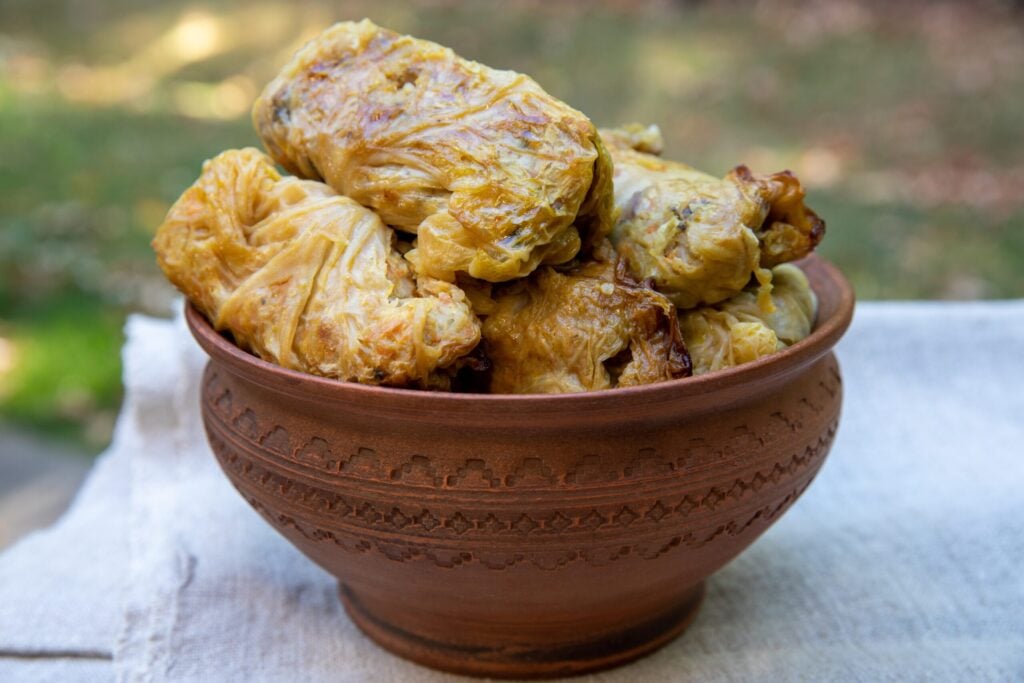
Grape leaves rolled around rice, onion and herbs, sometimes with minced meat, and simmered slowly; plain yogurt or a squeeze of lemon goes on the side. The Albanian relative of dolma and sarma, common across the Balkans. Recipe: Japrak.Albanian Recipes by Type
Every Albanian recipe on ALB Connection, grouped by type. Each link opens the full recipe card.
Pies and Pastries
- Byrek me Spinaq (spinach byrek), spinach and feta in crisp filo.
- Byrek me Mish (meat byrek), seasoned ground meat and onions in filo.
- Pite me Djathë (cheese pie), thin phyllo layers around a feta-based filling.
- Lakror, Korçë’s flat pie, here filled with slow-cooked leeks.
- Fli (flija), thin batter layers baked one at a time and brushed with cream.
Mains and Stews
- Tavë Kosi (baked lamb with yogurt), lamb baked under a yogurt and egg custard.
- Fërgesë (peppers, tomatoes and cheese), roasted peppers and tomatoes baked with gjizë.
- Tavë Dheu (meat and vegetable casserole), ground meat and vegetables under an egg custard, baked in a clay dish.
- Qofte (grilled meatballs), lamb and beef with mint and parsley.
- Bamje (okra stew), okra and tomatoes simmered together, often with lamb.
- Pilaf me Pulë (chicken and rice), braised chicken over butter-toasted rice.
Soups and Cold Dishes
- Fasule (white bean soup), dried white beans slow-cooked with onions, tomatoes and herbs.
- Tarator (cold yogurt soup), yogurt, cucumber, garlic and walnuts, served cold.
Sides, Starters and Breads
- Japrak (stuffed grape leaves), grape leaves rolled around rice and herbs.
- Suxhuk (spiced sausage), a quick patty version of the cured sausage, with paprika, cumin and garlic.
- Burani (spinach with yogurt), garlicky sautéed spinach topped with yogurt.
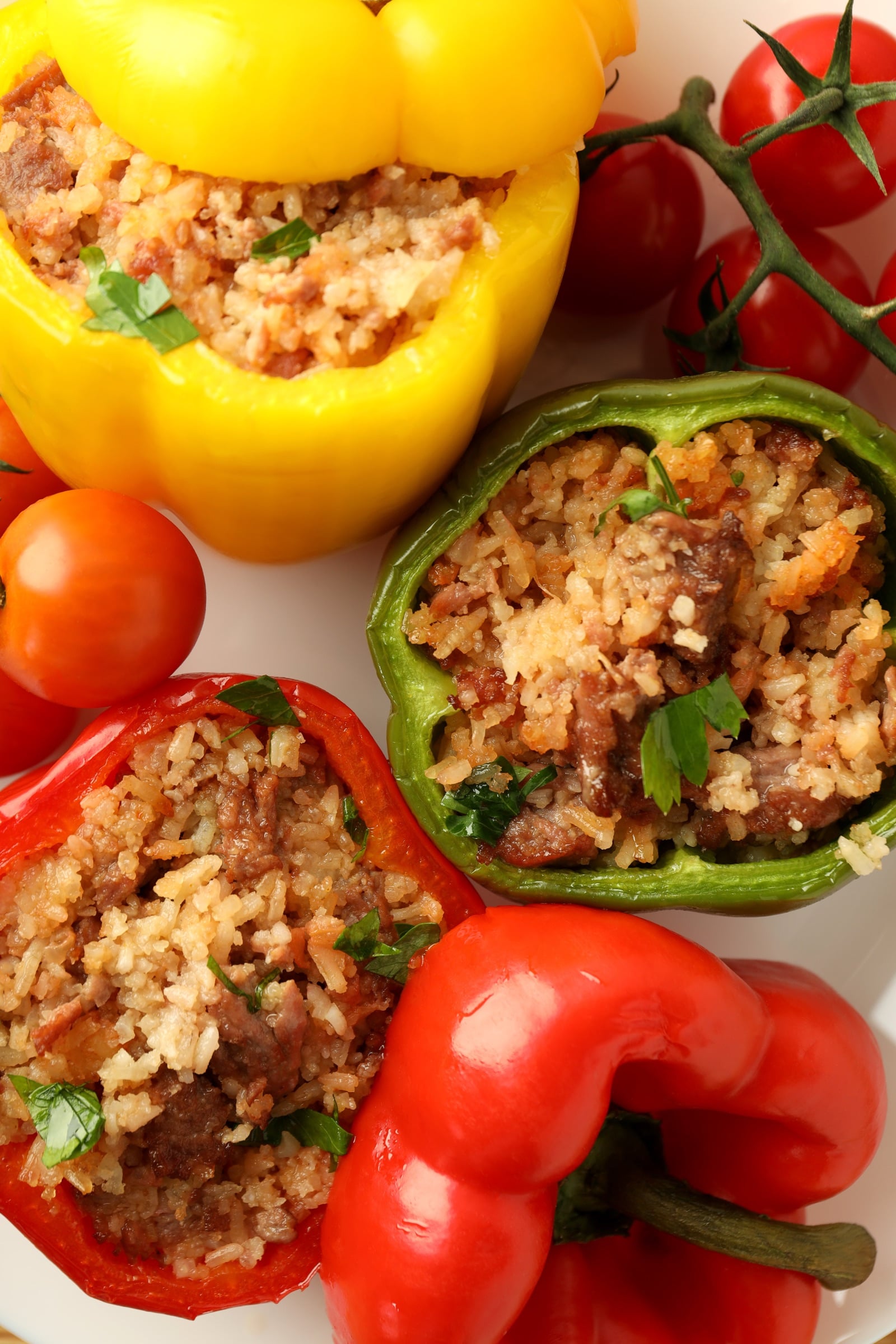
- Speca me Gjizë (stuffed peppers with cheese), sweet peppers filled with gjizë.
- Qifqi (rice balls), herbed rice balls from Gjirokastër, pan-fried.
- Kulaç me Kos (yogurt bread), a quick bread made with yogurt and no yeast. More breads in our udhëzues për bukën shqipetare.
- Petulla (fried dough), fried dough served with powdered sugar and honey, or with feta.
Desserts
Many of the desserts below use honey, nuts, syrup or fresh dairy.
- Bakllava (baklava), buttery phyllo with spiced walnuts in lemon sugar syrup.
- Trileçe (three-milk cake), sponge cake soaked in three milks and topped with caramel.
- Revani (semolina cake), semolina and yogurt cake soaked in syrup.
- Shëndetlie (honey and walnut cake), spiced honey and walnut cake soaked in syrup.
- Gurabija (shortbread cookies), crumbly butter cookies, often dusted with sugar.
- Kungull i Pjekur (baked pumpkin), pumpkin baked with honey and walnuts.
Tradita e Pijeve dhe Kafesë
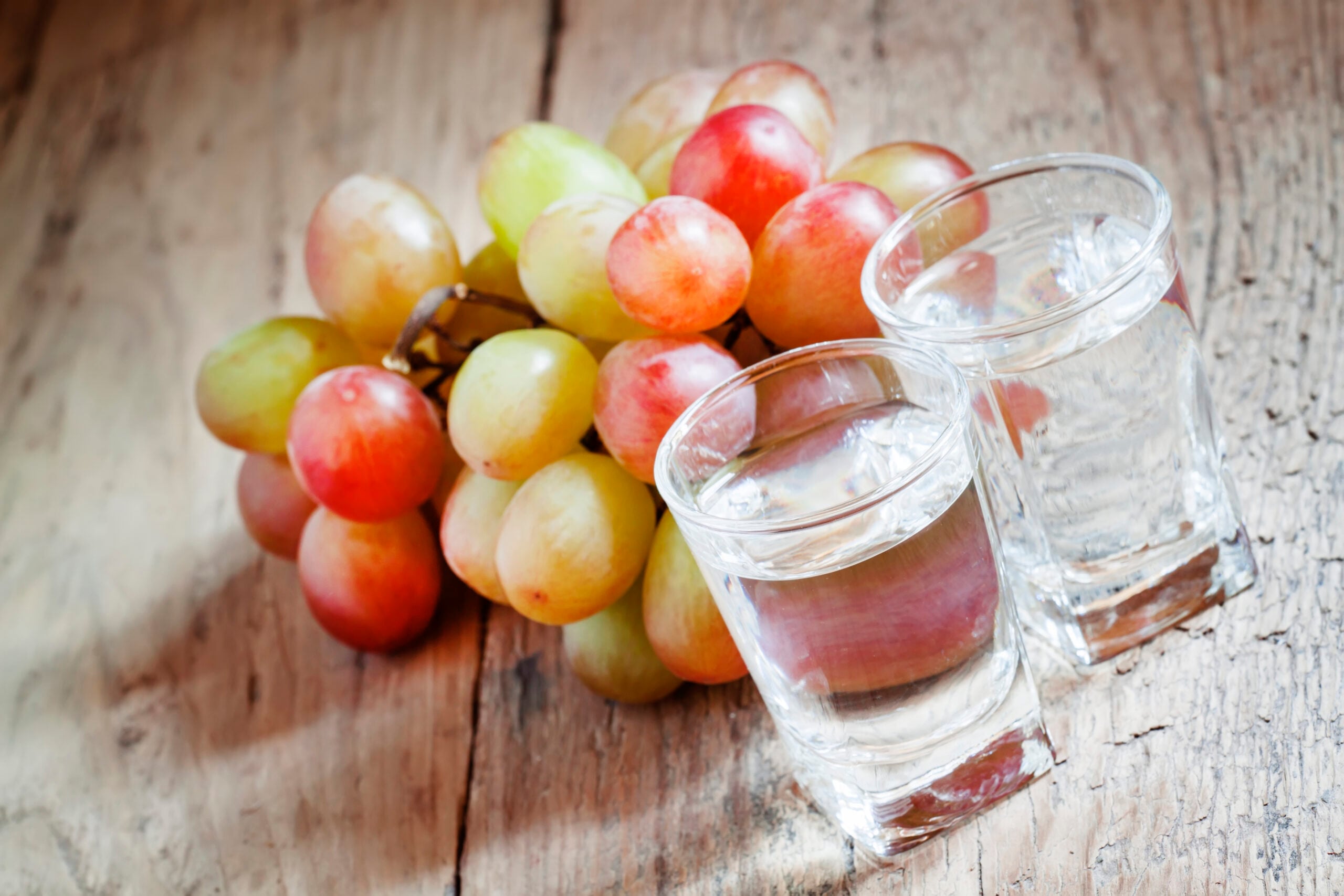
Kafeja është e shenjtë në Shqipëri, lexoni të plotë Udhëzues për traditën e kafesë në Shqipëri, and for everything else in the glass, from raki to boza, see our guide to Albanian drinks. Përgatitja tradicionale është Kafe në stilin turk (kafe turke), e bluar imët, e përgatitur në një enë të vogël bakri të quajtur xhezve, e servirur pa filtër me kokrrizat që qëndrojnë në fund. Është pjesa qendrore e jetës shoqërore: çdo vizitë te një i afërm fillon me "a do një kafe?" dhe përfundon me planifikimin e vizitës së ardhshme mbi filxhanin e dytë. Pija alkoolike kombëtare është raki, a clear brandy most often distilled from grapes and also made from plums and other fruit, similar to Italian grappa or Greek tsipouro, and often homemade. Commercial raki is usually bottled at 40 to 45% ABV, while homemade raki is often stronger, as high as about 60% (see Nga çfarë bëhet rakia). In the northern alpine village of Theth, researchers found cherry plums and cornelian cherries “used for producing home-made raki” (Pieroni, 2008). Raki is the toast at every celebration, every welcoming, and every difficult conversation.Regional Differences: North, South, the Coast and Kosovo
Albanian cuisine is not monolithic. A handy map is the language line: Britannica notes that the two principal dialects, “Gheg in the north and Tosk in the south, are separated roughly by the Shkumbin River,” and lists Kosovo among the Gheg-speaking areas. Food does not follow the river exactly, but the regions do have their own habits.
The North and the Albanian Alps (Gheg)
The northern mountains are flija country. Albania’s National Tourism Agency mentions guesthouses in the Valbona valley serving “flija, mazja and characteristic pies.” In Theth, in the Northern Albanian Alps, an ethnobotanical study found wild greens “used as fillings for home-made pies (byrekë and laknur)” and garden vegetables “conserved mainly via lacto-fermentation for consumption during the winter” (Pieroni, 2008).
Central Albania and Tirana
Central Albania is home to two of the best-known dishes: tavë kosi from Elbasan (TasteAtlas) and fërgesë from Tirana (TasteAtlas). I/E/Të/Të National Tourism Agency‘s Tirana culinary tour ends with a dinner “offering a modern interpretation of Albanian cuisine.” Visitors to Tirana often ask about fast food, so we explained why there is no McDonald’s in Albania.
The South (Tosk)
Southern towns keep their own specialties. Korçë is known for lakror, its flat pie, and Gjirokastër for qifqi rice balls; the National Tourism Agency also lists Gjirokastër’s “oshaf with dried figs, sheep’s milk cakes.” In the south, Nëna Farm in Lukovë makes “extra virgin olive oil with a characteristic Mediterranean flavor, extracted from local olive varieties.”
The Coast
On the coast the table turns to the sea. The National Tourism Agency describes Vlora’s cuisine as “fresh fish, squid, mussels, and wild herb pies taking center stage,” and adds that “Olive oil and local wine complete this authentic culinary experience.”
Kosovë
Kosovo is Gheg-speaking, and its best-known dishes overlap with northern Albania’s. Britannica names fli, “pancakelike pastry layered with cream and yogurt,” and pite, phyllo pastry with cheese, meat or vegetables, among “the most popular traditional Albanian dishes” there, and describes llokuma, “deep-fried dough puffs eaten with yogurt and garlic or with honey.” Slow Food lists flia in its Ark of Taste as part of Albanian and Kosovar gastronomy. For travel in Kosovo, see our Udhëzues udhëtimi për në Kosovë.
Besa dhe Tavolina: Si Mikpritja Shqiptare Formëson Kulturën e Ushqimit
No discussion of Albanian cuisine is complete without understanding besa. Besa, rooted in the Kanun, the ancient Albanian code of customary law, is a concept that translates literally as “keeping one’s word” or “trust.” In practice, it extends to an absolute moral obligation to protect and care for guests, even at personal cost. The Albanian saying “bukë, kripë e zemër” (bread, salt and heart) captures its culinary expression. In Albanian culture, feeding a guest is not a courtesy. It is a duty. Portions are generous. Refusals to eat more are treated as polite starting positions rather than final answers. Meze spreads appear before you have finished deciding what you want. Raki, the Albanian grape or fruit spirit, is poured as a gesture of welcome. This is not performative; it reflects a genuine cultural ethic that has been passed down through generations and is visible in Albanian restaurants and homes across the diaspora. Albanian-American food writers and community members often note that even in diasporic contexts, Albanian gatherings around food carry an intensity and generosity that surprises outsiders. The table is where community is built, where news is shared, where kinship is maintained. That cultural weight elevates even everyday dishes into something more than sustenance.Si krahasohet ushqimi shqiptar me atë të fqinjëve të tij
Ushqimi shqiptar krahasohet shpesh me kuzhinat greke, turke dhe ballkanike, dhe për një arsye të mirë: këto tradita ndajnë shekuj gjeografie, tregtie dhe shkëmbimi kulturor. Por kuzhina shqiptare ka identitetin e vet të veçantë që bëhet i qartë pasi të kesh kaluar kohë me të. Krahasuar me kuzhinën greke, ushqimi shqiptar ndan vaj ulliri, djathë feta, prodhime deti dhe mish të pjekur në skarë, por mbart ndikime më të forta osmane dhe tradita më të rënda të qumështit, veçanërisht rreth ëmbëlsirave me bazë kosi si tavë kosi që nuk kanë ekuivalent të drejtpërdrejtë grek. Krahasuar me kuzhinën turke, ushqimi shqiptar ndan traditën e brumit filo (byrek kundrejt börek), kulturën e kebabit dhe bakllavanë, por gatimi shqiptar në përgjithësi është më pak pikant dhe më i varur nga shijet natyrale të përbërësve të tij të shkëlqyer vendas. Krahasuar me kuzhinat e tjera ballkanike, ushqimi shqiptar ndan dashurinë për mishrat e pjekur në skarë, ajvarin dhe perimet e mbushura, por gjeografia e tij mesdhetare i jep një lehtësi dhe bollëk vaji ulliri që e dallon atë nga traditat më të rënda, dominuese të mishit të derrit, të vendeve fqinje. Veçantia e kuzhinës shqiptare qëndron në ndërthurjen e të gjitha këtyre: është mesdhetare pa qenë greke, e ndikuar nga osmanët pa qenë turke, ballkanike pa qenë serbe apo bullgare. Është tërësisht e saj.Ushqimi Shqiptar në Amerikë
Rreth 228,500 people in the United States report Albanian ancestry (U.S. Census Bureau, ACS 5-year estimates, 2020 to 2024), concentrated in New York (especially the Bronx and nearby Yonkers), Michigan (the Detroit area) and Massachusetts (Boston and Worcester). Albanian-American food has its own subculture, Piceritë në Shqipëri Në Bronx dhe Westchester, të drejtuara nga familjet shqiptare, kanë qenë pioniere të një stili rajonal italo-amerikan, dhe furrat e bukës në pronësi të shqiptarëve bëjnë byrek tradicional së bashku me bukët e komunitetit vendas të emigrantëve. Për të gjetur ushqim autentik shqiptar pranë jush, Direktoria e biznesit ALB Connection liston restorante, furra buke dhe tregje në pronësi të shqiptarëve në të gjithë SHBA-në.Pyetje të shpeshta
Cila është gatimi kombëtar i Shqipërisë?
Tavë kosi, lamb baked under a yogurt and egg custard, is widely described as the national dish of Albania, though no law or official list names one; TasteAtlas calls it “the unofficial national dish.” It comes from Elbasan, in central Albania, and in Turkey a béchamel-topped version is called Elbasan tava. TasteAtlas also calls fërgesë, the baked pepper, tomato and cottage cheese dish of Tirana, “one of Albania’s national dishes.” Recipes: tavë kosi dhe fërgesë.
What do Albanians eat?
Everyday Albanian food is built on bread, yogurt and white cheese, vegetables and beans, and pies. Saveur found yogurt “in everything from soups and drinks to sauces and sides,” AramcoWorld calls byrek “the street food of the Balkans,” and Britannica names fli and pite among the most popular traditional dishes in Kosovo. In the northern Alps, researchers recorded home-made pies filled with wild greens and vegetables preserved by lacto-fermentation for winter (Pieroni, 2008). See the recipe index for dishes you can cook at home.
A është ushqimi shqiptar pikant?
Usually mild. Seasoning leans on garlic, herbs such as oregano, mint, parsley and dill, and paprika; Saveur‘s writer found the food “delicately spiced.” Heat is optional: our suxhuk uses hot paprika or cayenne, our qofte add crushed red pepper flakes, and flija can be served with ajvar, which TasteAtlas describes as “a spicy vegetable spread.”
A është ushqimi shqiptar i ngjashëm me ushqimin grek apo turk?
Yes, it is closely related, with key differences. Albanian cuisine shares many ingredients and techniques with Greek and Turkish cooking, phyllo pies, grilled meats, yogurt dishes, and Turkish-style coffee. But Albanian food uses less spice, more yogurt, and has its own signature dishes like fërgesë and flija.
Cila është ëmbëlsira më e njohur shqiptare?
There is no official ranking. Britannica calls baklava “the most common sweet to serve for special occasions” in Kosovo, and our bakllava recipe describes it as served at Bajram, Easter, weddings and family gatherings. Trileçe, a sponge cake soaked in three milks and topped with caramel, is the Albanian version of tres leches. Revani, shëndetlie dhe gurabija are also traditional; see the dessert recipes.
A është ushqimi shqiptar i shëndetshëm?
Albanian home cooking uses plenty of vegetables, beans and yogurt and, especially on the coast, olive oil (National Tourism Agency), alongside lamb, cheese, butter and phyllo pastry. How healthy a meal is depends on the dish and the portion; for nutrition advice, ask a doctor or dietitian.
Çfarë hanë shqiptarët për mëngjes?
A typical Albanian breakfast is byrek with yogurt, petulla (fried dough) with honey or jam, or bread with white cheese and olives, usually with coffee. Read our full Udhëzues për mëngjesin në Shqipëri për më shumë.
Ku mund të gjej ushqim shqiptar afër meje?
The quickest way is our list of Restorante shqiptare pranë jush, by state and city, or the Direktoria e biznesit ALB Connection for Albanian-owned restaurants, bakeries and markets.
Provoni këto receta autentike shqiptare
Ready to cook? Every recipe below is tested in our kitchen with full ingredient lists, prep times, and step-by-step instructions. See the full recipe index by type above, or browse all Albanian recipes → Pikat e nisjes popullore:Burimet
- Francine Prose, Eastern Promise, Saveur (2013)
- Tristan Rutherford, Resurging Cuisine: Traditional Albanian Dishes Make a Comeback, AramcoWorld (2024)
- TasteAtlas: Tavë kosi
- Enciklopedia Britannica: Kosova, Jeta kulturore
- TasteAtlas: Fërgesë Tirane
- National Tourism Agency of Albania: Culinary Tour in Tirana
- U.S. Census Bureau, American Community Survey 5-year estimates 2020-2024, Table B04006 (People reporting ancestry)
- Encyclopaedia Britannica: Albania
- Slow Food Foundation: Flia, Ark of Taste
- TasteAtlas: Flija
- Pieroni, A. (2008). Local plant resources in the ethnobotany of Theth, a village in the Northern Albanian Alps. Genetic Resources and Crop Evolution 55: 1197-1214
- Encyclopaedia Britannica: Albanian language
- National Tourism Agency of Albania: 3 Day Tour to the Albanian Alps
- National Tourism Agency of Albania: Gjirokastra
- National Tourism Agency of Albania: Nëna Farm, Lukovë (southern Albania)
- National Tourism Agency of Albania: Vlora Cuisine

Autor: Dardanë Halimi
Dardanë Halimi është një shkrimtare dhe profesioniste e komunikimit me titull magjistër në Shkrim, Retorikë dhe Komunikim Teknik nga Universiteti James Madison. Puna e saj përqendrohet në tregimin e historive, përmbajtjen digjitale, arsimin e lartë dhe komunikimin strategjik, me përvojë në shkrimin për organizata akademike, jofitimprurëse dhe marketingu si në Shtetet e Bashkuara ashtu edhe në Kosovë.