Kultura dhe Traditat Shqiptare: Një Udhëzues i Plotë
Një udhëzues i plotë për zakonet, vlerat, besimin, festimet dhe traditat shqiptare që mbajnë bashkë komunitetin, në vend dhe në diasporë.
Kultura shqiptare është një nga më të vjetrat dhe më të veçantat në Evropë, një trashëgimi që i ka mbijetuar perandorive, izolimit dhe migrimit, dhe që familjet e diasporës e mbajnë me krenari ndër breza. Ajo është ndërtuar mbi një kod të fuqishëm nderi personal, mikpritje legjendare, lidhje të thella familjare dhe një traditë të jashtëzakonshme tolerance fetare. Nëse jeni rritur në një familje shqiptare dhe dëshironi t'i kuptoni rrënjët tuaja më thellë, apo po e zbuloni kulturën për herë të parë, ky udhëzues është prezantimi juaj i plotë me zakonet, besimin, festimet, emrat dhe gjuhën që i bëjnë shqiptarët atë që janë.
Besa: Kodi i Nderit Shqiptar
Nëse ka një koncept në zemër të identitetit shqiptar, ai është besa, që zakonisht përkthehet si një premtim nderi, por që në të vërtetë do të thotë diçka më afër besimit të shenjtë dhe të pathyeshëm. Të japësh besën tënde do të thotë të vësh në rrezik nderin tënd për mbajtjen e fjalës tënde, dhe tradita është aq e thellë saqë ka formësuar shekuj të jetës shoqërore shqiptare përmes kodit zakonor të njohur si Kanun.
Besa is most famous for one extraordinary chapter of history: during World War II, Albanians sheltered Jews living in the country and Jewish refugees who had fled there. Yad Vashem records only two cases in which Jews were captured and deported from Albania, and says the help given may have been grounded in besa. It remains a living value, not a museum piece.
Lexo: Çfarë është Besa? Kodi i Nderit i Shqiptarëve i Shpjeguar
Mikpritja: Mikpritja Shqiptare
Closely tied to besa is mikpritja, the belief that a guest is a blessing who must be honored generously. In Albanian tradition a visitor is offered the best of everything: the best seat, the best food, endless coffee and raki, and a warmth that often surprises first-time guests. Declining hospitality can even cause offense, because offering it is a point of pride.
Kjo nuk është thjesht etiketë; ajo pasqyron një botëkuptim në të cilin komuniteti, bujaria dhe reputacioni kanë shumë rëndësi. Për diasporën, mikpritja është një nga traditat më të çmuara për t'u trashëguar, një mënyrë për të mbajtur gjallë ngrohtësinë e shtëpisë në një vend të ri.
Lexo: Mikpritja Shqiptare (Mikpritja)
Në Shqipëri, besimi rrallë është ndarë: myslimanët, katolikët dhe të krishterët ortodoksë kanë jetuar, janë martuar dhe kanë festuar krah për krah për shekuj me radhë.
Besimi dhe Harmonia Fetare
Shqipëria është vërtet e pazakontë në botë për harmoninë e saj fetare. Myslimanë, ortodoksë dhe katolikë, si dhe anëtarë të urdhrit mistik sufi bektashi kanë jetuar krah për krah për breza, shpesh brenda të njëjtës familje ose fshat, duke festuar shpesh festat e njëri-tjetrit. Thënia e vjetër se feja e shqiptarëve është shqiptaria tregon se si identiteti kombëtar ka pasur tendencën të vijë përpara ndarjes fetare.
Urdhri Bektashi, një degë tolerante dhe mistike e Islamit me selinë e saj botërore në Tiranë, dhe Kisha Ortodokse Autoqefale Shqiptare janë dy nga shprehjet më dalluese të kësaj trashëgimie.
Lexo: Bektashi: Tradita unike sufi myslimane e Shqipërisë · Kisha Ortodokse Shqiptare
Dasma, Festa dhe Festime
Pak kultura festojnë si shqiptarët. Një dasmë tradicionale mund të shtrihet në disa ditë, me mbledhje të ndara për familjet e nuses dhe dhëndrit, muzikë live, veshje tradicionale dhe festa që përfshijnë të gjithë komunitetin. Muzika dhe vallëzimi, përfshirë vallëzimin rrethor të njohur si valle, janë në qendër të çdo festimi.
Kalendari është i pasur edhe me kremtime, nga festat fetare të ndara nëpër besime te ditët kombëtare dhe traditat e gjalla të Vitit të Ri që përziejnë të vjetrën me të renë.
Lexo: Traditat e Dasmave Shqiptare · Këngë të njohura dasmash në shqip · Si e festojnë shqiptarët Vitin e Ri · Festat dhe Reformat Shqiptare
Emrat dhe Identiteti
Emrat shqiptarë mbartin kuptim, kujtesë dhe madje rezistencë. Gjatë epokës komuniste, shumë emra tradicionalë dhe fetarë u dekurajuan në favor të emrave ilirë ose patriotikë të shpikur, dhe rezultati është një kulturë emërtimi plot histori. Emrat shpesh festojnë natyrën, virtytet ose heronjtë kombëtarë, ndërsa mbiemrat shpesh e kanë origjinën nga një rajon, një fis, një profesion ose një paraardhës.
Lexo: Emra Shqipëtarë për Foshnja · Mbiemrat Shqiptarë dhe Kuptimi i tyre
- ~7.5 milionëFolësit e shqipes në mbarë botën
- 3 besimeduke jetuar krah për krah
- Besakodi që i lidh të gjitha
Gjuha shqipe
Shqipja, shqip, është një nga gjuhët më të vjetra të Evropës dhe formon degën e saj të pavarur të... Indo-Evropiane family, of which it is the only modern representative. It is written in a 36-letter alphabet and has two main dialect groups, Gheg in the north and Tosk in the south, which together shaped the standard language spoken today. Its survival through centuries of foreign rule is itself a point of cultural pride.
Lexo: Gegë vs. Toskë: Dialektet e shqipes të shpjeguara
Ushqimi, Kafeja dhe Jeta e Përditshme
Kultura shqiptare jetohet rreth tryezës. Vaktet janë të gjata, bujare dhe shoqërore, dhe kuzhina, byreku, qoftet, perimet e freskëta, produktet e qumështit dhe mishrat e pjekur në skarë, pasqyrojnë shekuj të ndikimit mesdhetar dhe osman, të bërë qartësisht shqiptar. Kafeja në veçanti është një ritual i përditshëm lidhjeje: një ftesë për kafe është në të vërtetë një ftesë për t'u ulur, për të folur dhe për t'u përkatur.
Lexo: Ushqimi Shqiptar: Udhëzuesi i Plotë · Tradita e kafesë në Shqipëri
Shqiptarët në qendër të vëmendjes
Trashëgimia shqiptare shfaqet në disa vende të habitshme, duke përfshirë edhe kryesimin e listave globale të muzikës pop. Ndërsa më shumë figura publike përqafojnë rrënjët e tyre, brezat e rinj në diasporë po gjejnë krenari të re për identitetin e tyre.
Lexo: A është Dua Lipa shqiptare?
Familja dhe Roli i Pleqve
Familja është themeli i jetës shqiptare. Familjet tradicionale shqiptare janë të lidhura ngushtë dhe shpesh shumëgjeneracionale, me respekt të thellë për prindërit dhe pleqtë të ndërthurur në jetën e përditshme dhe vendimet e mëdha. Pleqtë nderohen për mençurinë e tyre dhe kujdesi për prindërit e moshuar konsiderohet një detyrë e shenjtë dhe jo një barrë. Edhe pse familjet e diasporës përshtaten me jetën amerikane, këto lidhje zgjasin, mbledhjet e së dielës, festimet e mëdha familjare të zgjeruara dhe një ndjenjë e fortë detyrimi ndaj njëri-tjetrit mbeten qendrore për identitetin shqiptar.
Muzikë dhe vallëzim
Music runs through every Albanian celebration. The country is especially known for Albanian iso-polyphony, a multi-voiced folk singing tradition that UNESCO proclaimed a Masterpiece of the Oral and Intangible Heritage of Humanity in 2005 and inscribed on its Representative List in 2008. Traditional instruments like the çifteli (a long-necked two-stringed instrument) and the lahuta (a single-stringed instrument played while singing epic songs, inscribed by UNESCO in 2025) accompany folk songs, while the circle dance known as the valle brings whole communities together at weddings and festivals. In the diaspora, this music is one of the most powerful ways younger generations stay connected to their roots.
Veshje Tradicionale dhe Simbole Kombëtare
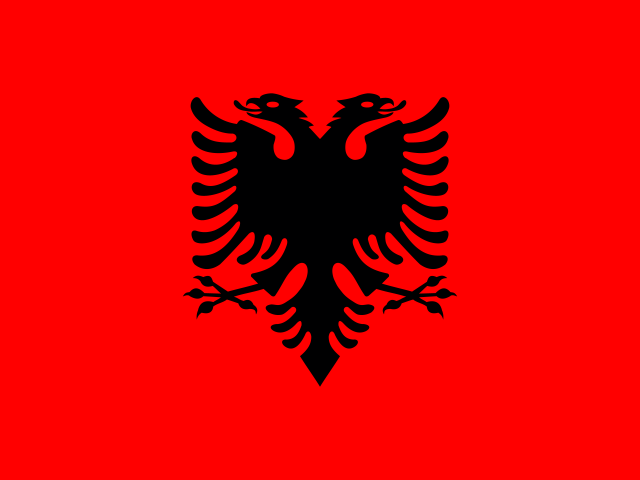
Veshjet tradicionale shqiptare janë ndër më të larmishmet në Ballkan, me kostume të dallueshme rajonale, kapelen e bardhë prej ndjeri për burra të njohur si plis, jelekë të qëndisur me shumë pasuri dhe veshje të përpunuara të grave që ndryshojnë nga fshati në fshat. Në zemër të simbolizmit shqiptar është shqiponja e zezë me dy koka në një fushë të kuqe, e nxjerrë nga flamuri i Skënderbeut dhe tani pjesa qendrore e flamurit kombëtar. Për shumë njerëz në diasporë, veshja e veshjeve tradicionale në dasma ose ngritja e flamurit me shqiponjë është një shprehje publike krenare e identitetit.
Albanian Culture at a Glance
Albanian culture is the shared way of life of Albanians in Albania, Kosovo, North Macedonia, Montenegro and a large diaspora: one language, several faiths, a strong code of hospitality and a living folk tradition. The table below gives the basics with their sources, and the sections that follow go deeper.
| Topic | Key facts | Burimi |
|---|---|---|
| Gjuha | Albanian (shqip), the only modern representative of its own branch of the Indo-European family. Two main dialects, Gheg in the north and Tosk in the south, divided roughly by the Shkumbin River. The standard spelling was adopted in 1909. | Britannica |
| Religion in Albania | Census 2023: Muslim 45.9%, Catholic 8.4%, Orthodox 7.2%, Bektashi 4.8%, Evangelical 0.4%, believers without a denomination 13.8%, atheist 3.6%, preferred not to answer 10.2%, no data 5.6%. | INSTAT, Census 2023, Table 15 |
| National flag | A black two-headed eagle on a red field. Skanderbeg raised a red flag with a black eagle over Krujë on November 28, 1443. | Britannica |
| National day | November 28, the date independence was proclaimed in 1912. | Britannica |
| National anthem | Lyrics by the poet Asdren (Aleksandër Stavre Drenova). | Britannica |
| Besa | A code of honor. Yad Vashem explains that besa literally means “to keep the promise,” so a family hosted by Albanians could trust them with their lives. | Yad Vashem |
| Mikpritja (hospitality) | Britannica describes Albania as known for traditions of hospitality that are based on the kanun, the customary code attributed to the 15th century lord Lekë Dukagjini. | Britannica |
| UNESCO intangible heritage | Five elements: folk iso-polyphony (2008), xhubleta (2022), transhumance (2023, shared with nine other countries), k’cimi dancing of Tropojë (2024) and the lahuta (2025). | UNESCO |
The census percentages are shares of the resident population of 2,402,113, calculated from the counts in INSTAT’s Table 15. For the values themselves, see our guides to besa, Mikpritja Shqiptare dhe Kanun, and for the symbols, the meaning of the Albanian flag dhe national anthem.
Albanian Traditions on the UNESCO Heritage Lists
UNESCO lists five Albanian traditions as intangible cultural heritage. Two of them sit on the list for traditions in need of urgent safeguarding, which means UNESCO judges that they are at risk of disappearing.
| Element | Viti | Lista e UNESCO-s | Çfarë është |
|---|---|---|---|
| Izo-polifonia popullore shqipe | 2008 (first proclaimed in 2005) | Lista Përfaqësuese | Group singing with two solo parts, a melody and a countermelody, over a choral drone. The drone is continuous among Tosks and rhythmic among Labs. It is sung at weddings, funerals, harvest feasts and festivals such as the folk festival in Gjirokastër. |
| Xhubleta, aftësitë, mjeshtëria dhe format e përdorimit | 2022 | Urgent Safeguarding List | A handmade, bell-shaped garment worn by highland women and girls in northern Albania, mostly black with embroidered motifs. UNESCO notes that few women now know the whole process. |
| Transhumanca, transporti sezonal i bagëtive | 2023 | Lista Përfaqësuese | The seasonal movement of herders and their animals between regions, inscribed jointly by Albania, Andorra, Austria, Croatia, France, Greece, Italy, Luxembourg, Romania and Spain. |
| Vallëzimi K'cimi i Tropojës | 2024 | Lista Përfaqësuese | A dance from the Tropojë region, usually accompanied by drums and performed by men, women and children, usually in couples who dance face to face without touching. |
| Arti i të luajturit, i të kënduarit dhe i bërjes së lahutës | 2025 | Urgent Safeguarding List | A single-stringed wooden instrument played while singing stories of legends, historical events and personal experience, in rural communities of north and northwestern Albania. |
Britannica names two other common folk instruments: the çifteli, a long-necked two-stringed instrument, and the gërnetë, a type of clarinet. Our guides to Muzikë shqipe, Albanian dances dhe kostume popullore cover each tradition in detail.
Albanian Literature, Arts and Sport
Albania’s best known writer is Ismail Kadare (1936 to 2024). The Booker Prize Foundation records that he won the inaugural Man Booker International Prize in 2005, that his novels have appeared in more than 40 countries, and that he sought political asylum in France in 1990 after works such as The Palace of Dreams brought him into conflict with the communist authorities. Britannica names the early 20th century poets Gjergj Fishta, Ndre Mjeda and Asdren, and remembers Fan S. Noli, an Orthodox bishop and briefly prime minister, for his translations of world classics into Albanian.
Traditional arts include fine embroidery, lace making and woodworking, along with long epic songs that singers perform from memory. In Tirana, Britannica lists the National Library, the National Theatre, the Opera and Ballet Theatre and the National Museum of History among the main cultural institutions.
Football (soccer) is the most popular sport, according to Britannica, followed by tae kwon do, volleyball, swimming and weightlifting, and chess is a common pastime. The national football team reached the European Championship for the first time at Euro 2016 and for the second time at Euro 2024. Albania first competed at the Olympics in Munich in 1972 and won its first Olympic medals at Paris 2024, when wrestlers Chermen Valiev and Islam Dudaev each took bronze. Kosovo competed at its first Olympics in Rio in 2016, where judoka Majlinda Kelmendi won gold in the women’s 52 kg class.
Etiquette for Visitors and Guests
You do not need to study rules before visiting an Albanian home, but a few habits are documented by the U.S. Peace Corps, which trained American volunteers to live with Albanian host families.
- Answer the welcome. When a host says Mirë se vini! (Welcome!), the set reply taught in the Peace Corps language course is Mirë se ju gjeta!
- Expect to be offered coffee. The same course drills the question Doni një kafe? (Would you like a coffee?), and the Peace Corps welcome book describes people inviting newcomers for coffee soon after they arrive. Saying yes is an easy way to start a conversation.
- Expect generous food. The welcome book warns vegetarians to be tactful, because many families will want to serve meat to an honored guest.
- Dress neatly. It notes that Albanians dress in their best in public and that ragged or unkempt clothing on a foreigner is likely to be taken as an affront.
- Know the toast. Gëzuar! means cheers, and Të bëftë mirë! is said before a meal.
For more everyday customs, see our guides to the xhiro, the evening walk, and to fraza të zakonshme në shqip.
How Culture Differs in Albania, Kosovo and the Diaspora
Albanians in Albania and Kosovo share a language, a flag and most customs, but their 20th century histories were different, and it shows.
- Dialect. Britannica notes that Albanian speakers in Kosovo and North Macedonia speak eastern varieties of Gheg, while the standard language has been modelled on Tosk since World War II. Since 1974 they have widely used a common spelling with Albania. See Gegë kundrejt Toskë.
- Religion and the state. Albania banned all religious practice from 1967 to 1990, as the Peace Corps country profile notes, and in the 2023 census about 17 percent of residents described themselves as believers without a denomination or as atheists. Britannica describes Kosovo’s society as largely secular, with Ramadan the most important celebration for Muslims and St. George’s Day (Shëngjergji) celebrated by members of all faiths. Our article on Albania’s religion ban has the background.
- Literature. Britannica observes that Albanian literature in Kosovo developed differently than in Albania, where the communist government imposed more severe ideological constraints.
- Dress and food. In Kosovo many older Albanian men still wear the white brimless cap, the plis, and well known dishes include fli (flija) and pite. Britannica’s examples for Albania include fergesë from Tirana, qofte and raki before a meal.
- Family networks. Britannica describes family support networks in Kosovo as very strong even when some members live abroad. UNESCO, for its part, lists the emigration of young people as one of the threats to passing on iso-polyphony.
For life between two cultures, our guides to Albanian vs. Kosovan, Albanian American identity and teaching kids Albanian go further.
Pyetje të shpeshta
Kanuni i Lekë Dukagjinit
Ai quhet besa, një premtim i shenjtë besimi dhe mbrojtjeje. Të japësh besën tënde do të thotë të vësh në rrezik nderin tënd për të mbajtur fjalën, një vlerë kaq e thellë sa ka formësuar shekuj me radhë traditat shqiptare.
Shumica e shqiptarëve janë myslimanë, por ka edhe pakica të konsiderueshme të krishterësh (ortodoksë dhe katolikë) dhe grupe të tjera fetare më të vogla.
Shqiptarët janë të larmishëm nga pikëpamja fetare dhe të famshëm për tolerancën e tyre. Popullsia përfshin myslimanë sunitë, anëtarë të urdhrit mistik Bektashi, si dhe të krishterë ortodoksë dhe katolikë, të cilët prej kohësh jetojnë të qetë krah për krah.
Shqiptarët flasin shqip.
Shqiptarët flasin shqip, një nga gjuhët më të vjetra të Evropës dhe degën e saj të pavarur të familjes indoevropiane. Ajo ka dy dialekte kryesore, gegërisht dhe toskërisht.
Si është një dasmë tradicionale shqiptare?
Dasmat shqiptare janë festime të mëdha, të gëzueshme dhe shumëditore, me veshje tradicionale, muzikë live, valle në rreth dhe gosti bujare që përfshijnë të gjithë familjen dhe komunitetin e zgjeruar.
Çfarë do të thotë mikpritja?
Mikpritja është mikpritja shqiptare, bindja e thellë se një mysafir është një bekim kur nderohet me më të mirën e gjithçkaje.
What is Albanian culture known for?
Albanian culture is known for besa, a code of honor built on keeping your word, and for generous hospitality toward guests. It is also known for religious coexistence, the red flag with the black double-headed eagle, folk iso-polyphony singing, which UNESCO inscribed in 2008, circle dances at weddings, and the novels of Ismail Kadare.
What is the main religion in Albania?
Islam is the largest religion. In Albania’s 2023 census, 45.9 percent of residents identified as Muslim and another 4.8 percent as Bektashi, while 8.4 percent were Catholic and 7.2 percent Orthodox. A further 13.8 percent said they were believers without a denomination, 3.6 percent said atheist, and about 16 percent gave no answer or had no data.
Which Albanian traditions are recognized by UNESCO?
UNESCO lists five: Albanian folk iso-polyphony (inscribed 2008), the xhubleta highland garment (2022), transhumance, shared with nine other countries (2023), k’cimi dancing of Tropojë (2024), and the art of playing, singing and making the lahuta (2025). The xhubleta and the lahuta are on the list of traditions in need of urgent safeguarding.
Is Kosovo culture the same as Albanian culture?
Largely, yes. Albanians in Kosovo and Albania share the language, the flag, most holidays and customs such as besa and hospitality. The differences come from history: Kosovo Albanians speak Gheg varieties, and Britannica notes that their literature developed differently than in Albania, where the communist government imposed more severe ideological constraints.
Who is the most famous Albanian writer?
Ismail Kadare (1936 to 2024) is the best known. He won the inaugural Man Booker International Prize in 2005, and his novels, including The General of the Dead Army and The Palace of Dreams, have been published in more than 40 countries, according to the Booker Prize Foundation. He sought political asylum in France in 1990.
Burimet
- INSTAT: Albania Population and Housing Census 2023, Main Results (Table 15, resident population by religion)
- Trashëgimia Kulturore Jomateriale e UNESCO-s: Shqipëria, elementët në lista
- UNESCO: Albanian folk iso-polyphony
- UNESCO: Xhubleta, skills, craftsmanship and forms of usage
- UNESCO: Transhumance, the seasonal droving of livestock
- UNESCO: K’cimi dancing of Tropojë
- UNESCO: Art of playing, singing and making the lahuta
- Britannica: Albania, Cultural life (cultural milieu, daily life, the arts, sports)
- Britannica: Kosovo, Cultural life
- Britannica: Albanian language
- Britannica: Flag of Albania
- Yad Vashem: Albania, Historical Background during the Holocaust
- The Booker Prizes: Ismail Kadare
- U.S. Peace Corps: The Peace Corps Welcomes You to Albania (welcome book, November 2013)
- Korpusi i Paqes i SHBA në Shqipëri: Gjuha shqipe, Gjuha shqipe, për të ftuarit (PDF)
- International Committee of Mediterranean Games: Albania wins first historic medals at the Olympic Games
- ESPN: Against all odds, Albania have Euro 2024 knockouts in reach (June 23, 2024)
- ABC News (Australia): Rio 2016, Kosovo wins first ever medal as Majlinda Kelmendi triumphs in judo