
Preferoni të hani jashtë? Gjeni restorante shqiptare pranë jush, i kërkueshëm sipas qytetit ose kodit postar.
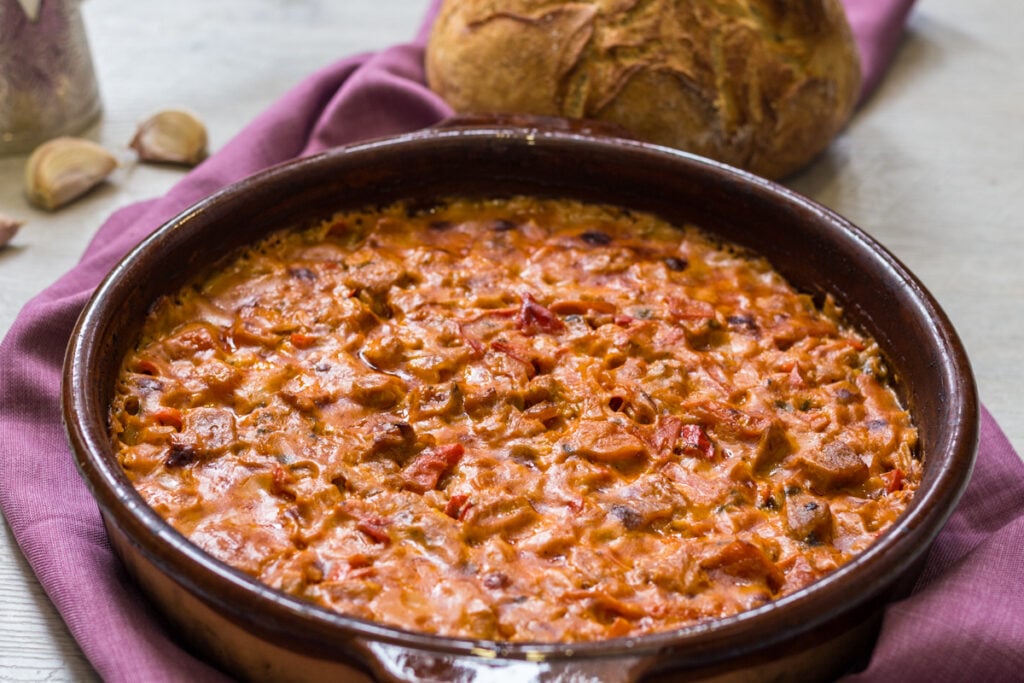
Fërgesë is one of Albania’s most beloved everyday dishes, a rich, bubbling bake of roasted peppers, ripe tomatoes, and creamy gjizë (Albanian cottage cheese) that comes together in under an hour. Often called fërgesë Tirane after the capital city where it became a staple, this dish captures the essence of Albanian home cooking: simple ingredients, bold flavors, and a tradition passed from one generation to the next. Whether served as a main course with warm bread or alongside grilled meat, fërgesë has earned its place at the heart of the Albanian table. While visitors to Albania may first hear about tavë kosi or byrek, it is fërgesë that many Albanians cook at home as an everyday meal. The dish is quick, affordable, and endlessly adaptable, qualities that have kept it popular. If you want to understand Albanian cuisine, fërgesë is where you start. The recipe below gives you the authentic version, followed by the history and cultural story behind this essential Albanian dish. You can find fërgesë and other traditional dishes at Restorante shqiptare në të gjithë Shtetet e Bashkuara, ose provoni ta bëni vetë me udhëzuesin hap pas hapi më poshtë.Historia e Fërgesës
Fërgesë is a dish of central Albania, prepared mainly around Tirana, Durrës, Kavajë, Shijak, and Elbasan, and traditionally finished in a clay dish in the oven. Its early history is not well documented. The dish evolved as Albania’s agricultural regions, particularly the fertile plains around Tirana, Elbasan, and Berat, produced abundant harvests of peppers and tomatoes each summer. Gjizë, a fresh curd cheese, gives the dish its distinctive creamy texture. The name “fërgesë” comes from the Albanian verb fërgoj, to fry, and Wiktionary defines the noun as braised or fried food. It is a warm weather dish, generally made from spring until late autumn, when fresh peppers and tomatoes are in season. Today, fërgesë appears on many traditional restaurant menus in Albania and remains a dish that Albanians abroad often miss.Çfarë e bën të veçantë Fërgesën
The magic of fërgesë lies in the interplay between sweet roasted peppers, acidic tomatoes, and rich, melting cheese. Unlike similar Mediterranean dishes, Albanian fërgesë uses gjizë, a fresh, slightly tangy cottage cheese that melts into creamy pockets throughout the dish. When gjizë is unavailable outside Albania, the card’s substitute of 200 g ricotta plus 50 g crumbled feta produces a similar effect. The peppers must be roasted until their skins blister and char, which concentrates their sweetness and adds a subtle smoky depth. Do not skip it unless you use roasted peppers from a jar, which the card allows, because raw peppers produce an entirely different dish. The tomatoes are cooked down into a thick sauce, the cheese is crumbled in over low heat, a butter and flour roux is folded through, and the dish is finished in a hot oven until golden and bubbling.Variacione Rajonale
The meatless pepper, tomato, and cheese version, the recipe below, is sometimes called summer fërgesë (fërgesë verore). Fërgesë with liver (fërgesë me mëlçi) is the other classic of Tirana and central Albania, and Wikipedia notes that it is sometimes the one called simply fërgesë Tirane. In that version, cubed calf’s liver is sautéed with the peppers and tomatoes before the cheese goes in. The recipe notes mention a richer version in which a beaten egg or two is added in the last few minutes of cooking, giving a custard-like texture similar to Turkish menemen. The recipe notes also give a meaty version, fërgesë me mish, with cubes of veal or lamb browned at the start. Cook veal or lamb pieces to at least 145°F (63°C) with a 3 minute rest, and any ground meat or sausage to 160°F (71°C). Whatever the variation, the core technique stays the same: roast, simmer, stir in the cheese, and bake.Këshilla për Fërgesë të Përsosur
Piqni specat siç duhet. Specat duhet të jenë të pjekur plotësisht nga të gjitha anët. Përdorni një flakë gazi, skarë ose skarë shumë të nxehtë. Pasi të jenë pjekur, mbyllini në një qese ose tas të mbuluar për 10 minuta, avulli i liron lëkurat në mënyrë që ato të qërohen lehtë. Ky hap është thelbësor për shijen autentike të ëmbël si tym. Përdorni domate të pjekura dhe të shijshme. Në verë, përdorni domate të freskëta dhe të pjekura që i qëroni dhe i grini vetë. Në dimër, domatet e plota të konservuara me cilësi të lartë janë të mira. Shmangni domatet e freskëta të holluara me ujë dhe jashtë sezonit, ato do ta bëjnë pjatën të pashëndetshme. Merrni djathin siç duhet. Authentic gjizë is a fresh Albanian cottage cheese. Outside Albania, use the card’s substitute: 200 g whole-milk ricotta plus 50 g crumbled feta, about four parts ricotta to one part feta. The ricotta provides creaminess while the feta adds the characteristic tang. Do not use mozzarella, it makes the dish stringy rather than creamy. Gatuajeni salcën. Përzierja domate-speca duhet të jetë e trashë, jo e holluar me ujë, përpara se të shtoni djathin. Nëse është shumë e lëngshme, fërgesa do të jetë e butë në vend që të jetë e pasur dhe kohezive. Shërbejeni siç duhet. Fërgesë is traditionally served in the dish it is baked in, after the 5 minute rest in the card, with crusty white bread for dipping. It is best eaten hot. You can explore more about traditional ushqimi shqiptar dhe zakonet e ngrënies në tonën udhëzues i plotë për ushqimin shqiptar.Fërgesë at a Glance
The times, temperature, quantities and yield below come from the recipe card at the bottom of this page. The origin and season rows are from Wikipedia, and the last row is official US food-safety guidance.
| Artikull | Detaje |
|---|---|
| Kurs | Main course, or a generous side |
| Rajoni i origjinës | Central Albania: Tirana, Durrës, Kavajë, Shijak and Elbasan (Wikipedia) |
| Sezoni | Generally made from spring until late autumn, when fresh peppers and tomatoes are in season (Wikipedia) |
| Përbërësit kryesorë | 6 large red bell peppers, 4 ripe tomatoes, 250 g gjizë, garlic, butter, flour, olive oil, oregano |
| Prep time | 15 minutes |
| Cook time | 35 minutes |
| Total time | 50 minutes |
| Rendimenti | 6 servings |
| Oven temperature | 390°F (200°C) for 15 to 20 minutes, until golden and bubbling |
| Rest before serving | 5 minutes |
| Storage | Leftovers keep in the refrigerator for 2 days |
| Safe storage (USDA) | Refrigerate within 2 hours. The USDA limit for leftovers is 3 to 4 days, so the card’s 2 days is the stricter rule. Reheat to 165°F (74°C) |
Gjizë Substitutes, Make-Ahead and Storage Notes for US Kitchens
- Gjizë: Wiktionary glosses the word as cheese curd or a dry cottage cheese, and Wikipedia’s Albanian cuisine article calls it Albanian ricotta. If you cannot buy it, use the card’s own substitute, 200 g ricotta plus 50 g crumbled feta, which is about 7 oz and just under 2 oz. Our guide to Djathë shqiptar explains where gjizë fits among the country’s cheeses.
- Cheeses to avoid: the card rules out mozzarella and cheddar because they melt and taste completely different.
- Peppers: the card accepts roasted peppers from a jar in place of fresh ones. Drain them, chop them, and skip the roasting and the 10 minute steam. Everything after that is unchanged.
- Make-ahead: the card has no make-ahead step. The natural pause is after the peppers are roasted, peeled and chopped. Refrigerate them within 2 hours and carry on the next day.
- Leftovers: the card reheats them in a pan or the microwave. For the microwave, the USDA advises covering and rotating the food so it heats evenly, then checking that it reaches 165°F (74°C).
- Opened ricotta: the USDA says soft cheeses such as cottage cheese and ricotta keep one week in the refrigerator, so plan another use for the rest of the tub.
Leftover gjizë or ricotta goes well in speca me gjizë, Albanian peppers stuffed with cheese.
Pyetje të shpeshta
Çfarë do të thotë fërgesë në shqip?
Fërgesë comes from the Albanian verb fërgoj, which means to fry. Wiktionary defines fërgesë as braised or fried food, and as a type of traditional Albanian cooking. The word does not refer to a pan.A mund të bëj fërgesë pa djathë?
Teknikisht po, por nuk do të ishte një fërgesë tradicionale. Djathi është ajo që e dallon fërgesën nga një gjellë e thjeshtë me speca dhe domate. Nëse ju nevojitet një version pa produkte qumështi, disa kuzhinierë përdorin tofu të butë të përzier me lëng limoni si zëvendësim, megjithëse kjo nuk është tradicionale.A është fërgesa e njëjtë me shakshuka?
No. While both dishes involve peppers and tomatoes, fërgesë is defined by its melted cheese, which creates a creamy, cohesive bake rather than a sauce for poaching eggs. The flavor profiles are also different, fërgesë has a sweeter, more dairy-rich character. Some versions of fërgesë do add a beaten egg or two, as the recipe notes mention, but the cheese base remains.Çfarë shërbeni me fërgesë?
Buka e bardhë krokante është shoqërimi klasik, shqiptarët i copëtojnë copat dhe e marrin fërgesën me lugë direkt. Gjithashtu shkon mirë me mish të pjekur në skarë (sidomos me mish qengji ose viçi)., Sallatë shqiptare (sallatë shqiptare), dhe pilaf me oriz. Si vakt më i lehtë, fërgesa me bukë dhe sallatë është një darkë e plotë.Si ta ruaj fërgesën e mbetur?
Refrigerate in an airtight container within 2 hours, and eat it within 2 days, as the recipe notes say. Reheat it in a pan or the microwave, as the notes suggest, or covered with foil in a 325°F (165°C) oven for about 15 minutes, until it is steaming hot, 165°F (74°C). The cheese texture changes slightly upon reheating but the flavor remains excellent. Fërgesë does not freeze well because the cheese becomes grainy. If you are looking for Albanian restaurants serving fërgesë and other traditional dishes near you, browse our Drejtoria e bizneseve shqipe në Nju Jork, Drejtoria e bizneseve shqiptare në Detroit, ose eksploroni të plotë Drejtoria e bizneseve në Shqipëri për të gjetur restorante shqiptare në zonën tuaj.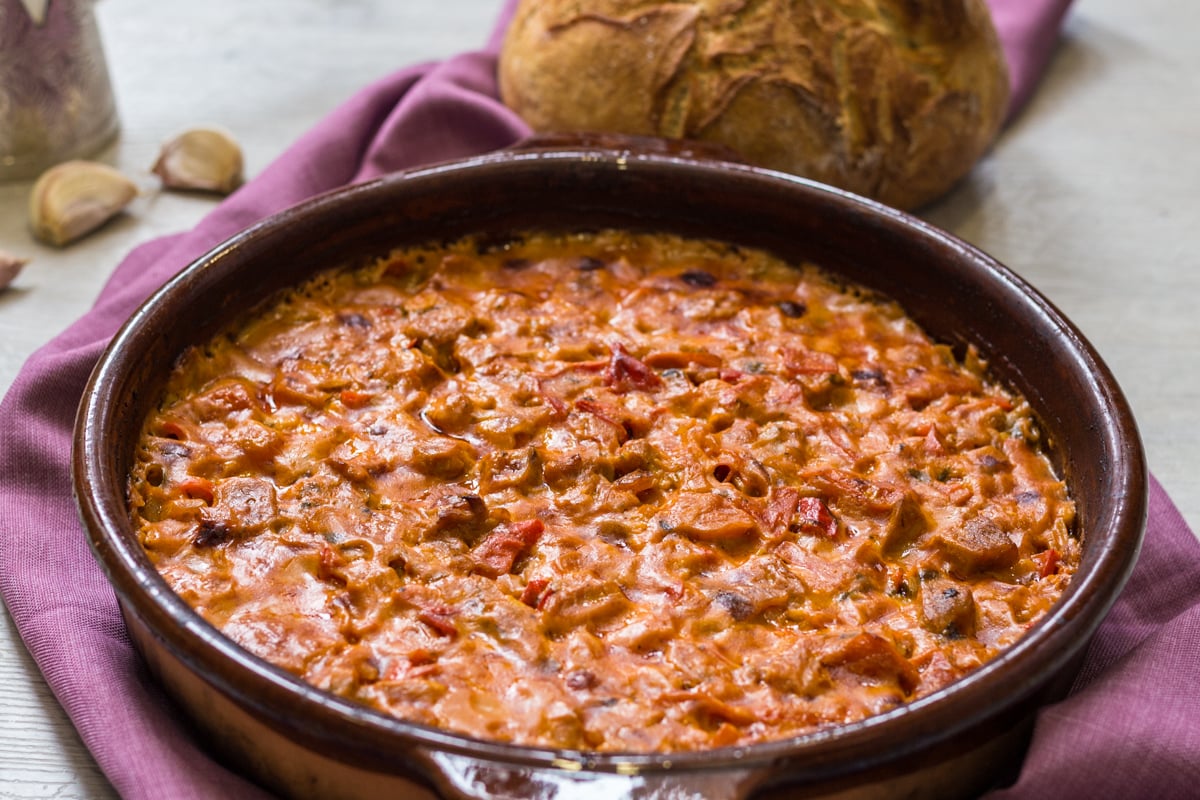
Fërgesë (Speca, Domate dhe Djathë)
Ingredients
Method
- Nëse përdorni speca të freskët, piqini mbi flakë të hapur ose në skarë derisa lëkura të jetë djegur dhe të ketë flluska nga të gjitha anët. Vendosini në një tas, mbulojeni me qese plastike dhe lërini të ziejnë në avull për 10 minuta. Qëroni lëkurat, hiqni farat dhe pritini specat në copa të vogla.
- Në një tigan ose tenxhere të madhe, ngrohni vajin e ullirit në zjarr mesatar. Shtoni hudhrën e grirë dhe kaurdiseni për 30 sekonda derisa të lëshojë aromë.
- Shtoni domatet e prera në tigan. Gatuajini për 8-10 minuta, duke i përzier herë pas here, derisa domatet të treten në një salcë të trashë.
- Shtoni specat e pjekur të grirë në salcën e domates. Përziejini mirë dhe gatuajini së bashku për 5 minuta, duke i shtuar kripë, piper dhe rigon të tharë.
- Në një tenxhere të vogël të veçantë, shkrini gjalpin në zjarr mesatar. Shtoni miellin dhe përzieni vazhdimisht për 1-2 minuta për të bërë një roux.
- Ulni nxehtësinë në minimum të përzierjes së specit dhe domates. Thërrmoni gjizën (ose rikotën dhe djathin feta) në tigan dhe përziejini ngadalë.
- Hidhni përzierjen me gjalpë dhe miell dhe përziejini të gjitha së bashku derisa djathi të fillojë të shkrihet dhe salca të trashet.
- Transfer the mixture to a baking dish. Bake in a preheated oven at 390°F (200°C) for 15-20 minutes until the top is golden and bubbling.
- Nxirreni nga furra dhe lëreni të pushojë për 5 minuta para se ta servirni. Shërbejeni të ngrohtë me bukë krokante si pjatë kryesore ose si një pjatë të bollshme anësore.
Notes
Burimet
- Wikipedia: Fërgesë
- Wikipedia: Kuzhina Shqiptare
- Wiktionary: gjizë
- Shërbimi i Sigurisë dhe Inspektimit Ushqimor i USDA-së: Mbetjet dhe Siguria Ushqimore
- USDA Ask FSIS: How long can you keep dairy products like yogurt, milk, and cheese in the refrigerator?

Autor: Dardanë Halimi
Dardanë Halimi është një shkrimtare dhe profesioniste e komunikimit me titull magjistër në Shkrim, Retorikë dhe Komunikim Teknik nga Universiteti James Madison. Puna e saj përqendrohet në tregimin e historive, përmbajtjen digjitale, arsimin e lartë dhe komunikimin strategjik, me përvojë në shkrimin për organizata akademike, jofitimprurëse dhe marketingu si në Shtetet e Bashkuara ashtu edhe në Kosovë.