
Preferoni të hani jashtë? Gjeni restorante shqiptare pranë jush, i kërkueshëm sipas qytetit ose kodit postar.

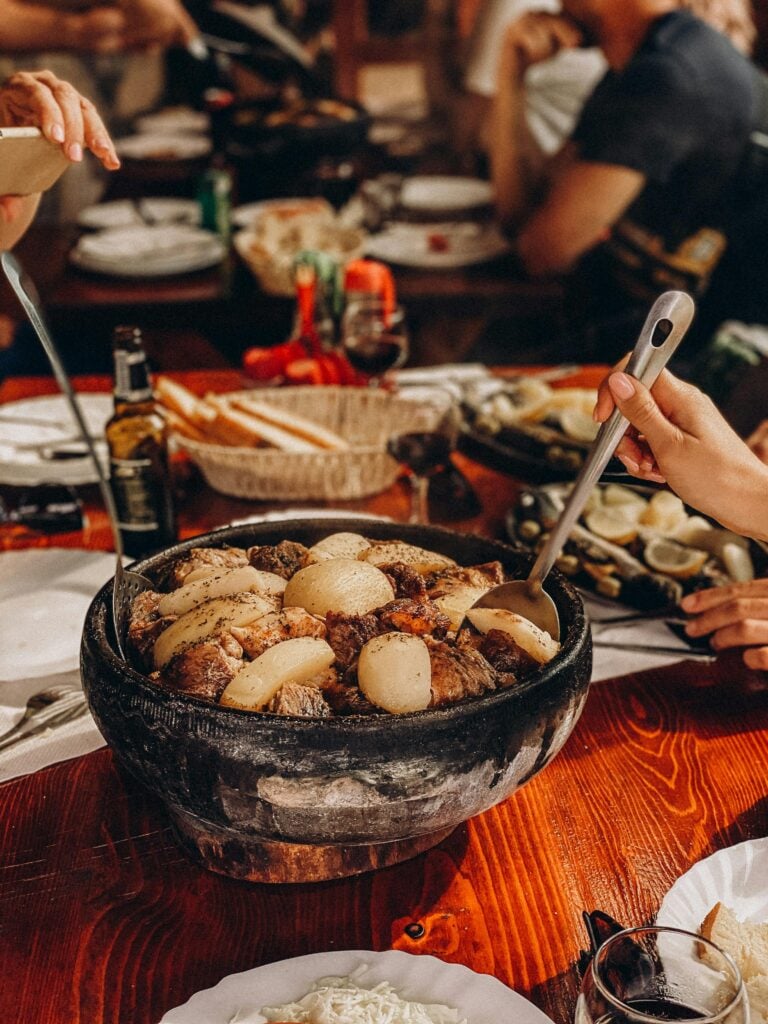
Shqiptar Tavë Kosi (Qingji i pjekur me kos)
Ingredients
Method
- Kriposni, piperosni dhe lyejini copat e qengjit me kripë, piper dhe rigon. Ngrohni vajin perimesh në një tigan të madh në zjarr mesatar-të lartë dhe skuqeni qengjin nga të gjitha anët, rreth 8 minuta gjithsej. Transferojeni në një pjatë.
- Ngroheni furrën në 350°F (175°C). Lyejeni një tepsi të thellë pjekjeje me përmasa 9x13 inç me gjalpë.
- Vendosni copat e qengjit të skuqur në një shtresë të vetme në tavën e pjekjes. Shtoni gjethen e dafinës dhe hudhrën e grirë. Hidhni ujë aq sa të mbulojë mezi mishin (rreth 1 filxhan). Mbulojeni me letër alumini dhe piqeni për 45 minuta derisa qengji të jetë i butë.
- Ndërsa qengji piqet, përgatitni kremin e kosit. Në një tas të madh, përzieni së bashku kosin grek, vezët, miellin e orizit, miellin për të gjitha përdorimet, gjalpin e shkrirë dhe qumështin derisa të bëhet një masë plotësisht e lëmuar pa kokrriza.
- Hiqeni tavën e pjekjes nga furra dhe rrisni temperaturën në 375°F (190°C). Hidhni gjethen e dafinës. Qengji duhet të jetë i butë dhe pjesa më e madhe e lëngut të jetë përthithur.
- Hidheni përzierjen e kremit me kos të shtrihet në mënyrë të barabartë mbi mishin e qengjit, duke u siguruar që të depërtojë midis dhe përreth copave.
- Kthejeni në furrë dhe piqeni pa kapak për 40-45 minuta, derisa sipërfaqja të marrë ngjyrë të artë dhe të fryhet, dhe kremi të jetë mpiksur me një tundje të lehtë në qendër.
- Lëreni tavën e kosit të pushojë për 10-15 minuta para se ta servirni. Kremi do të trashet pak ndërsa ftohet. Servireni të ngrohtë, të prerë në katrorë, me një sallatë të thjeshtë dhe bukë krokante.
Notes
Historia e Tavë Kosit
Tavë kosi originated in the city of Elbasan, in central Albania, and is known as Elbasan tava in Turkey and other neighboring countries. The dish reflects Albania’s position at the crossroads of Mediterranean and Ottoman culinary traditions, yogurt-based cooking is common across Turkey and the Balkans, but the Albanian version is distinguished by its simplicity and the quality of its lamb. In Albania, lamb is a prized meat, raised on mountain pastures where sheep graze on wild herbs and grasses that give the meat a distinctive flavor. TasteAtlas dates the dish to the 15th century and notes that the original was topped with kos, Albanian soured milk, where modern recipes use a sauce of yogurt and eggs. Today it is enjoyed across Albania and Kosovo, and TasteAtlas calls it Albania’s unofficial pjatë kombëtare and it is a fixture of Albanian celebrations.Çfarë e bën të veçantë Tavë Kosin Shqiptare
The magic of tavë kosi is in the yogurt custard. Unlike Greek moussaka or Turkish yogurt kebab, the Albanian version uses a custard that puffs up in the oven almost like a soufflé, then settles into a rich, creamy layer that coats each piece of lamb. The key is the ratio of yogurt to eggs to flour, too much flour and it becomes stodgy; too little and the custard won’t set. The rice flour, which the card combines with a little all-purpose flour, acts as a stabilizer that prevents the yogurt from curdling in the oven’s heat. In this recipe the lamb is browned in oil, then baked under foil with garlic, a bay leaf, and about 1 cup of water for 45 minutes, so it is already tender before the custard goes on top. Many traditional versions also cook a little rice with the lamb, which the card leaves out. This two-stage cooking is what separates a good tavë kosi from a great one, the lamb should be fork tender, and the custard should be set with only a slight jiggle in the center and a golden-brown, puffed top. For a thermometer check, the USDA minimum for lamb pieces is 145°F (63°C) with a 3 minute rest, which shoulder baked until tender passes easily, and a casserole that combines meat with an egg custard, like this one, is done at 165°F (74°C).Variacione Rajonale
While the Elbasan version is considered the classic, you will find variations across Albania and Kosovo. The card seasons the lamb with garlic and oregano, which Wikipedia lists among the usual seasonings, and some cooks stir them into the custard instead. In the diaspora, especially among Komunitetet shqiptare në Nju Jork dhe Detroit, lamb shoulder is sometimes substituted with lamb leg (easier to find in American grocery stores) or even chicken for a lighter version called tavë kosi me pulë. Some modern cooks bake it in individual ramekins, or add a layer of thinly sliced potatoes beneath the lamb. The classic needs no embellishment: good lamb, good yogurt, eggs, butter, and patience.Këshilla për Perfect Tavë Kosi
Përdorni kos me yndyrë të plotë. This is non-negotiable. The card calls for full-fat Greek yogurt or strained Albanian kos, and warns that low-fat yogurt will curdle and separate during baking. Albanian yogurt (kos) is naturally thick and tangy. If you cannot find it, full-fat Greek yogurt is the card’s choice. Avoid yogurt with added thickeners like gelatin or pectin. Sillni kosin në temperaturën e dhomës para përzierjes së kremit. Kosi i ftohtë ka më shumë gjasa të ndahet kur bie mbi qengjin e nxehtë dhe nxehtësinë e furrës. Mos e hapni furrën gjatë 30 minutave të para të pjekjes së kremit të ëmbëlsirës. Ashtu si një sufle, kremi i ëmbëlsirës ka nevojë për nxehtësi të qëndrueshme që të fryhet dhe të mpikset. Hapja e derës shkakton një rënie të temperaturës që mund ta bëjë atë të shembet. Pushoni para se ta servirni. Let the dish sit for 10 to 15 minutes after it comes out of the oven. The custard will firm up slightly and be easier to cut into clean portions. Shërbejeni me bukë. Shqiptarët gjithmonë hanë tavë kosi me bukë të bardhë krokante për të thithur salcën kremoze të kosit. Një Sallatë shqiptare (sallatë shqiptare) of tomatoes, cucumbers, and raw onion dressed with olive oil and salt, with feta if you like, is the traditional accompaniment.Tavë Kosi at a Glance
The times, temperatures, quantities and yield below come from the recipe card at the top of this page. The first two rows are from TasteAtlas and Wikipedia, and the last two are official US food-safety guidance.
| Artikull | Detaje |
|---|---|
| Also known as | Tavë Elbasani, or Elbasan tava, after the city of Elbasan where the dish is thought to originate (Wikipedia, TasteAtlas) |
| Reputation | Often described as Albania’s unofficial national dish (TasteAtlas) |
| Kurs | Main course |
| Përbërësit kryesorë | 2 lbs boneless lamb shoulder, 1 cup full-fat Greek yogurt, 4 large eggs, 1 cup whole milk, butter, rice flour, all-purpose flour |
| Prep time | 30 minutes |
| Cook time | 1 hour 30 minutes |
| Total time | 2 hours, plus 10 to 15 minutes of resting |
| Rendimenti | 6 servings from a deep 9×13 inch baking dish |
| Oven temperature | 350°F (175°C) covered for 45 minutes, then 375°F (190°C) uncovered for 40 to 45 minutes |
| Reheating | 325°F (165°C) for 15 to 20 minutes |
| Safe doneness (FoodSafety.gov) | 165°F (74°C) for casseroles that contain meat |
| Safe storage (USDA) | Refrigerate within 2 hours. Baked casseroles with eggs keep 3 to 4 days. Reheat to 165°F (74°C) |
Yogurt Choices, Make-Ahead and Storage Notes for US Kitchens
- Yogurt: buy plain, unsweetened, full-fat Greek yogurt, which is what the card measures. Strained Albanian kos is the card’s other option. The card warns that low-fat yogurt will curdle and separate in the oven.
- Flour: the custard takes 3 tablespoons of rice flour and 2 tablespoons of all-purpose flour.
- Chicken: the card’s notes allow bone-in chicken thighs for a lighter version. FoodSafety.gov’s minimum for all poultry is 165°F (74°C).
- Rice: Wikipedia and TasteAtlas both describe the classic as lamb and rice under the yogurt topping. The card leaves the rice out, and this page follows the card.
- Make-ahead: the card notes that the custard sets firmer overnight and slices more cleanly the next day, so baking a day early works well. Cool the dish, cover it, and refrigerate it within 2 hours.
- Reheating: follow the card, 325°F (165°C) for 15 to 20 minutes, and check that the center reaches 165°F (74°C). The USDA also advises covering leftovers while they reheat, and foil does the job here.
If you have kos or yogurt left over, it goes into kulaç me kos, a quick Albanian yogurt bread that suits this dish. For another baked tavë, see our tavë dheu recipe.
Pyetje të shpeshta
Çfarë do të thotë tavë kosi në anglisht?
Tavë kosi përkthehet në "tavë kos" ose "tavë për pjekje kos". Tavë do të thotë enë pjekjeje ose tavë, kurse kos në shqip do të thotë kos.A mund të bëj tavë kosi me pulë në vend të qengjit?
Yes, tavë kosi me pulë (chicken tavë kosi) is a popular lighter variation, and the recipe notes suggest bone-in chicken thighs. Reduce the first, covered bake to about 25 minutes, since chicken cooks faster than lamb, and make sure the chicken reaches 165°F (74°C) by the time the dish comes out of the oven.Cili është kosi më i mirë për tavë kosin?
Full-fat yogurt with no added thickeners. The recipe card uses full-fat Greek yogurt, or strained Albanian kos if you can find it, loosened in the custard with a cup of whole milk. Avoid anything low-fat, which the card warns will curdle and separate.A është tavë kosi pjata kombëtare e Shqipërisë?
Unofficially, yes. TasteAtlas calls it the unofficial national dish of Albania, and Wikipedia describes it as one of the country’s national dishes. It is thought to originate from the city of Elbasan. We found no record of an official designation.Si t'i ruaj mbetjet e tavë kosit?
Refrigerate in an airtight container within 2 hours, and eat it within 3 days. Reheat in a 325°F (165°C) oven for 15 to 20 minutes, as the recipe notes say, covered with foil, until the center reaches 165°F (74°C). The custard will not puff up again on reheating but will still taste excellent. Looking to connect with the broader Albanian community? Shfletoni direktorinë tonë me mbi 3,000 biznese në pronësi të shqiptarëve në mbarë botën, ose eksploro Restorante shqiptare në Bronx të provosh tavë kosi të përgatitur nga profesionistë.Burimet
- TasteAtlas: Tavë kosi
- Wikipedia: Tavë kosi
- FoodSafety.gov: Cook to a Safe Minimum Internal Temperature
- FoodSafety.gov: Grafiku i Ruajtjes së Ushqimeve në të Ftohtë
- Shërbimi i Sigurisë dhe Inspektimit Ushqimor i USDA-së: Mbetjet dhe Siguria Ushqimore

Autor: Dardanë Halimi
Dardanë Halimi është një shkrimtare dhe profesioniste e komunikimit me titull magjistër në Shkrim, Retorikë dhe Komunikim Teknik nga Universiteti James Madison. Puna e saj përqendrohet në tregimin e historive, përmbajtjen digjitale, arsimin e lartë dhe komunikimin strategjik, me përvojë në shkrimin për organizata akademike, jofitimprurëse dhe marketingu si në Shtetet e Bashkuara ashtu edhe në Kosovë.