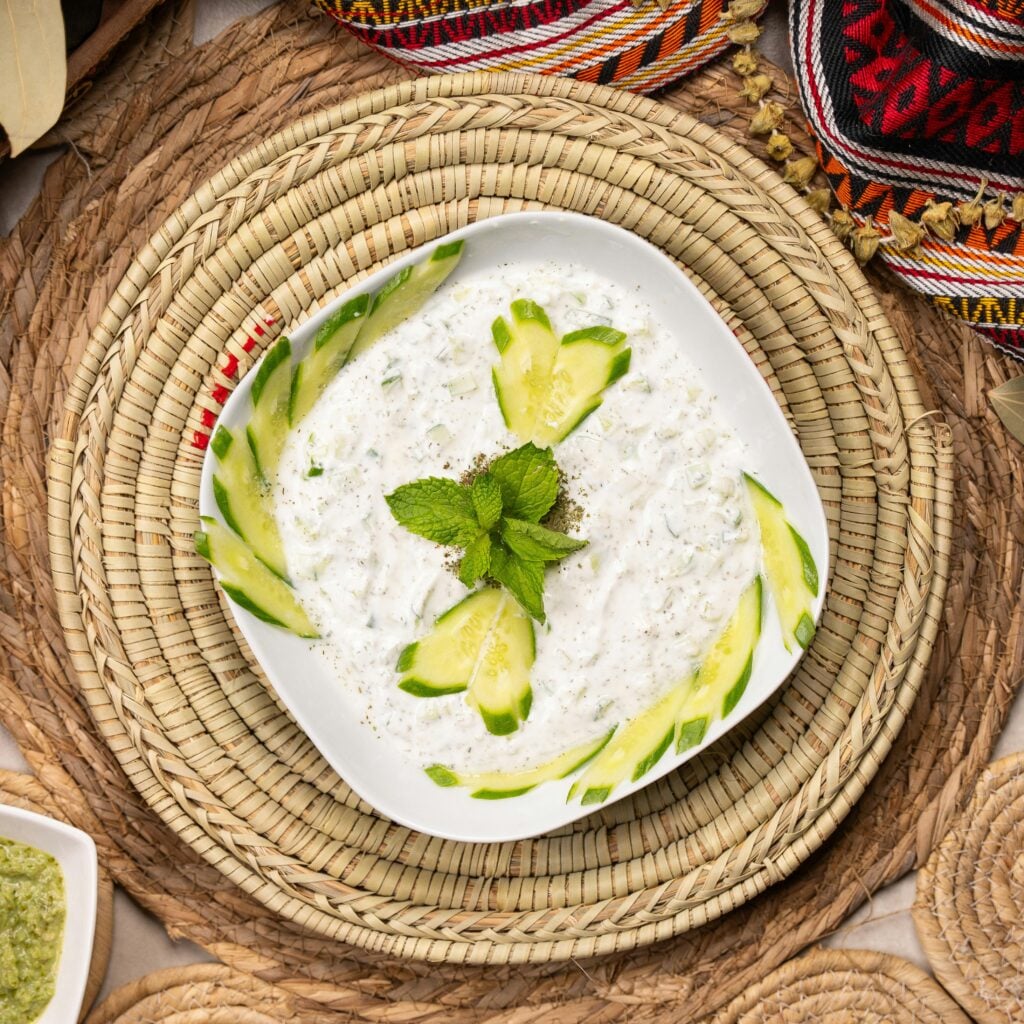

Tarator is a refreshing cold soup made with yogurt, cucumbers, garlic, and walnuts, the perfect dish for Albania’s hot summer days. This no-cook recipe takes about 15 minutes to mix, plus at least 30 minutes of chilling, and delivers a cool, creamy, tangy bowl that is both satisfying and revitalizing.
Preferoni të hani jashtë? Gjeni restorante shqiptare pranë jush, i kërkueshëm sipas qytetit ose kodit postar.

Tarator (Supë e ftohtë me kos)
Ingredients
Method
- In a large bowl, whisk the yogurt until smooth. Add cold water and mix until you reach your desired consistency, thinner for a soup, thicker for a dip.
- Shtoni kastravecat e prera në kubikë, hudhrën e grirë, arrat e grira dhe koprën. Përziejini.
- Hidhni vaj ulliri dhe uthull ose lëng limoni. Përziejini mirë.
- Kriposeni sipas shijes.
- Vendoseni në frigorifer për të paktën 30 minuta që shijet të përzihen.
- Shërbejeni të ftohtë, të zbukuruar me pak vaj ulliri, disa copa arre dhe një degëz kopre.
Notes
Origjina e Taratorit Shqiptar
Tarator is a cold yogurt-based soup that is a summer staple of Albanian and Balkan cuisine. This refreshing dish, made from yogurt, cucumbers, garlic, and walnuts, belongs to a wider family of yogurt and cucumber dishes found from the Balkans to Turkey, and the Albanian version is usually made with olive oil and fresh herbs.
Në Shqipëri, taratori është pjata tipike e verës. Gjatë muajve të nxehtë nga qershori deri në shtator, familjet shqiptare e shërbejnë atë si pjatë të parë, si pjatë shoqëruese ose edhe si një vakt të lehtë më vete me bukë krokante. Nuk kërkon gatim, mund të përgatitet brenda pak minutash dhe ofron lehtësim të menjëhershëm nga vapa, duke e bërë atë një nga pjatat më praktike në kuzhinën shqiptare.
The dish is a good example of simple Albanian home cooking. All the ingredients, yogurt, cucumbers, garlic, walnuts, olive oil, are staples of the Albanian pantry, readily available in even the most modest households. In Albanian-American communities, tarator remains a beloved summer tradition, often appearing at barbecues and family gatherings alongside grilled meats.
Këshilla për Taratorin më të Mirë Shqiptar
Përzgjedhja e kosit: Përdorni kos të thjeshtë me yndyrë të plotë për rezultatin më të pasur dhe më kremoz. Kosi grek funksionon, por mund të duhet të hollohet me pak ujë të ftohtë. Kosi shqiptar (kos) është natyrshëm i trashë dhe i athët, nëse mund ta gjeni në një treg ballkanik, është zgjedhja ideale.
Përgatitja e kastravecit: Peel and finely dice the cucumbers, as the recipe says. If you prefer to grate them, gently squeeze out some excess water to prevent the tarator from becoming too thin.
Hudhër: Raw garlic is traditional and provides the signature punch. Mince it finely or use a garlic press. The recipe uses two cloves. For a milder bowl start with one and add more to taste, the garlic mellows as the tarator chills.
Arra: Walnuts give tarator its crunch and set it apart from Greek tzatziki, although Bulgarian tarator uses them too. Chop them finely, as the recipe says, and toast them lightly first if you want a deeper flavor.
Temperatura e servirjes: Taratori duhet të shërbehet i ftohtë, futeni në frigorifer për të paktën 30 minuta para se ta servirni. Disa familje shtojnë nga një kub akulli në secilën tas për më shumë freski në ditët shumë të nxehta.
Përfundimi: A drizzle of good olive oil, a few walnut pieces, and a sprig of fresh dill on top is the finishing touch in this recipe. Some cooks sprinkle on dried mint instead.
Variacione
Tarator klasik shqiptar: Yogurt, cucumber, garlic, walnuts, fresh dill, olive oil, salt, and vinegar or lemon juice, thinned with cold water. Served as a cold soup.
Taratori si një salcë: Made thicker (with little or no water) and served as a dip with bread, similar to tzatziki but with walnuts.
Pa arra: Some Albanian families omit walnuts, making a version closer to Turkish cacık or Greek tzatziki. Albanian recipes often treat the walnuts as optional.
Tarator sauce: In Turkey and the Middle East, tarator is a sauce of tahini, lemon juice, and garlic (without yogurt or cucumber), often served with fish. This is a completely different dish that shares only the name.
One Name, Two Dishes: Tarator from the Balkans to the Middle East
The Oxford Companion to Food notes that tarator is a term with two meanings, depending on where you meet it. In Bulgaria, and in slightly altered form in neighboring countries, it is a refreshing cold soup of yogurt, cucumber, walnuts and garlic, which the Companion calls not far distant from the Greek cucumber and yogurt salad tzatziki. In Turkey and the Middle East, tarator is a sauce of tahini, lemon juice and garlic, often served with grilled or baked fish.
The Albanian dish belongs to the first family. Wikipedia’s survey of these yogurt dishes describes Albanian tarator as a cold summer dish of yogurt, cucumber, garlic and herbs, often with olive oil, that can range from soup-like to dip-like depending on the yogurt and how much water is added. The recipe on Discovering Albania treats both the water and the walnuts as optional, and points out that the same bowl works as a dip for seafood or a sauce poured over cauliflower.
Tarator and Its Cousins, Side by Side
| Dish | Ku | What goes in | How it is served |
|---|---|---|---|
| Tarator | Shqipëri | Yogurt, cucumber, garlic, dill, olive oil, often walnuts, water to thin | Cold soup, side dish or dip |
| Tarator | Bulgaria, North Macedonia | Yogurt, cucumber, garlic, dill, sunflower oil, walnuts, water or ice. In some versions bread replaces the nuts, or carrots or lettuce replace the cucumber | Well-chilled soup |
| Cacık | Turqi | Yogurt combined with water and garlic, plus varying vegetables and herbs such as cucumber, mint and dill | Cold meze or side dish |
| Tzatziki | Greqi | Strained yogurt, cucumber, garlic, olive oil, vinegar, herbs | Thick meze dip and sauce |
| Tarator sauce | Turkey and the Middle East | Tahini, lemon juice, garlic, no yogurt | Sauce for fish |
As the table shows, walnuts also appear in the Bulgarian soup. In these sources the clearest difference is the oil: olive oil in the Albanian recipes, sunflower oil in the Bulgarian version that TasteAtlas describes.
The Albanian Words on the Ingredient List
- kos: kos
- kastravec: cucumber
- hudhër: hudhër
- arrë: walnut
- kopër: dill
- vaj ulliri: vaj ulliri
- uthull: vinegar
- kripë: kripë
Yogurt runs through the whole cuisine. The Albanian National Tourism Agency’s gastronomy booklet calls it irreplaceable, eaten on its own and added to many dishes, doughs and cakes, and says southern Albania is known for sheep’s milk yogurt so compact it can be cut with a knife. You can taste the same ingredient baked in tavë kosi or kneaded into kulaç me kos, a quick bread that is good for dipping into tarator.
Shopping for Tarator in a US Supermarket
- Kos: buy plain whole-milk yogurt and read the label. It should list milk and live cultures, with no gelatin, starch or sweetener. Greek yogurt is strained, so expect to use all of the recipe’s 100 ml of water, or a little more.
- Cucumbers: English or Persian cucumbers have thin skins and small seeds. If you buy standard waxed slicing cucumbers, peel them as the recipe says and scoop out large, watery seeds.
- Arra: taste one before chopping. Rancid walnuts are bitter and will ruin the bowl. Store the rest of the bag in the freezer.
- Hudhër: if a clove has a green sprout in the center, pull it out for a milder flavor.
Keeping Tarator Cold at the Table
Tarator is a dairy dish that often ends up on an outdoor table in July, so the clock matters. USDA’s Food Safety and Inspection Service says cold perishable food should be kept at 40°F or below and thrown away if it has sat out for more than 2 hours, or more than 1 hour when the temperature is above 90°F. Its suggestion for buffets fits tarator well: nest the serving bowl in a larger bowl of ice, or put out a small bowl and refill it from the refrigerator.
For make-ahead, stir in the walnuts just before serving so they stay crunchy. Tarator does not freeze well, because the yogurt separates and the cucumber turns limp when thawed.
Pyetje të shpeshta
A është taratori i njëjtë me tzatziki?
They are cousins but not identical. This tarator includes walnuts and is thinned with water (more soup-like), while Greek tzatziki is a thick dip made with strained yogurt and no nuts. Both use yogurt, cucumber, and garlic as their base.
A mund ta bëj taratorin paraprakisht?
Po, taratori ruhet mirë në frigorifer deri në 2 ditë. Shijet në fakt përmirësohen pas disa orësh ndërsa hudhra dhe kastraveci përzihen me kosin. Përziejini para se ta servirni dhe rregulloni erëzat nëse është e nevojshme.
Is tarator a light dish?
Yes. The recipe card lists about 90 calories per serving. A bowl is mostly yogurt and cucumber, with walnuts and olive oil for richness, so it works as a light summer starter or side.
Çfarë shërbejnë shqiptarët me tarator?
Buka krokante është shoqërimi klasik. Taratori gjithashtu shkon mirë me mish të pjekur në skarë, peshk të skuqur ose si një pjatë anësore freskuese së bashku me pjata më pikante si fërgesë.
Receta të Ngjashme Shqiptare
Eksploroni më shumë meze dhe gatime të ftohta shqipe:
- Speca me Gjizë, Speca të mbushur me gjizë
- Qifqi, Topa orizi nga Gjirokastra
- Burani, Pjatë anësore me spinaq dhe kos
- Fërgesë, Speca të pjekura dhe domate me djathë
- Ushqimi shqiptar, Udhëzues i plotë për kuzhinën shqiptare
Burimet
- The Oxford Companion to Food (Alan Davidson), via ckbk: Tarator
- TasteAtlas: Tarator
- Wikipedia: Tzatziki (with sections on cacık and Balkan tarator)
- Discovering Albania: Tarator, Yogurt and Cucumber Soup
- Albanian National Tourism Agency: Albanian Gastronomy (PDF)
- Shërbimi i Sigurisë dhe Inspektimit Ushqimor i USDA-së: Mbetjet dhe Siguria Ushqimore

Autor: Dardanë Halimi
Dardanë Halimi është një shkrimtare dhe profesioniste e komunikimit me titull magjistër në Shkrim, Retorikë dhe Komunikim Teknik nga Universiteti James Madison. Puna e saj përqendrohet në tregimin e historive, përmbajtjen digjitale, arsimin e lartë dhe komunikimin strategjik, me përvojë në shkrimin për organizata akademike, jofitimprurëse dhe marketingu si në Shtetet e Bashkuara ashtu edhe në Kosovë.