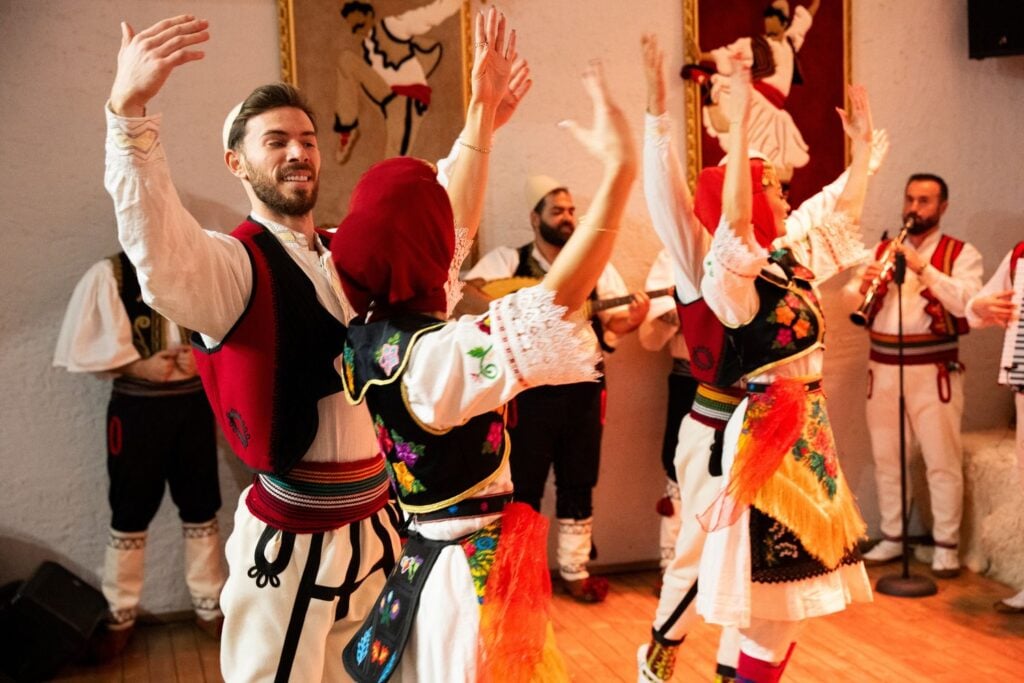

Fakte të Shpejta: Valle Shqiptare (Valle)
- Emër Valle (vallë popullore shqiptare)
- Forma: Zakonisht valle në grup rrethore ose në vijë, të lidhura dorë për dore, nga supet ose nga një rrip.
- Rajonet: Valle luftëtarësh të fuqishëm në veri; valle më të ngadalta dhe lirike në jug
- Më të famshmet: Shota (vallja e dasmës kosovare) dhe vallja rugovase (Vallja e Rugovës)
- Instrumente: çifteli, lahuta, def (daulle kornize), gajde (gajde), klarinetë dhe violinë në jug
Në këtë faqe
- Çfarë është Valle?
- Stilet Veriore dhe Jugore
- Vallet e famshme shqiptare
- Muzika dhe Instrumentet
- Vallëzimi në Dasma dhe në Diasporë
- Pyetje të shpeshta
Çfarë është Valle?
Vallja është vallja tradicionale popullore shqiptare dhe është pothuajse gjithmonë një akt i përbashkët dhe jo një performancë solo. Valltarët bashkohen në një vijë ose në një rreth të hapur, duke mbajtur duart, shpatullat ose rripat, dhe ndjekin një udhëheqës i cili vendos dhe shpesh improvizon hapat në krye të vijës. Vallja e lidh grupin në një trup të vetëm lëvizës, prandaj qëndron në zemër të çdo feste shqiptare, nga dasmat te festat kombëtare.Stilet Veriore dhe Jugore
Vallja shqipe ndahet përgjatë të njëjtës gjerësi vijë veri-jug si gjuha dhe muzika:- Vallet Veriore (Gege) janë energjike dhe shpesh luftarake. Ato përfshijnë valle dramatike burrash, ndonjëherë të kryera me shpata ose pushkë, që festojnë guximin dhe traditën luftëtare të malësive.
- Vallet e Jugut (Toskë dhe Lab) kanë tendencë të jenë më të ngadalta, më elegante dhe lirike, të shoqëruara shpesh nga kënga iso-polifonike magjepsëse e jugut, e cila njihet nga UNESCO si një kryevepër e trashëgimisë kulturore jomateriale.
Vallet e famshme shqiptare
- Shota. A fast, playful couple dance from Kosovo, a highlight of Albanian weddings.
- Vallja e Rugovës. A powerful men’s dance from the Rugova highlands, known for its dramatic movements and its display of strength and pride.
- Lugina rajonale nga zona si Tropoja, Dropulli dhe Labëria, secila me hapat, ritmin dhe karakterin e vet.
Muzika dhe Instrumentet
Vallja shqipe është e pandashme nga muzika shqipe. Në veri, çifteli (një lahutë me dy tela) dhe lahutë mbart melodinë, së bashku me padyshim (daulle me kornizë) dhe gajde (gajdë). Në jug, klarineta, violina dhe defi udhëheqin meloditë më të ngadalta dhe të zbukuruara. Ritmi i këtyre instrumenteve drejton ritmin e luginës dhe u tregon valltarëve kur të shpejtojnë ose të ngadalësojnë.Vallëzimi në Dasma dhe në Diasporë
Vallëzimi është zemra që rreh e festimeve shqiptare. Në një Dasmë Shqiptare, të ftuarit kërcejnë në luginë për orë të tëra, shpesh në formën e tyre më të mirë, ndonjëherë në kostume tradicionale popullore. Kjo traditë udhëtoi me diasporën: në të gjithë Shtetet e Bashkuara, ansamblet e valleve popullore dhe grupet komunitare shqiptare e mbajnë gjallë luginën, duke ua mësuar atë një brezi të ri në festivale, dasma dhe festa kombëtare si Dita e Pavarësisë.K’cimi of Tropojë: An Albanian Dance on the UNESCO List
In 2024, UNESCO added the k’cimi dancing of Tropojë to its Representative List of the Intangible Cultural Heritage of Humanity. It is the first Albanian dance to receive that recognition, joining iso-polyphony, which was inscribed in 2008.
UNESCO describes k’cimi as a festive dance performed at spontaneous gatherings and at weddings, birthdays, and village celebrations. Men, women, and children all take part, usually in couples who dance face to face without touching, raising and dropping their arms as they circle one another. Drums typically set the rhythm, and women may wave a handkerchief, usually a red one.
The dance belongs to the people of Tropojë in the northern highlands, where it is tied to springtime celebrations, the mountain landscape, and the flight of eagles. According to UNESCO, it is now danced year-round across Albania and by organized groups at festivals, and it is passed on informally as younger people watch and join their elders.
Named Albanian Dances at a Glance
Every region has its own repertoire, so no list is complete. The dances below are among the best documented, with the region each comes from and what sets it apart.
| Vallëzim | Rajon | Personazhi |
|---|---|---|
| K’cimi (Vallja e Tropojës) | Tropojë, northern Albania | Couples dance face to face without touching, arms rising and falling, to the beat of drums |
| Shota | Northern Albania and Kosovo | Synchronized steps over a strong rhythm, a fixture of weddings and folk festivals |
| Vallja e Rugovës | Rugova, Kosovo | Sword dance in which two men act out a mock battle for a girl’s hand |
| Highland sword dance | Northern Albanian highlands | Silent, rhythmic movement with no instruments or singing; versions also survive among the Arbëreshë of Italy |
| Vallja e Osman Takës | Çamëria | Named after the Cham Albanian dancer Osman Taka, who died in 1887, and the legend of his last dance |
| Pogonishte | Pogon, southern Albania | Open circle in 2/4 time, with two gentle bounces on every count |
| Napoloni | Central Albania, mainly Tirana | Wedding dance |
| Shamia e Beqarit | Danced at weddings | Closing ritual dance of the bride and groom, built around a handkerchief |
| Valje | Arbëreshë villages of Calabria, Italy | Semicircular chain dance through the streets at Easter, sung to epic songs |
The Osman Taka dance carries one of the best-known legends in Albanian folklore. Taka, from the Taka clan of Filiates, was held in Ioannina under sentence of death. Folk tradition says that when he was granted a final wish he asked to dance, and that he danced so beautifully that the Albanian gendarmes refused to execute him.
Shota also has a stage history. A professional ensemble named after the dance was founded by Kosovo Albanians in 1950, and in 1952 Olga Skovran choreographed Shota for the Serbian state ensemble Kolo. From there it spread to amateur groups across the former Yugoslavia and beyond.
War Dances and What Lord Byron Saw
Albanian war dances, known as valle luftarake, were historically performed before men left for battle. One old form is a circle dance around a fire that can go on for hours with only brief breaks, opened by songs that begin with battle cries.
Lord Byron watched a dance of this kind during his journey through the region in October 1809. In Canto II of Childe Harold’s Pilgrimage, published in 1812, he describes soldiers setting aside their sabres after a meal on the shore and dancing hand in hand, man linked to man, by the light of night fires while half singing, half shouting their song. An editor’s note to the poem calls the dance a remnant of the ancient Pyrrhic war dance.
The Rugova dance has a more recent stage life as well. Choreographer Slavko Kvasnevski created a formal version in 1971 for folk ensembles in Yugoslavia, which helped carry it far beyond the Rugova highlands.
The Gjirokastër National Folklore Festival
The most important showcase for Albanian dance is the National Folklore Festival, held on an open-air stage in the castle of Gjirokastër. It grew out of a National Festival of Song, Music and Dance held in Tirana in 1949 and again in November 1959. The first festival in Gjirokastër ran from October 8 to 16, 1968.
The festival then returned every five years, in 1973, 1978, 1983, and 1988. The 1995 edition moved to the citadel of Berat, and the event came back to Gjirokastër in 2000. Later editions followed in 2009 and 2015.
The most recent festival, the 11th, ran from June 24 to July 1, 2023, after a gap of eight years. Organized by Albania’s Ministry of Culture, it brought groups from the country’s 12 regions together with performers from Kosovo, North Macedonia, and Montenegro, plus Arbëreshë groups from Italy and groups from Greece.
Smaller regional festivals keep local styles on stage between editions. They include Sofra Dardane in Bajram Curri each June, Oda Dibrane in Peshkopi, Logu i Bjeshkëve in Kelmend each August, and a Cham dance festival in Saranda.
Ensembles, Bands, and Research
Albania’s National Song and Dance Ensemble was created in Tirana in 1957, with musician Çesk Zadeja and choreographer Gëzim Kaçeli as its first directors. It is one of the country’s oldest national performing groups still active, and it usually performs at the National Theatre of Opera and Ballet.
Beyond the instruments already mentioned, two classic band formats accompany the valle. In the north, dances are often driven by the pairing of surle, a wind instrument, and lodra, a large drum, or by a small group with çifteli, sharki, and flutes. In the south, the typical dance band is the saze, built around clarinet, violin, llautë, def, and accordion. You can read more about both traditions in our guide to Albanian traditional music.
Researchers have been recording these dances since the Second World War. The Albanian Folklore research project, which draws on the work of dance scholar Ramazan Bogdani, reports that about 5,000 dances have been described in Albania and Kosovo. It also notes couple dances danced by two women, a form it says has no equivalent among neighboring Balkan peoples.
Two Wedding Dances With a Ritual Role
Some dances are more than entertainment. Shamia e Beqarit, literally the bachelor’s handkerchief, is traditionally the final dance of an Albanian wedding. The bride and groom act out washing, wringing, and spreading a handkerchief, which is then burned while the guests sing, marking the end of the groom’s bachelor life. Napoloni, by contrast, is a wedding dance associated mainly with Tirana and central Albania.
The Vallje of the Arbëreshë in Italy
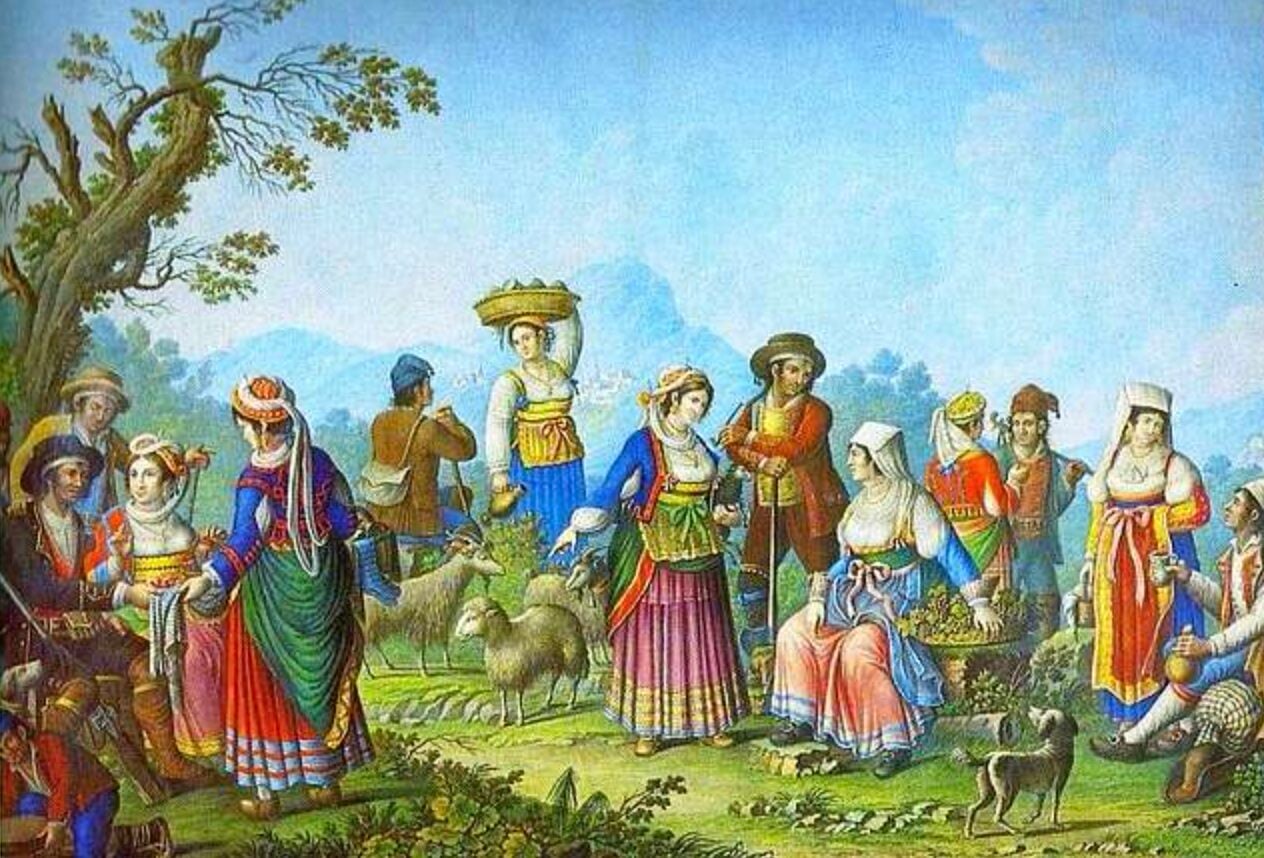
The Arbëreshë, whose ancestors settled in southern Italy between the 15th and 18th centuries, still dance the vallje at Easter. In Calabrian villages such as Civita, dancers in bright costumes of fuchsia, gold, and green link hands in a semicircular chain and wind through the streets. They sing epic songs about resistance to the Ottomans, including a song of Skënderbeu performed on Easter Tuesday, according to Italy’s national tourism board.
Pyetje të shpeshta
Si quhet vallja tradicionale shqiptare?
Quhet valle (shumësi valle ose vallet). Shumica e valleve shqiptare janë valle në grup, rrethore ose në vijë, të cilat kryhen dorë për dore, nga supet ose nga një rrip.Çfarë është vallja Shota?
Shota is a fast, playful Albanian couple dance from Kosovo, a highlight of weddings.Cili është ndryshimi midis valleve të Shqipërisë veriore dhe asaj jugore?
Vallet veriore (gege) janë energjike dhe shpesh luftarake, ndonjëherë të kryera me shpata, ndërsa vallet jugore (toske dhe labe) janë më të ngadalta dhe më lirike, shpesh të shoqëruara me këndim iso-polifonik.Cilat instrumente përdoren në muzikën vallëzimi shqipe?
Instrumentet e zakonshme përfshijnë çiftelinë, lahutën, defin (daulle me kornizë) dhe gajden (gajden) në veri, si dhe klarinetën, violinën dhe defin në jug.Lexime të Ngjashme
- Traditat e Dasmave Shqiptare
- Kostumet Popullore Shqiptare
- Gegërisht kundër toskërishtes: Dialektet e shqipes
- Nga janë shqiptarët?
Burimet
- UNESCO Intangible Cultural Heritage: K’cimi dancing of Tropojë
- Wikipedia: Gjirokastër National Folk Festival
- Euronews Albania: Gjirokastër 2023 National Folklore Festival doors open
- Embassy of Albania in Canada: National Folklore Festival in Gjirokastër
- Wikipedia: Albanian war dances
- Wikisource: The Works of Lord Byron, Childe Harold’s Pilgrimage, Canto II
- Albanian Folklore: Dances
- Italia.it: Easter in Calabria, the must-see rituals

Autor: Val Demiri
Valbona është redaktore dhe shkrimtare në ALB Connection, ku ajo mbulon njerëzit, bizneset dhe kulturën që formësojnë diasporën shqiptare. E diplomuar në gazetari në Universitetin e Ajovës, puna e saj përfshin profile të komunitetit, histori suksesi dhe reportazhe mbi jetën shqiptare në të gjithë SHBA-në, Evropën dhe më gjerë. Ajo tërhiqet nga historitë që festojnë arritjet e shqiptarëve dhe e mbajnë komunitetin të lidhur përtej kufijve.