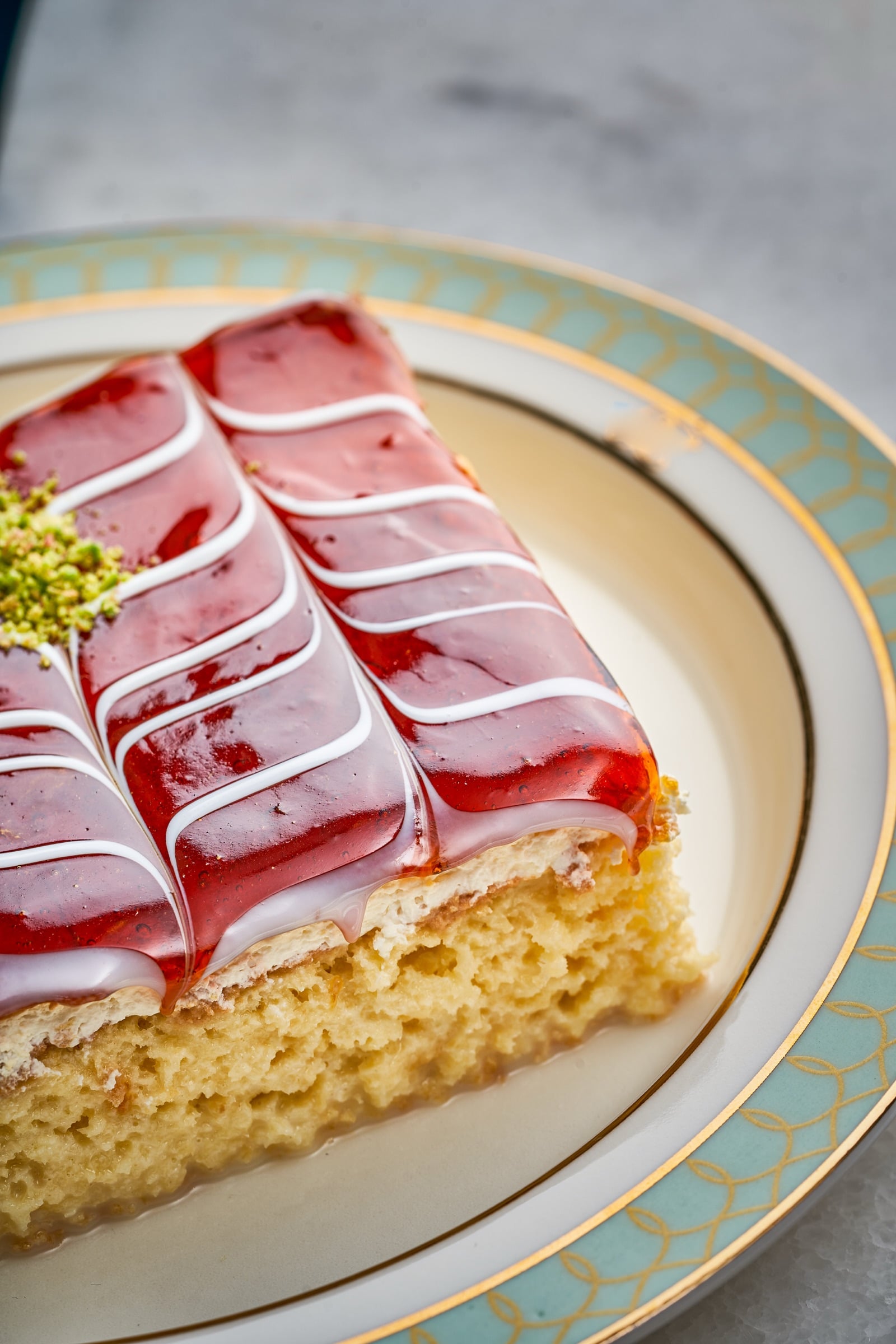
Revani is a sweet semolina cake soaked in sugar syrup, popular across Albania and the wider Balkans and eastern Mediterranean. It is dense, moist and lightly sweet, made from semolina and yogurt and finished with a citrus or vanilla syrup that softens the crumb. Albanian families serve it at holidays, weddings and Sunday coffee, and it keeps well for days, which is part of why it has stayed on the table for generations.
This guide covers what revani is, where it comes from, the ingredients you need, a step-by-step method, and the tips that make the difference between a dry cake and a properly syrup-soaked one.
What Is Revani?
Revani (also written ravani) is a traditional semolina cake bound with yogurt and eggs, baked until golden, then drenched in syrup while it is still hot. The syrup is what defines it: as it soaks in, the semolina swells and the cake turns tender and glossy. The result sits somewhere between a cake and a pudding, closer in spirit to baklava than to a light sponge, because both rely on syrup for their character.
It is a staple of Albanian home baking and a fixture in bakeries. If you have browsed a display of Albanian sweets, revani usually sits near the trileçe and the syrup pastries. For the wider context of how it fits the national table, see our guide to Albanian cuisine.
A Short History
Revani belongs to a family of semolina and syrup desserts found from the Balkans through Turkey and the Levant, a legacy of centuries of shared Ottoman-era cooking. Versions appear in Greece (ravani), Turkey (revani) and across the former Yugoslav republics, each with small differences in flavoring and syrup. In Albania it is firmly part of the home and holiday repertoire, made from pantry staples that were always on hand: semolina, yogurt, eggs, sugar and a little citrus.
Ingredients
Makes one 9×13 inch dish, about 12 to 16 pieces.
For the cake
- 2 cups fine semolina
- 1 cup all purpose flour
- 1 cup plain yogurt
- 4 eggs
- 1 cup sugar
- 3/4 cup vegetable oil or melted butter
- 1 teaspoon baking powder
- 1/2 teaspoon baking soda
- Zest of 1 lemon
- 1 teaspoon vanilla
For the syrup
- 2 cups sugar
- 2 cups water
- Juice of 1/2 lemon
- Optional: 1 strip lemon peel or a splash of orange blossom water
How to Make Revani, Step by Step
- Make the syrup first. Combine the sugar and water, bring to a boil, then simmer about 10 minutes until slightly thickened. Stir in the lemon juice and set aside to cool. The syrup must be cool when it meets a hot cake: this is the single most important rule.
- Beat the eggs and sugar until pale and slightly foamy, about 3 minutes.
- Add the wet ingredients. Whisk in the yogurt, oil, lemon zest and vanilla.
- Fold in the dry ingredients. Combine the semolina, flour, baking powder and baking soda, then fold into the wet mixture until just smooth. Rest the batter 10 minutes so the semolina absorbs moisture.
- Bake. Pour into a greased dish and bake at 350F (175C) for 30 to 35 minutes, until golden and set in the center.
- Soak. As soon as it comes out, pour the cool syrup evenly over the hot cake. Let it stand at least 2 hours, or overnight, so the syrup soaks through.
- Cut and serve in squares or the traditional diamonds, at room temperature.
Tips for the Best Revani
- Hot cake, cool syrup. Reverse it and the cake turns gummy on top and dry underneath.
- Do not overmix. Fold the semolina in gently so the crumb stays tender.
- Let it rest. Revani is better the next day, once the syrup is fully absorbed.
- Toast the semolina lightly beforehand for a deeper, nuttier flavor.
Variations
- Coconut revani: add 1/2 cup shredded coconut to the batter.
- Orange: swap lemon for orange zest and juice.
- Rose or orange blossom: scent the syrup for a more eastern Mediterranean flavor.
How to Serve It
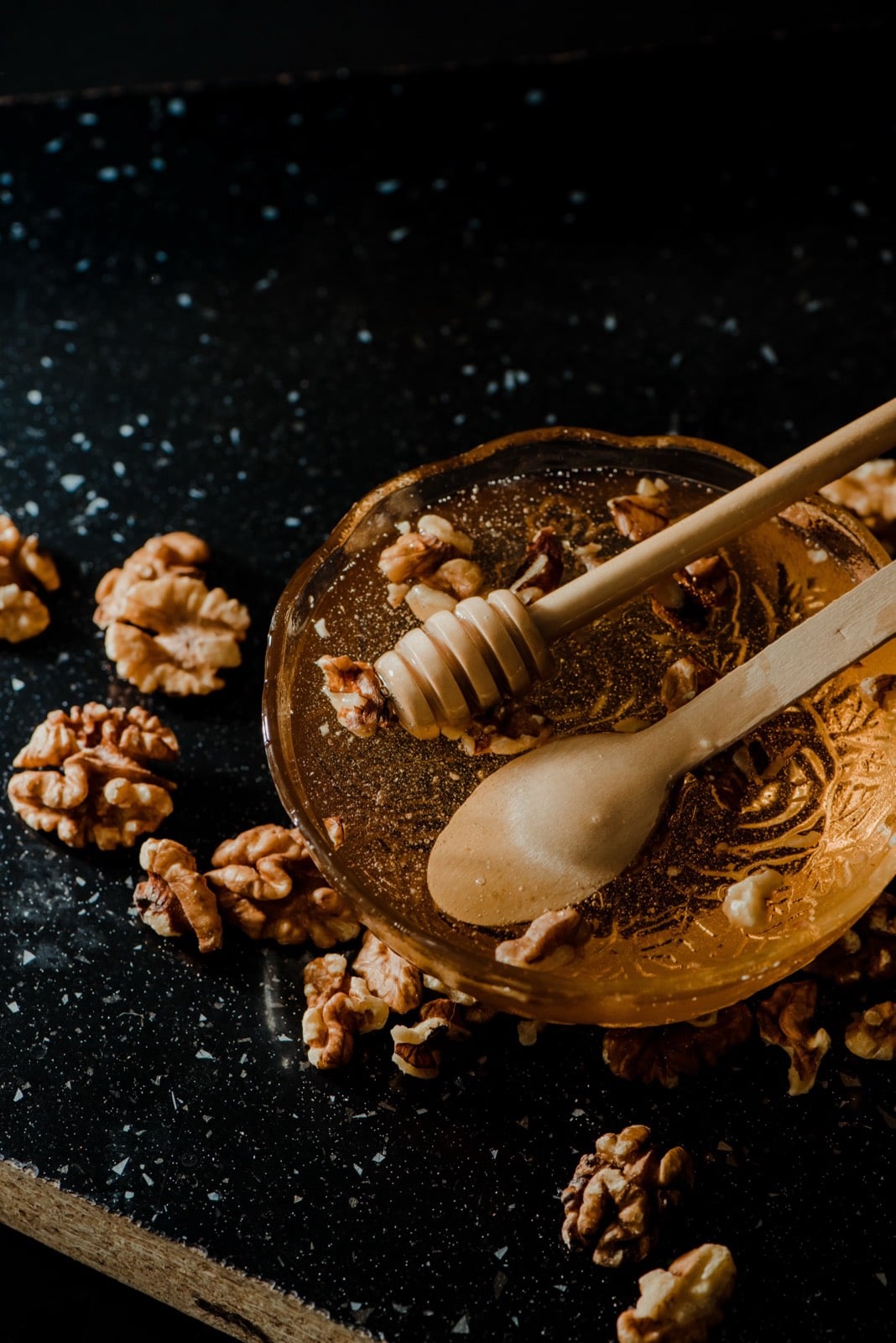
Revani is a coffee cake in the truest sense. Albanians serve it with a small cup of strong coffee, and the ritual matters as much as the cake: see our piece on Albanian coffee tradition. A spoon of thick yogurt or a scatter of chopped walnuts on top is common. It also holds its own on a holiday sweets table alongside baklava and trileçe.
Where to Find Albanian Sweets Near You
If baking is not on the agenda, many Albanian bakeries make revani fresh. Browse our guide to the best Albanian bakeries and our roundup of Albanian restaurants in NYC, or explore more traditional dishes in popular foods in Albania. Own an Albanian bakery or restaurant? List it free on ALB Connection so families can find you.
Revani Across the Region
Revani is one of the great shared desserts of the former Ottoman world, and every country that inherited it claims a slightly different version. Knowing the names helps in bakeries and on menus from Astoria to Istanbul.
| Name | Where | How it differs |
|---|---|---|
| Revani | Albania, Kosovo, North Macedonia | Fine semolina and yogurt or eggs, lemon syrup, cut in diamonds; often plain on top or with a single nut |
| Revani | Turkey | Very similar; sometimes flavored with rosewater or orange and topped with coconut |
| Ravani | Greece | Often made with coarser semolina and orange syrup; the town of Veria is famous for it |
| Basbousa, harisa, namoura | Egypt, the Levant, North Africa | Semolina soaked in syrup, usually with coconut and an almond on each piece |
Albania’s Syrup Cakes Compared
Albanian home baking has a whole family of cakes finished with syrup, and they are easy to confuse. This is how revani sits among its cousins.
| Cake | Base | Finish | When it is served |
|---|---|---|---|
| Revani | Semolina, eggs, yogurt | Lemon sugar syrup | Everyday and holiday tables, with coffee |
| Shëndetlie | Flour, honey, walnuts, spices | Honey syrup | Weddings, Bajram, winter holidays |
| Trileçe | Sponge cake | Soaked in three milks, caramel on top | Restaurants and birthdays; the most popular modern dessert |
| Baklava | Layered filo and nuts | Sugar syrup | Bajram, New Year, weddings |
| Kadaif | Shredded pastry and nuts | Sugar syrup | Holidays, especially in Kosovo and the north |
Revani is the lightest of the group and the quickest to make, which is why it is the one most often baked on an ordinary weeknight. For the others, see the baklava recipe, the trileçe recipe and the full Albanian recipe collection.
Ingredient Notes
| Ingredient | Notes |
|---|---|
| Semolina | Fine semolina, sold as semolina flour or as irmik in Turkish and Balkan shops; coarse semolina gives a grainy, drier cake. In the US, Bob’s Red Mill and Middle Eastern grocers stock the fine grade |
| Yogurt | Full-fat plain yogurt; it keeps the crumb tender and gives the slight tang that balances the syrup |
| Eggs | Beaten well with the sugar until pale; this is where the cake gets its lift, so do not rush it |
| Lemon | Zest in the batter and juice in the syrup; orange works as a substitute and is the Greek preference |
| Coconut | Optional; a Turkish and Egyptian habit that many Albanian families have adopted |
| Nuts | An almond or walnut half on each diamond is the traditional finish |
Revani is forgiving of almost everything except the syrup, and the ingredient list is short enough that quality shows. Buy the fine semolina and the full-fat yogurt and the rest takes care of itself.
Storing and Freezing
Revani keeps for four to five days covered at room temperature, and the syrup keeps it moist for most of that time; refrigeration firms the crumb and dulls the flavor, so leave it out unless the kitchen is very warm. It freezes well once fully soaked and cooled: wrap the cut diamonds individually and thaw them at room temperature for an hour. The unsoaked cake can also be baked ahead and syruped on the day, which is the trick most Albanian bakeries use for holiday orders.
Frequently Asked Questions
What is revani made of?
Revani is made from semolina, yogurt, eggs, sugar and oil or butter, baked and then soaked in a cool sugar and lemon syrup.
Is revani Albanian or Turkish?
Both, and more. Revani is a shared Ottoman-era dessert eaten across Albania, Turkey, Greece and the Balkans, with small regional differences. In Albania it is a traditional home and holiday cake.
Why is my revani dry?
The most common cause is syrup that was too hot, or too little of it. Always pour cool syrup over a hot cake and use the full amount, then let it rest at least two hours.
How long does revani keep?
Stored covered at room temperature, revani keeps three to four days and often tastes better on day two once fully soaked.
Can I make revani without eggs?
Yes. Replace the eggs with an extra half cup of yogurt and a tablespoon of oil, though the crumb will be a little denser.
More Albanian Recipes
Explore the full collection on our Albanian recipes page, or try trileçe and baklava next.
Sources
- Revani, overview and regional variations (Wikipedia)
- Semolina in baking (Encyclopaedia Britannica)
- Wikipedia: Revani (regional names and variants)

Author: Val Demiri
Valbona is an editor and writer at ALB Connection, where she covers the people, businesses, and culture shaping the Albanian diaspora. A journalism graduate of the University of Iowa, her work spans community profiles, success stories, and features on Albanian life across the US, Europe, and beyond. She is drawn to stories that celebrate Albanian achievement and keep the community connected across borders.