Prefer to eat out? Find Albanian restaurants near you, searchable by city or ZIP code.
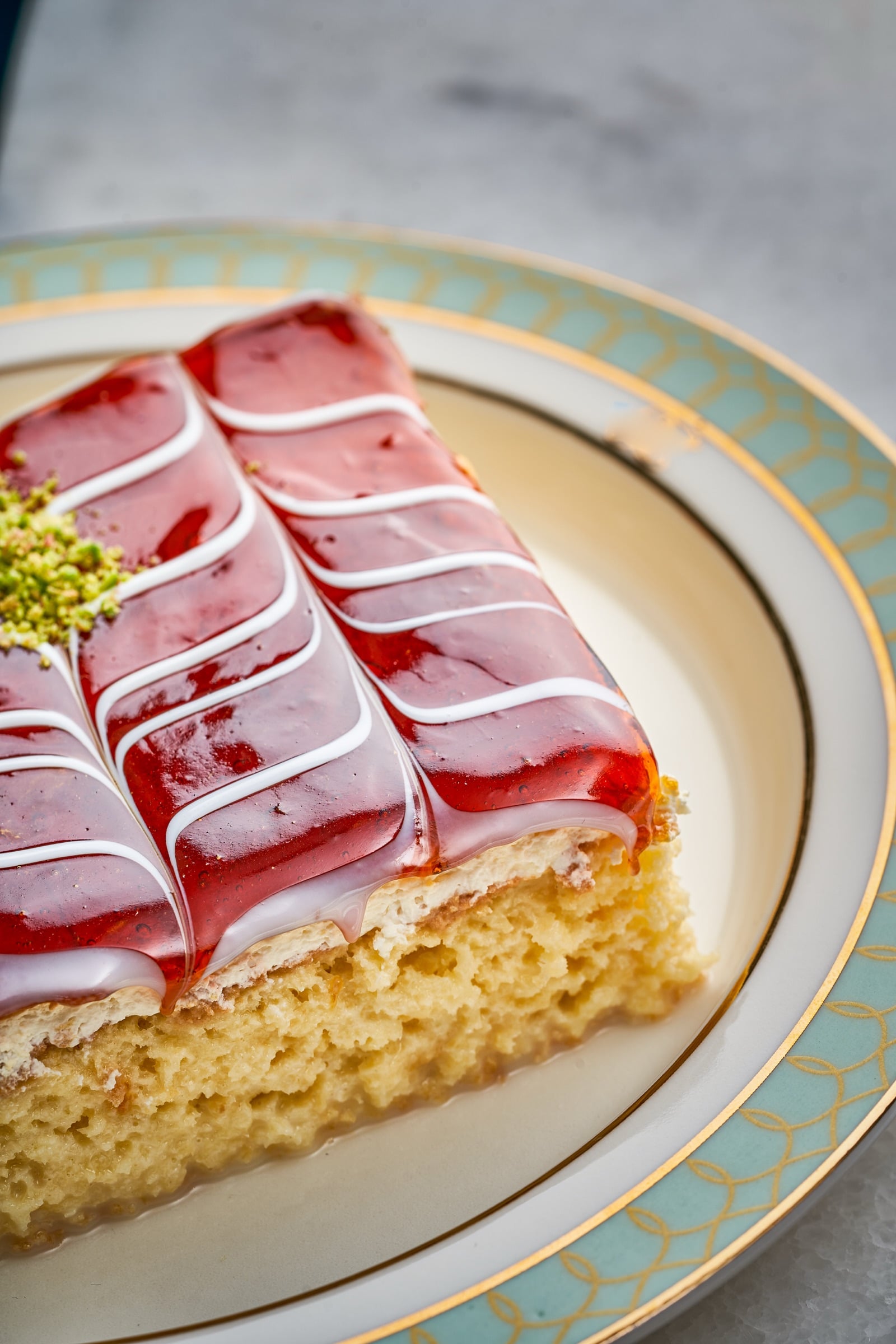
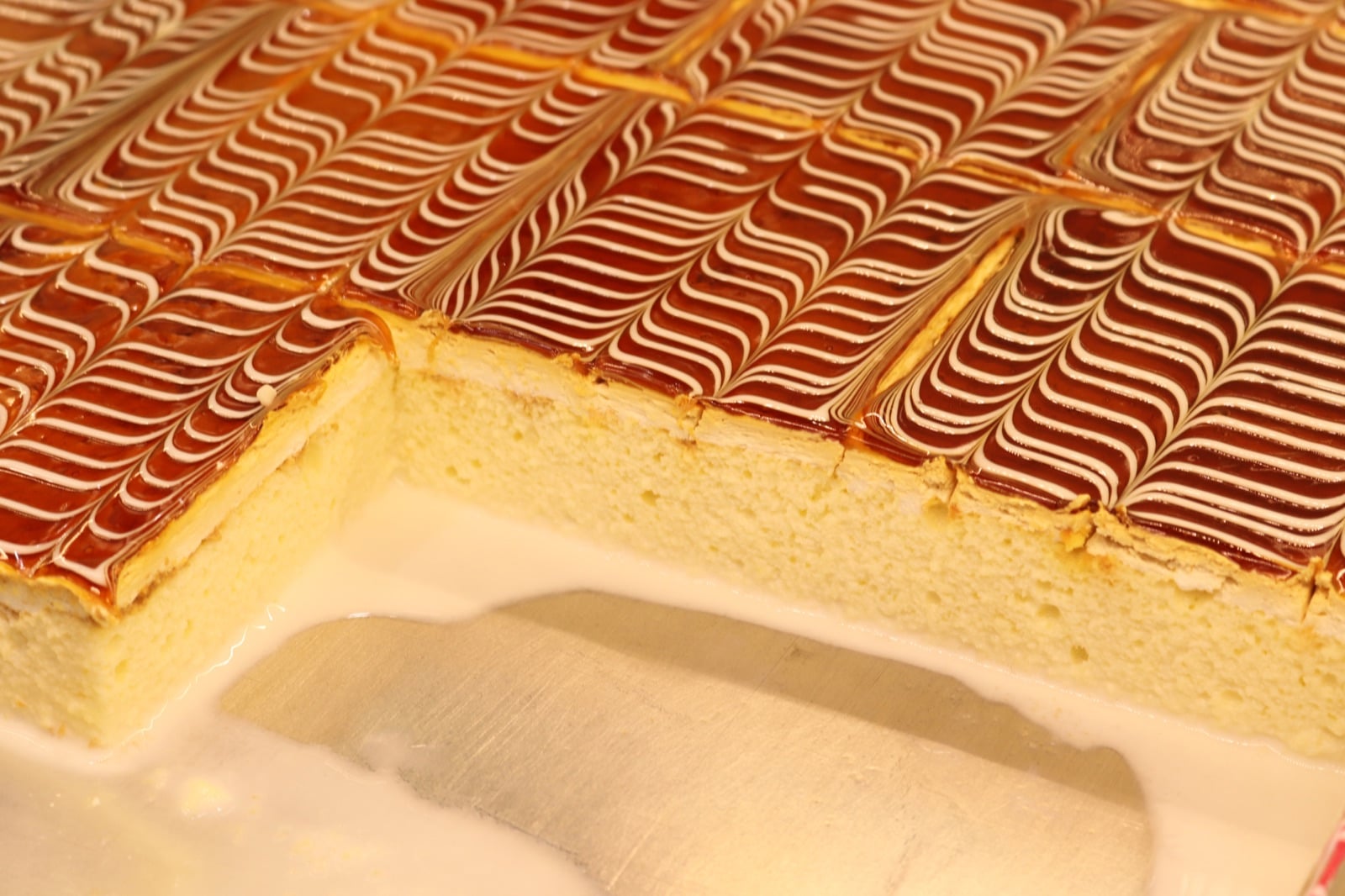
Trileçe (also written trilece, and trileqe in Kosovo) is a sponge cake soaked in a mixture of milks and finished with a thin caramel topping. It is sold in pastry shops across Albania, Kosovo, North Macedonia, Turkey and much of the Balkans. The name is the Spanish tres leches, “three milks”, in Albanian spelling, and the cake is a Balkan version of the Latin American tres leches cake. The most detailed reporting on its history, by Kosovo 2.0, traces the caramel-topped version to a Tirana restaurant kitchen in 2005.
Our recipe card comes first. After it: what the name means, how the cake reached Albania and spread through the region, what sets the Balkan version apart, and where to find trileçe in the US.
Albanian Trileçe (Tres Leches Cake)
Ingredients
Method
- Preheat your oven to 350°F (175°C). Grease a 9x13 inch (23x33 cm) baking pan with butter or cooking spray and lightly dust with flour.
- Separate the eggs. Place the whites in a large, clean mixing bowl and the yolks in a separate bowl.
- Beat the egg whites with a pinch of salt using an electric mixer on high speed until stiff peaks form, about 3 to 4 minutes.
- In the separate bowl, beat the egg yolks with the sugar for 8 to 10 minutes until the mixture is pale, thick, and falls in ribbons from the whisk. This step is critical, do not rush it. Add the vanilla extract.
- Sift the flour and baking powder together. Gently fold the flour mixture into the yolk-sugar mixture in three additions, using a spatula with slow, sweeping motions to keep the batter light.
- Fold the beaten egg whites into the batter in three additions. Be very gentle, you want to preserve as much air as possible. The batter should be light and fluffy.
- Pour the batter into the prepared pan and spread it evenly. Bake for 22 to 25 minutes, until the top is golden and a toothpick inserted in the center comes out clean. Do not overbake.
- While the cake bakes, whisk together the whole milk, heavy cream, sweetened condensed milk, and vanilla extract in a large bowl or measuring jug until fully combined.
- Remove the cake from the oven and let it cool in the pan for 10 minutes. While still warm, poke holes all over the surface using a fork or skewer, about 40 to 50 holes evenly spaced.
- Slowly and evenly pour the three-milk mixture over the entire surface of the warm cake. Pour in stages, let each addition absorb for a minute before adding more. The cake will seem very wet, but it will absorb the liquid as it cools.
- Cover the pan with plastic wrap and refrigerate for at least 4 hours, or ideally overnight. The longer it soaks, the better the texture and flavor.
- When ready to serve, make the caramel. Combine the sugar and water in a heavy-bottomed saucepan over medium heat. Stir gently until the sugar dissolves, then stop stirring completely.
- Let the sugar cook undisturbed for 8 to 12 minutes, swirling the pan occasionally, until it reaches a deep amber color. Watch carefully, it can go from perfect to burnt in seconds. If using lemon juice, add it when the sugar first melts.
- Remove from heat immediately. If using butter, stir it in quickly (it will bubble vigorously). Let the caramel cool for about 1 minute, it should still be pourable but not smoking hot.
- Pour the caramel evenly over the chilled cake, tilting the pan to spread it across the entire surface. Work quickly as the caramel sets fast. Let it cool and harden for 5 to 10 minutes before serving.
Notes
What Is Trileçe?
Trileçe is a light sponge cake that is pricked while warm, soaked in a mixture of milks, chilled, and covered with caramel. This recipe soaks it in whole milk, heavy cream and sweetened condensed milk, but bakers vary the mix. Kosovo 2.0 found that cost and availability led Albanian pastry shops to use two milks (condensed and evaporated, or condensed and plain milk), all three, or just one. In Istanbul, Atlas Obscura reported bases made with flour or semolina, soaked in just about any milk, from sheep, goat or cow to water buffalo, and usually topped with caramel.
What Does Trileçe Mean?
The name is Spanish. Tres leches means “three milks”, and trileçe is that phrase written the Albanian way. Albanian tri does mean three, but the Albanian word for milk is qumësht, so leçe is simply the Spanish leches. The Turkish food writer Refika Birgül made the same point in Hürriyet in 2015: the name is Hispanic in origin, not Albanian.
According to Kosovo 2.0, the chef who first made the caramel-topped cake in Tirana called it “trelece”, an Italianized tres leches, and by the time he left Tajvan it was spelled trileçe. Each language then fitted it to its own alphabet:
- Trileçe: standard Albanian, and also the Turkish spelling.
- Trilece: the same word without the cedilla.
- Trileqe: the usual Kosovo spelling (Bota Sot prints a recipe under this name).
- Trileće: the form that passed from Kosovo into the Slavic languages of former Yugoslavia.
How Trileçe Came to Albania
For such a widely sold cake, its history is short and was poorly documented until recently. The most thorough account is a 2024 investigation by the journalist Altin Raxhimi for Kosovo 2.0, a magazine based in Prishtina, built on interviews with the cooks involved. It is one reporter’s reconstruction, but it is the only account we found that names its witnesses. Its main steps:
| When | Where | What happened (per Kosovo 2.0) |
|---|---|---|
| Spring 2002 | Piazza restaurant, Tirana | Renata Casadei, an Italian restaurateur from near Trieste, became chef and made a tres leches from a Dominican friend’s recipe, topped with whipped cream and fruit. It did not catch on |
| April 2005 | Tajvan, Rinia Park, Tirana | Ignazio Piazza, a Sicilian-born chef, layered a sponge with cream and diluted condensed milk, topped it with a thin liquid caramel glaze and called it “trelece”. The restaurant was soon selling 300 portions a day |
| Fall 2006 | Western Kosovo | A restaurant owner waited a week to get the recipe from a Tajvan pastry cook |
| 2007 | Albania; Tetovo, North Macedonia | Trileçe had spread to bakeries, pastry shops and restaurants across Albania. A Tetovo pastry shop learned it from a trainer from Albania |
| 2008 | Northern Kosovo, Serbia, Istanbul | It crossed into northern Kosovo and Serbia, and at the end of the year debuted in Istanbul’s Fatih district through relatives of the Tetovo family |
| 2014 and 2015 | Turkey | The most Googled recipe in the country, before the craze eased in the mid-2010s |
Turkish sources agree that the cake arrived there from the Albanian world. Birgül wrote in Hürriyet that it came to Turkey as an “Albanian dessert”, first known from a few pastry shops in Fatih and from families of Albanian origin.
Other Origin Stories
The best-known alternative is the soap-opera story. Atlas Obscura wrote in 2015 that many sources credited Latin American, especially Brazilian, soap operas with bringing tres leches to Turkey, adding that Hürriyet credits Albania, where soaps were also popular. A 2015 Hürriyet piece quoted a gourmet friend of Albanian origin who said the cake became popular in Albania because South American series were so widely watched there. In another version, Albanian viewers of 1990s telenovelas reverse-engineered the cake. Matador Network pointed out in 2019 that no one has named the episode, or even the series, and Kosovo 2.0 traced the story to something the Istanbul chef Arda Türkmen heard from a gym acquaintance, which then made its way into Atlas Obscura and English Wikipedia.
Claims that trileçe is an old Albanian, Balkan or Ottoman dessert are not supported by the record. The earliest online mentions Raxhimi could find date from December 2009 in Albania and 2012 in Turkey, and he notes a recent film in which migrants in 1950s Istanbul run a cake counter named Trileçe, half a century before the name existed. A chef quoted by Culinary Backstreets, as relayed by Mitú, remembered it as a traditional Albanian cake from the 1940s; we found no documentation for that.
The written record of tres leches itself is thin, and sources differ. Nestlé is said to have printed a recipe on its cans, in the early 1900s according to Mitú or around the 1940s according to Atlas Obscura. Raxhimi found none on mid-century Mexican cans, and Food52‘s Mandy Baca found no recipe in Mexican or Nicaraguan cookbooks before the 1970s, though people she interviewed remembered the cake from the 1940s.
The Caramel Top: How the Balkan Version Differs
This recipe builds the sponge in three steps: egg yolks beaten with sugar for 8 to 10 minutes to a thick, pale ribbon, the sifted flour and baking powder folded in, then the whites, whipped separately to stiff peaks, folded in last. The card warns that the soaked cake will seem very wet, but it absorbs the liquid as it cools. The three-milk mixture in this recipe combines whole milk, heavy cream and condensed milk, and the card’s notes allow evaporated milk in place of the cream. The ratio matters enormously, too much liquid and the cake falls apart, too little and you lose the characteristic melt-in-your-mouth quality that makes trileçe irresistible. The caramel is the clearest difference. Tres leches in Latin America and the US is usually finished with something white: Food52 describes the Nicaraguan cake sold in Miami as often topped with whipped meringue or marshmallow fluff and a maraschino cherry, and Casadei’s 2002 Tirana version was crowned with whipped cream, berries and pineapple. Atlas Obscura described the Istanbul trileçe as usually topped with caramel, which it said is not found on the American version. According to Kosovo 2.0, Ignazio Piazza’s first tray in 2005 used a thin layer of liquid caramel glaze from a can, the kind that sometimes tops cheesecakes. Kosovo recipes such as one in Bota Sot also finish the cake with caramel, with melted chocolate as an option. This recipe cooks sugar and water to a deep amber, lets it cool for about a minute and pours it over the chilled cake, where it sets in 5 to 10 minutes.Trileçe Across the Balkans, Turkey and the Diaspora
Trileçe varies from shop to shop and country to country. Kosovo 2.0 reports that in Kosovo it became as popular as in Albania, if not more, under the spelling trileqe. In Turkey bakers added their own touches: thin jelly coatings of strawberry or lemon, a pinch of ground pistachio as on baklava, and stripes of white cream drawn through the caramel into waves. The same report describes how migrant bakers carried it abroad, to Kosovar cafés in London and Southsea, Albanian-run Italian restaurants in France, Serb-run pizza parlors in American strip malls and Turkish döner shops in Canada. Look for it at Albanian restaurants as part of a wider tour of Albanian food. The “three milks” have also been reinterpreted as three animals. Türkiye Today wrote in 2025 that the best Turkish trileçe use fresh sheep, goat and cow milk, while Kosovo 2.0 says that experiment did not work, and Birgül argued in Hürriyet that the three are forms of milk (liquid milk, cream and milk caramel), not three animals. In the Americas, Atlas Obscura notes, tres leches is often soaked in evaporated milk, condensed milk and heavy cream or whole milk, close to the mix in this recipe. Kosovo 2.0 also notes that in some places trileçe has become a staple dessert for iftar, the evening meal that breaks the Ramadan fast. Its make-ahead nature helps: the card’s notes recommend making it a full day before serving, and it keeps up to 3 days in the refrigerator.Tips for the Perfect Trileçe
The most common mistake when making trileçe is not whipping the eggs enough. The egg yolks and sugar should be beaten for a full 8 to 10 minutes, until the mixture is pale and thick and falls in ribbons from the whisk. The whites are whipped separately to stiff peaks, about 3 to 4 minutes, and folded in last. This aeration is what gives the sponge its structure and its ability to absorb liquid without collapsing. When adding the milk mixture, pour it slowly and evenly over the entire surface of the warm cake. First let the cake cool in the pan for 10 minutes, then poke holes all over it with a fork or skewer, about 40 to 50 of them, as the card says, so the milk reaches the center. Let the cake absorb the mixture in the refrigerator for at least 4 hours, though overnight is ideal. The caramel requires confidence and attention. Sugar and water are cooked until they reach a deep amber color, if you pull it too early, the caramel will be pale and too sweet; too late and it will be bitter and burnt. Take it off the heat, let it cool for about 1 minute so it is still pourable but no longer smoking hot, then pour it over the chilled cake and tilt the pan to spread it evenly. It sets into a glossy shell in 5 to 10 minutes.How to Serve Trileçe
Trileçe is best served cold, straight from the refrigerator, and that is also where it has to live. It is a cake soaked in milk and cream, so do not leave it at room temperature for more than 2 hours, or 1 hour on a day above 90°F (32°C), and put leftovers straight back in the refrigerator. The contrast between the cool, creamy cake and the crisp caramel topping is part of its magic. Cut it into squares or rectangles with a sharp knife, wiping the blade between cuts for clean edges. Trileçe needs no accompaniment. In Turkey, shops sometimes finish it with a pinch of ground pistachio or ribbons of cream across the caramel (Kosovo 2.0). If you serve coffee alongside, our guide to the Albanian coffee tradition explains how it is made. For a complete Albanian meal, serve trileçe after savory dishes like tavë kosi or qofte. Being served cold and made ahead, it is easy to put on the table after a hot main course.Trileçe at a Glance
Every number below comes from the recipe card at the top of this page. The origin and name rows are from Kosovo 2.0’s reporting and the last row is official US food-safety guidance.
| Item | Details |
|---|---|
| Course | Dessert |
| Origin | A Balkan version of Latin American tres leches. The first documented caramel-topped trileçe was made in Tirana in 2005 (Kosovo 2.0); other origin stories are unproven |
| Other names | Trilece, trileqe (Kosovo), trileće (former Yugoslavia); tres leches in Spanish |
| Main ingredients | Eggs, sugar, flour, whole milk, heavy cream, sweetened condensed milk, caramel |
| Prep time | 20 minutes |
| Cook time | 25 minutes (the sponge bakes for 22 to 25 minutes) |
| Soaking time | 4 hours at least, or overnight |
| Total time | 4 hours 45 minutes |
| Yield | 12 servings from a 9×13 inch (23×33 cm) pan |
| Oven temperature | 350°F (175°C) |
| Storage | Covered, in the refrigerator, for up to 3 days |
| Safe storage (USDA) | Keep at 40°F (4°C) or below. Discard cake left out for more than 2 hours, or 1 hour above 90°F (32°C) |
Shopping, Make-Ahead and Storage Notes for US Kitchens
- Shopping: nothing in the card needs a specialty store. Do not confuse the two canned milks. The soak uses one 14 oz (397 g) can of sweetened condensed milk. Evaporated milk appears only in the card’s notes, as a swap for the heavy cream when you want a lighter cake.
- Optional items: the card marks the butter and the lemon juice in the caramel as optional. Butter makes the caramel smoother and lemon juice helps prevent crystallization. The method is the same with or without them.
- Make-ahead: the card’s notes recommend making the cake a full day ahead. Bake, soak, cover with plastic wrap and refrigerate. Make the caramel when you are ready to serve, pour it over the chilled cake, and give it 5 to 10 minutes to harden.
- Storage: trileçe is served cold and is never reheated, so the refrigerator does all the safety work. The card’s limit of 3 days sits inside the 3 to 4 days that FoodSafety.gov’s cold storage chart allows for custard pies, the closest item on that chart. For comparison, the USDA says plain milk keeps seven days refrigerated.
For another dessert that can be made ahead, see our Albanian baklava recipe, and serve either one with coffee made the traditional way, described in our guide to the Albanian coffee tradition.
Where to Buy Trileçe in the US
Trileçe is a bakery staple in Albania and Kosovo. In the US, look where Albanian and other Balkan communities shop:
- Albanian bakeries and pastry shops. Our guide to the best Albanian bakeries lists bakeries to try, and our restaurant finder covers Albanian restaurants that serve dessert.
- Balkan and Turkish bakeries and cafés. The cake spread through Kosovo, North Macedonia, Serbia, Bosnia and Turkey, so shops run by those communities may stock it. The label may say trileçe, trilece, trileqe or trileće.
- Boxed kits. Dr. Oetker, the German food company, packs the sponge, milk and caramel components into pouches at factories near Izmir, and other Turkish ingredient makers followed, and Kosovo 2.0 reports these reached specialty food shops in the Americas. Check the shelves of Balkan, Turkish or Middle Eastern grocers.
- Latin American bakeries. They sell tres leches, the parent cake, usually topped with whipped cream or meringue rather than caramel.
Ask before you buy whether it has the caramel top, since some shops finish it differently.
Other Albanian Cakes
If you searched for an Albanian cake more generally, trileçe is the newest arrival. Two older syrup-soaked desserts are revani, a semolina cake soaked in a light syrup (Atlas Obscura), and baklava. See our revani recipe and baklava recipe.
Frequently Asked Questions
Is trileçe Albanian or Turkish?
Neither originally. It is a version of the Latin American tres leches cake. The caramel-topped trileçe took shape in Albania, where the earliest documented version was made in a Tirana restaurant in 2005, and spread from there to Kosovo, North Macedonia and, from late 2008, Turkey, where the craze peaked in the mid-2010s.
What is the difference between trileçe and tres leches?
Mainly the topping. Trileçe is finished with a thin layer of caramel, while tres leches in Latin America and the US is usually topped with whipped cream or meringue. The soaked sponge underneath is the same idea.
Where can I buy trileçe in the US?
Try Albanian bakeries and restaurants first, then Balkan and Turkish bakeries and grocers, which may also sell boxed trileçe kits made in Turkey. Our Albanian bakeries guide is a good place to start.
What does trileçe mean?
Trileçe means “three milks”. It is the Spanish name tres leches written the Albanian way: Albanian “tri” does mean three, but “leçe” is simply the Spanish “leches”, since the Albanian word for milk is qumësht. It is also spelled trilece, trileqe (in Kosovo) and trileće (in the languages of former Yugoslavia), and Turkish took the name trileçe from Albanian.Can I make trileçe without the caramel topping?
Yes, though the caramel is what distinguishes Albanian trileçe from other versions. If you prefer, you can top the soaked cake with whipped cream instead, which is more common in Latin American tres leches. You can also finish the cake with a simple dusting of cinnamon or cocoa powder for a less labor-intensive but still delicious alternative.How far in advance can I make trileçe?
Trileçe actually improves with time, making it an ideal make-ahead dessert. The card’s notes suggest making it a full day ahead, and they give it up to 3 days, covered, in the refrigerator, counted from the day you soak it. Keep it at 40°F (4°C) or below the whole time. The USDA says plain milk keeps about seven days in the refrigerator; the card is more cautious with a milk-soaked cake and stops at 3 days. Make the caramel when you are ready to serve, as the card says, so the topping stays crisp.Why is my trileçe soggy or falling apart?
This usually means either the sponge was not whipped enough (resulting in a dense cake that cannot support the liquid) or too much milk mixture was added. The sponge should be very light and airy before baking. Also, make sure to pour the milk mixture gradually and allow each addition to absorb before adding more. The cake should be moist and spoonable, but it should still hold its shape when cut.Can I use a different type of milk?
The traditional combination is whole milk, heavy cream, and condensed milk, but variations exist. For a lighter version, the card’s notes suggest swapping evaporated milk for the heavy cream. You can also use low-fat milk, but the texture will not be as luxurious. Plant-based milks can be used for a dairy-free version, though the flavor and texture will differ significantly from the traditional recipe.Sources
- Wikipedia: Trileçe
- Wiktionary: trileçe
- Kosovo 2.0: Ignazio’s spell, by Altin Raxhimi (2 October 2024)
- Atlas Obscura: How a South American Soap Opera Created a Turkish Dessert Craze, by Dan Nosowitz (12 November 2015)
- Matador Network: How Tres Leches Became a Phenomenon Outside Central America, by Dan Arnett (21 February 2019)
- Hürriyet: Trileçe hakkında konuşmalıyız, by Refika Birgül (11 April 2015)
- Hürriyet: Trileçe kazan dünya kepçe (1 March 2015, updated 25 June 2018)
- Food52: The Long, Winding Origin Story of Tres Leches Cake, by Mandy Baca (17 January 2020)
- Mitú: The History of Tres Leches Cake, by Camila Barbeito (21 February 2024)
- Türkiye Today: This year’s food sensation, by Lisa Morrow (7 March 2025)
- Bota Sot: Si të përgatisim një trileqe (8 December 2015)
- USDA Food Safety and Inspection Service: Leftovers and Food Safety
- FoodSafety.gov: Cold Food Storage Chart
- USDA Ask FSIS: How long can you keep dairy products like yogurt, milk, and cheese in the refrigerator?

Author: Dardanë Halimi
Dardanë Halimi is a writer and communications professional with an M.A. in Writing, Rhetoric, and Technical Communication from James Madison University. Her work focuses on storytelling, digital content, higher education, and strategic communication, with experience writing for academic, nonprofit, and marketing organizations in both the United States and Kosovo.