I uritur? Gjeni restorante shqiptare pranë jush, i kërkueshëm sipas qytetit ose kodit postar.
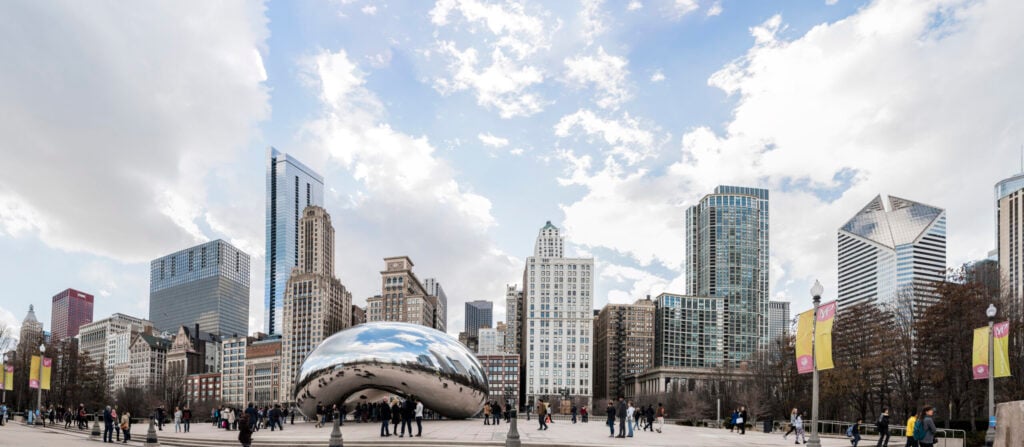
Illinois is home to one of the Midwest’s oldest and most established Albanian communities, centered on the Chicago metropolitan area. With an institutional through-line of Orthodox parish, fraternal organization, and Albanian-language press running continuously for more than a century, Chicago’s Albanian community is one of the most durable in the country. From the Orthodox parish on the Northwest Side to the Islamic center in suburban Berkeley, this guide covers where Albanians live in Illinois, the community’s history, community life, notable figures, and where to find Albanian-owned businesses.TLDR
- Komuniteti shqiptar i Illinois është i përqendruar në zonën metropolitane të Çikagos.
- About 2,100 live in the city of Chicago, spread across the North and Northwest Sides; most of the Cook County total is suburban
- Largest suburban numbers: DuPage County (about 4,050) and northwest Cook County; the main mosque is in Berkeley
- Rrënjët shkojnë deri në vitet 1890; valë të reja erdhën pas vitit 1991 (Shqipëria) dhe luftës së vitit 1999 në Kosovë.
- About 15,400 Illinois residents report Albanian ancestry, the sixth-largest state total (U.S. Census Bureau, ACS 5-year estimates, 2020 to 2024, Table B04006)
- ALB Connection liston bizneset e verifikuara në pronësi të shqiptarëve në të gjithë Illinois
Ku jetojnë shqiptarët në Illinois
Chicago’s North and Northwest Sides
Inside the city, Census estimates are small and spread across the North and Northwest Sides: about 340 residents of Albanian ancestry in the survey area that covers Albany Park, North Park, Norwood Park and Forest Glen, about 230 in the area covering Portage Park, Dunning and Jefferson Park, and about 230 in the area covering West Ridge, Lincoln Square and North Center, all with wide margins of error.Periferitë Perëndimore
Berkeley, Hillside, Melrose Park dhe Stone Park make up the community’s suburban institutional core, home to its largest religious and cultural centers. Census estimates, however, show almost no Albanian residents in these four villages (Berkeley, Hillside and Stone Park are all estimated at zero), and place the largest suburban numbers farther out, in DuPage County (about 4,050) and in northwest Cook County towns such as Palatine and Arlington Heights.Përtej Metrosë
Përtej këtyre qendrave, familjet shqiptare janë të shpërndara në të gjithë zonën e madhe të Çikagos dhe në veri të Illinoisit, me një brez të dytë dhe të tretë në rritje që ndërton mbi më shumë se një shekull vendbanimi.Një histori e shkurtër
Imigracioni shqiptar në Illinois filloi seriozisht midis Vitet 1890 dhe 1914, when young Albanian men, mostly Orthodox Christians and Muslims from southern Albania, came to greater Chicago for work in factories, restaurants, and construction. By 1914 about 1,000 lived in greater Chicago and northern Illinois, with small concentrations in Chicago, in Argo (Summit), and across the state line in Gary and Whiting, Indiana, and though the early community was small, it was durable (Enciklopedia e ÇikagosNë prag të Luftës së Dytë Botërore, numri i tyre në Illinois ishte rritur në rreth dy mijë, dhe komuniteti ndërtoi institucionet e tij të para të qëndrueshme. Në pranverën e 1944, dymbëdhjetë burra me prejardhje shqiptare organizuan Kisha Ortodokse Shqiptare e Shën Nikollës për familjet ortodokse që kishin mbërritur në vitet 1920 dhe 1930; ajo u inkorporua në Illinois më 18 qershor 1944 dhe mbetet një gur themeli i komunitetit (Kisha Ortodokse Shqiptare e Shën Nikollës). I/E/Të/Të rënia e komunizmit në vitin 1991 opened the door to a small but steady flow of new arrivals from Albania, and the Kosovo war of 1999 brought refugees: the Chicago Tribune reported in May 1999 that Chicago was one of four cities chosen for resettlement because of its large Kosovar Albanian population. Together these waves reshaped and greatly expanded a community that had already been part of Chicago for a century. For a closer look at the city itself, see our guide to Shqiptarët në Çikago.Jeta Komunitare
Komuniteti shqiptar i Çikagos mbështetet në institucione që përfshijnë të tre besimet kryesore. Kisha Ortodokse Shqiptare e Shën Nikollës, e themeluar në vitin 1944, është ndër institucionet më të vjetra shqiptare në Midwest. Megjithatë, spiranca më e madhe shqiptare në zonën metropolitane është Qendra Islamike Shqiptaro-Amerikane në Berkeley, Illinois, which says it was founded in the 1960s by the first Albanian Muslim families in the area, moved into a former school building in Berkeley after its original mosque in Summit burned down, and describes itself as the largest congregation of Albanian Muslims in the United States. On the civic side, the Komuniteti Shqiptaro-Amerikan i Illinois (AACI), një organizatë jofitimprurëse me seli në Çikago, punon për të ruajtur dhe promovuar kulturën, traditat dhe historinë shqiptare përmes programeve kulturore dhe ngjarjeve shoqërore (AACI). Albanian bakeries, cafes, and restaurants along Lawrence Avenue and across the western suburbs serve byrek, tavë kosi, and other traditional dishes, and the community marks Albanian Independence and Flag Day each November.Figura të shquara
Komuniteti shqiptar i zonës së madhe të Çikagos pretendon një Laureat i Nobelit. Ferid Murad, i lindur pikërisht matanë kufirit shtetëror të Indianës në Whiting, në zonën metropolitane të Çikagos, nga një baba emigrant shqiptar, fitoi Çmimi Nobel i vitit 1998 në Fiziologji ose Mjekësi për kërkimin e tij mbi oksidin nitrik si një molekulë sinjalizuese, punë që mbështet mjekësinë moderne kardiovaskulare. Mund të lexoni më shumë në profilin tonë të Ferid Murad, laureati shqiptaro-amerikan i çmimit Nobel. Ai është një nga një numër gjithnjë e në rritje i shqiptarëve nga Çikago që kanë lënë gjurmë në mjekësi, biznes dhe profesione të tjera.Popullsia Shqiptare në Illinois
According to the U.S. Census Bureau’s American Community Survey (2020-2024 5-Year Estimates, Table B04006), 15,370 Illinois residents report Albanian ancestry (margin of error plus or minus 1,995), the great majority of them in the Chicago metropolitan area: 8,144 in Cook County (plus or minus 1,599), 4,050 in DuPage County (plus or minus 971), and 2,125 in the city of Chicago (plus or minus 573). As with every state, the ancestry question undercounts the true community, since ancestry is self-reported and optional, only two ancestries per person are tabulated, many Albanians from Kosovo, North Macedonia and Montenegro are recorded under other ancestries, and later generations often stop reporting it. No named community estimate for Illinois could be verified. Curious how this compares nationwide? See our guide to the Popullsia shqiptare në Shtetet e Bashkuara, i/e/të Raporti i vitit 2026 për Gjendjen e Bizneseve me Pronësi Shqiptare në Amerikë, dhe Laboratori i Rritjes së Shkollës Kennedy të Harvardit Profilizimi Statistikor i Shqiptaro-Amerikanëve.Gjeni Biznese me Pronësi Shqiptare në Illinois
Sipërmarrësit shqiptarë janë një pjesë e dukshme e ekonomisë së Illinois, veçanërisht në të gjithë metropolin e Çikagos, me biznese në restorante, ndërtim, pasuri të paluajtshme dhe shërbime profesionale. Kategoritë kryesore të biznesit përfshijnë:- Restorante dhe Furra Buke
- Ndërtim & Tregti
- Pronë Immoblie
- Shërbime Ligjore dhe Profesionale
Pronarë të Bizneseve Shqiptare të Sugjeruara në Illinois
Çikago mbështet një komunitet biznesi shqiptar në rritje. Pronarët e profilizuar në faqen tonë seri e pronarëve të bizneseve të paraqitura përfshijnë:- Vilgert KosovaPasuri të patundshme në Çikago
- Grupi i Pasurive të Patundshme Marandapasuri të patundshme luksoze
- Ledia KaloDizajni i Interierëve Kalo
Keni një biznes shqiptar në Illinois?
Nëse drejtoni një biznes në pronësi të një shqiptari në Illinois, listojeni atë falas në ALB Connection. Bëjeni më të lehtë për komunitetin t'ju gjejë dhe t'ju mbështesë. Shtoni listën tuaj sot.Illinois Albanian Ancestry by County and Town
The table below gives the U.S. Census Bureau figures for people who report Albanian ancestry, from the ACS 5-year estimates, 2020 to 2024 (Table B04006). Each number is a survey estimate with a margin of error at the 90 percent confidence level. County figures are fairly solid. Town figures have wide margins, so read them as rough indications.
| Vend | Banorët që raportojnë prejardhjen e tyre nga Shqipëria | Marzhi i gabimit |
|---|---|---|
| Illinois | 15,370 | ±1,995 |
| Chicago-Naperville-Elgin metro area | 14,515 | ±1,982 |
| Cook County | 8,144 | ±1,599 |
| DuPage County | 4,050 | ±971 |
| Kane County | 525 | ±257 |
| McHenry County | 391 | ±227 |
| Will County | 250 | ±152 |
| Chicago city | 2,125 | ±573 |
| Lombard | 700 | ±462 |
| Palatin | 600 | ±448 |
| Wheaton | 587 | ±340 |
| Arlington Heights | 531 | ±384 |
| Naperville | 462 | ±319 |
| Addison | 408 | ±268 |
Three things stand out. First, the Illinois estimate has grown, from 8,794 in 2006 to 2010 to 12,481 in 2010 to 2014 and 15,370 in 2020 to 2024. Second, the growth is suburban. DuPage County went from 2,126 in 2010 to 2014 to 4,050 now, and at about 0.44 percent of residents its Albanian share is well above Cook County’s (about 0.16 percent). Third, only about a quarter of Cook County’s total lives inside the Chicago city limits (2,125 of 8,144), so most Albanian households in the county are in suburbs such as Palatine and Arlington Heights.
The figures also show that institutions and homes are not always in the same place. The village of Berkeley, home of the Albanian American Islamic Center, has a Census estimate of zero residents of Albanian ancestry (margin of error 18), and the same is true of neighboring Hillside. The center describes itself as serving the whole Chicago area.
Early Organizations: Flamuri i Shqipërisë and Vatra
The Encyclopedia of Chicago entry on Albanians, written by Nicholas C. Pano, gives the clearest outline of the first decades. Before World War I there were small concentrations of Albanians in Chicago, in Argo (Summit) and in Madison, Illinois, and across the state line in Gary and Whiting, Indiana. By 1914 about 1,000 lived in greater Chicago and northern Illinois, with another 200 to 300 elsewhere in the state, and most worked in factories, restaurants or construction.
In 1908 Chicago’s Albanians formed a patriotic society, Flamuri i Shqipërisë (The Albanian Flag), to promote Albanian independence. In 1913 it became the Chicago chapter of Vatra, the Pan-Albanian Federation of America, which had been founded the year before, and further Vatra chapters formed in Argo and Gary. Some members went back to Albania for good after the war, while others returned home only to marry and then raised their families in Illinois.
The encyclopedia also records the later waves. Since the late 1960s, several thousand ethnic Albanians from Kosovo, Macedonia and Montenegro have enlarged the community, followed by a small but steady flow from Albania in the 1990s. Pano put the number of residents of Albanian ancestry in Illinois, northwest Indiana and southern Wisconsin at some 12,000 to 15,000 by 2001. Along with Ferid Murad, he names the actors John and James Belushi among the best-known Americans with roots in the Chicago-area Albanian community.
St. Nicholas Church: From Rockwell Street to Narragansett Avenue
The parish history published by St. Nicholas Albanian Orthodox Church fills in the details. On March 1, 1947 the community bought the former Danish Evangelical Lutheran Church at 1655 N. Rockwell Street for $6,000. In April 1957 it acquired its present site at 2701 N. Narragansett Avenue on the Northwest Side. Ground was broken on December 18, 1960, the building was finished in late summer 1961, and the church was consecrated on October 10, 1971. Since 1979 the parish has been directly under the Ecumenical Patriarchate of Constantinople. According to the Encyclopedia of Chicago, some 300,000 people visited the church in 1986 and 1987 to see its “weeping icon” of St. Mary, which brought the parish national attention.
Kosovar Refugees, Albanian Schools and Hometown Associations
When the United States agreed to take in Kosovar refugees in 1999, the Chicago Tribune reported on May 12 that nine national agencies would relocate them mainly to four cities with large Kosovar Albanian populations: New York, Detroit, Boston and Chicago. In Chicago, World Relief, whose office was at 3507 W. Lawrence Avenue, and Interchurch Refugee and Immigrant Ministries were expected to handle the largest number of arrivals from Fort Dix, New Jersey, and World Relief trained local host families to house refugees for their first one to three weeks.
Language teaching is well organized today. Shkolla Shqipe Arbëria says on its website that it was founded in 2006, after a young girl asked why there was no school where she could learn Albanian, and that it has since welcomed over 300 students from across the Chicago area. It also runs a dance group, Grupi Arbëria. The Albanian American Islamic Center in Berkeley hosts a second weekend school, Shkolla Shqipe “Kongresi i Manastirit,” which meets every Sunday during the school year and teaches Islamic studies, the Quran and the Albanian language.
The community page of the Albanian-American Community of Illinois also lists the Hidai Eddie Bregu Program of Albanian Studies at DePaul University, the Albanian American Cultural Alliance at DePaul, and a set of hometown associations that reflect where Illinois families come from, including groups named for Ulqin (Ulcinj, Montenegro), Prespa and Çamëria, and an Albanian American association in Rockford. You can find contact details for many of them in our drejtoria e organizatave shqiptaro-amerikane.
Pyetje të shpeshta
Sa shqiptarë jetojnë në Illinois?
About 15,400 Illinois residents report Albanian ancestry (U.S. Census Bureau, ACS 5-year estimates, 2020 to 2024, Table B04006), about 14,500 of them in the Chicago metropolitan area. Census figures tend to undercount the community.Ku jetojnë shqiptarët në Çikago?
Mostly in the suburbs. Of about 8,100 Cook County residents who report Albanian ancestry, about 2,100 live in the city of Chicago, spread across the North and Northwest Sides. DuPage County has about 4,050, and towns with estimates in the hundreds include Lombard, Palatine, Wheaton and Arlington Heights (ACS 5-year estimates, 2020 to 2024, all with wide margins of error).Kur erdhën shqiptarët në Çikago?
Të ardhurit e parë erdhën midis viteve 1890 dhe 1914 për punë në fabrika dhe në bagëti. Komuniteti u rrit në rreth 2,000 banorë deri në Luftën e Dytë Botërore, pastaj u zgjerua shumë pas rënies së komunizmit në Shqipëri në vitin 1991 dhe luftës së Kosovës të vitit 1999.A ka ndonjë organizatë të komunitetit shqiptar në Illinois?
Yes. The Albanian-American Community of Illinois (AACI) anchors civic life, alongside the St. Nicholas Albanian Orthodox Church and the Albanian American Islamic Center in Berkeley, which describes itself as the largest congregation of Albanian Muslims in the United States.A ka shqiptarë të famshëm nga zona e Çikagos?
Po. Laureati i Çmimit Nobel Ferid Murad, i cili fitoi Çmimin Nobel në Fiziologji ose Mjekësi në vitin 1998, lindi në zonën metropolitane të Çikagos nga një baba shqiptar.A ka biznese shqiptare në Illinois?
Po. ALB Connection mban një drejtori të bizneseve në pronësi të shqiptarëve në të gjithë Illinois. Vizitoni faqen tonë të internetit. Drejtoria e bizneseve në Illinois për të kërkuar sipas qytetit ose kategorisë.Which Illinois county has the most Albanians?
Cook County has the largest number, with 8,144 residents reporting Albanian ancestry (margin of error 1,599), followed by DuPage County with 4,050 (margin of error 971), according to the ACS 5-year estimates, 2020 to 2024. DuPage has the higher share, about 0.44 percent of residents, and its estimate has nearly doubled since the 2010 to 2014 survey period.
Are there Albanian language schools in the Chicago area?
Yes. Shkolla Shqipe Arbëria, founded in 2006, teaches Albanian language, culture and dance and says it has welcomed over 300 students. The Albanian American Islamic Center in Berkeley hosts the Kongresi i Manastirit weekend school on Sundays. DePaul University is home to the Hidai Eddie Bregu Program of Albanian Studies.
Burime dhe Lexime të Mëtejshme
- Enciklopedia e Çikagos: Shqiptarët
- Kisha Ortodokse Shqiptare e Shën Nikollës, Çikago: historia e famullisë
- Komuniteti Shqiptaro-Amerikan i Illinois (AACI)
- Laboratori i Rritjes së Shkollës Harvard Kennedy: Profilizimi Statistikor i Shqiptaro-Amerikanëve
- Byroja e Regjistrimit të Popullsisë në SHBA: Vlerësime 5-vjeçare të ACS, 2020 deri në 2024, Tabela B04006, Njerëzit që Raportojnë Prejardhjen
- Chicago Tribune: Chicagoans Are Inviting Kosovars Into Homes (May 12, 1999)
- Shkolla Shqipe Arbëria: About
- Albanian American Islamic Center, Berkeley, Illinois: About Us
- Albanian-American Community of Illinois: Community
Udhëzues të ngjashëm të komunitetit
Eksploroni komunitetet shqiptare në qytete dhe shtete të tjera të SHBA-së:- Shqiptarët në Çikago
- Shqiptarët në Michigan
- Shqiptarët në Metro Detroit
- Shqiptarët në Ohajo
- Shqiptarët në Massachusetts
- Shqiptarët në Nju Jork

Autor: Val Demiri
Valbona është redaktore dhe shkrimtare në ALB Connection, ku ajo mbulon njerëzit, bizneset dhe kulturën që formësojnë diasporën shqiptare. E diplomuar në gazetari në Universitetin e Ajovës, puna e saj përfshin profile të komunitetit, histori suksesi dhe reportazhe mbi jetën shqiptare në të gjithë SHBA-në, Evropën dhe më gjerë. Ajo tërhiqet nga historitë që festojnë arritjet e shqiptarëve dhe e mbajnë komunitetin të lidhur përtej kufijve.