
Ksamil is the closest thing the Albanian Riviera has to a Caribbean postcard, and it sits at the southern tip of a country most Americans still have to point out on a map. A former fishing village wedged between the Ionian Sea and Butrint National Park, Ksamil has gone from sleepy Communist-era outpost to one of the most photographed coastlines in Europe in barely two decades. This guide is for travelers and diaspora planning a first visit: the beaches, the islands, the ruins next door, where to sleep, what to eat, and how to actually get there without burning a vacation day.
Planning your trip? See our guides on things to do in Tirana and whether Albania is safe to visit.
| Quick Facts | Details |
|---|---|
| Location | Southern Albania, Ionian coast |
| Region | Vlorë County, Sarandë Municipality |
| Distance from Sarandë | ~17 km (30-minute drive) |
| Distance from Corfu, Greece | ~2 km across the strait |
| Best season | May to October (peak July to August) |
| Currency | Albanian lek (ALL); euros widely accepted |
| Language | Albanian; English common in tourism |
| Top attraction | Ksamil Islands and Butrint National Park |
| Visa for US citizens | Visa-free up to 1 year |
Where Ksamil Is, Exactly
Ksamil sits on Albania’s southernmost coastline, about 17 kilometers south of Sarandë and only a few kilometers from the Greek border. On a clear morning, you can stand on a Ksamil beach and watch ferries shuttle across the Corfu Channel, with the green hills of the Greek island close enough to feel like part of the same scene. Geographically, Ksamil is the tail end of the Albanian Riviera, the stretch of Ionian coast that runs from Vlorë down to the Greek border.
The village itself is small, with a permanent population of around 3,500, and it sits on a narrow peninsula bordered by the sea on one side and Lake Butrint on the other. Administratively it belongs to Sarandë Municipality within Vlorë County, the same southern region tied to Albania’s 1912 declaration of independence. The whole area sits inside or adjacent to Butrint National Park, a UNESCO World Heritage Site, which is one reason the coastline still has stretches of pine forest right up to the sand.
The Beaches and the Ksamil Islands
The Water and the Coastline
The Ksamil reputation rests on water color. The shallows here run a clear, pale turquoise that shifts to deep blue past the swim line, the kind of color most people associate with Greek islands or the Bahamas. The seabed is mostly white sand and crushed shell, which is what produces that glow. Beaches are small, often tucked between rocky outcrops or pine groves, and almost all of them rent loungers and umbrellas in season for roughly €10 to 25 per set per day depending on location. By Albanian law all beaches are technically public, but in practice most of the prime shoreline is leased to hotels and beach clubs that line up loungers right to the water. Free public access points exist between properties; the experience is just less staffed, and you bring your own towel. If you want a quieter morning, arrive before 9 AM. Ksamil is often compared with Greek island beaches; our Albania vs Montenegro, Croatia and Greece guide compares prices and crowds.
The Four Islands
The signature feature of Ksamil is its four small islets sitting just offshore, close enough that strong swimmers can reach the nearest two in about 10 minutes. Most visitors take a small boat taxi instead, with round-trip fares typically between €5 and €15 per person depending on which island and how long you stay. The two largest islands have small bars, basic beach setups, and clear water for snorkeling. The outer two are quieter and largely undeveloped.
Butrint National Park and Other Things to Do
Butrint Archaeological Park
About 4 kilometers south of Ksamil sits Butrint, one of the most layered archaeological sites in the Mediterranean. The ruins span Greek, Roman, Byzantine, Venetian, and Ottoman periods, set inside a forested peninsula on Lake Butrint. The Greek theater, the Roman baths, the Venetian triangular fortress, and the 6th-century baptistery mosaic are the headline stops. Plan at least three hours, longer if you want to walk the full loop. Entry is typically around 1,000 lek (about €10) per adult.
Lake Butrint and the Mussel Farms
The brackish lagoon next to the park supports one of Albania’s oldest aquaculture traditions. Butrint Lake mussels (midhje) are protected with their own designation, and you’ll see the wooden farm structures from the road. Many local restaurants serve them the same day, grilled with garlic and lemon, or in a simple white wine broth. It is the regional specialty and a fair way to spend an evening.
Boat Trips, Kayaks, and Coves
Beyond the four main islands, day boats run from Ksamil up the coast to hidden coves like Pasqyra (“Mirror Beach”) and Krorëza Beach, both reachable by car but easier by sea. Half-day boat rentals with a skipper typically start around €100 for a small group; kayaks rent for €15 to 25 a day. For something inland, the Syri i Kaltër (“Blue Eye”) natural spring is about a 45-minute drive northeast, an easy half-day add-on.
Day Trips From Ksamil
Ksamil makes a good base for the southern Riviera. Most travelers pair it with at least one of these:
- Sarandë: 30 minutes north, more restaurants, a long waterfront promenade, and the regional ferry hub. See the Sarandë travel guide for a full breakdown.
- Corfu, Greece: A 30-minute ferry from Sarandë port lands you in Corfu Town. Bring your passport.
- Gjirokastër: About 90 minutes inland, a UNESCO-listed Ottoman stone city worth a full day.
- Himarë and Dhërmi: Two of the Riviera’s prettiest beach towns, 2 hours up the coast, along the famously winding SH8 highway.
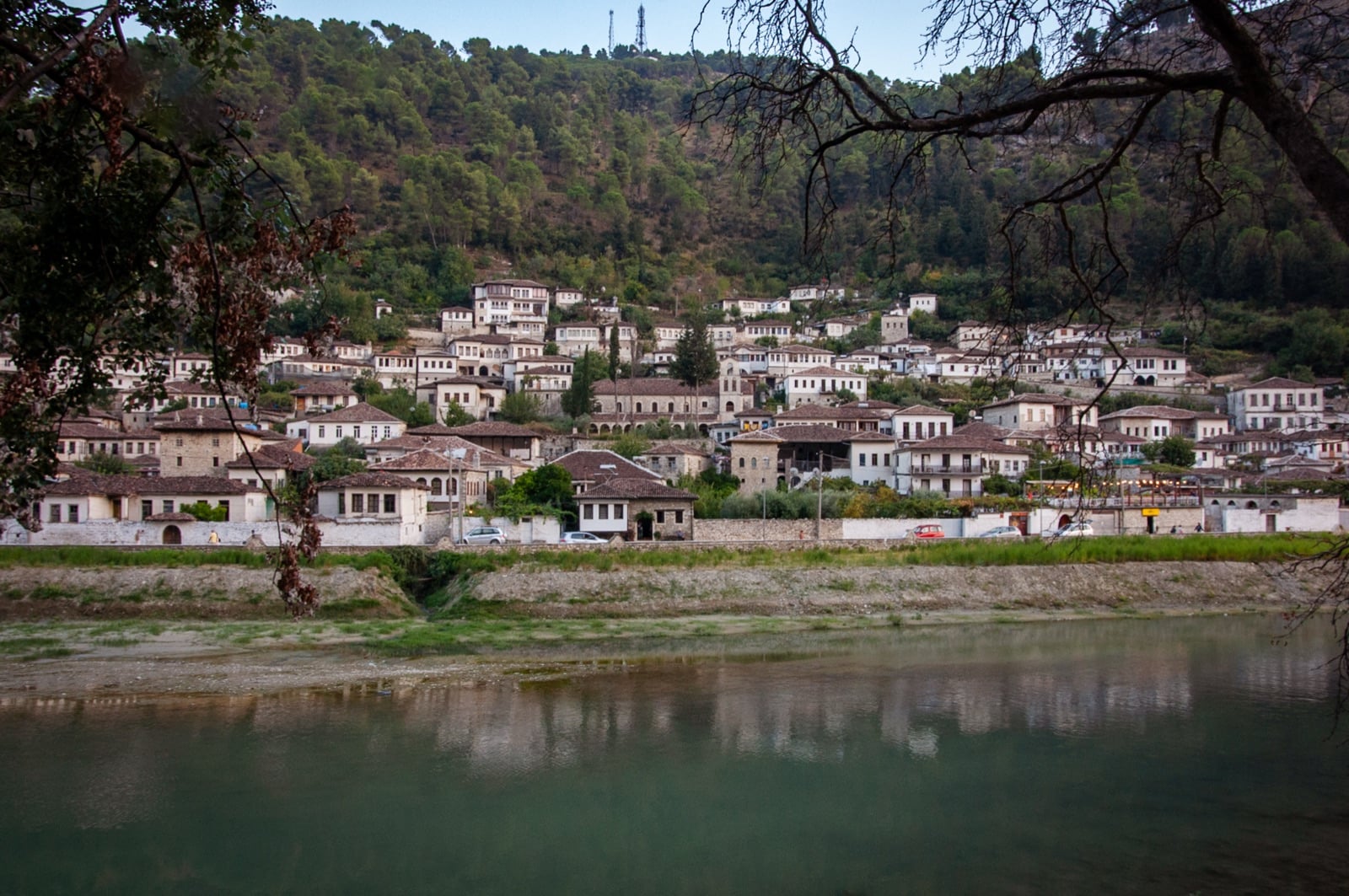
- Berat: The “city of a thousand windows” is a longer 3.5-hour drive, but worth it. See the Berat travel guide.
Where to Stay
Ksamil’s lodging has expanded fast, and the result is a mix of older family-run guesthouses, mid-range hotels built in the last five to ten years, and a growing crop of beachfront resorts. Booking ahead matters in July and August; everything visible from the water is usually full by May.
- Budget guesthouses: from around €30/night, typically a few blocks back from the beach, often family-run with a small breakfast included.
- Mid-range hotels: €60 to 100/night, with pools, balconies, and short walks to the sand.
- Beachfront properties: €120+/night in season, with direct sea access and lounger service.
- Apartment rentals: common on the usual platforms; good for families or longer stays, with kitchens for the inevitable late-night byrek run.
If you have the flexibility, shoulder season (late May or September) gives you 80 percent of the experience at 50 to 60 percent of the cost, with water still warm enough to swim.
Where and What to Eat
Ksamil’s food scene is built on seafood, and most of it is genuinely fresh because the boats land within walking distance. Grilled sea bass (levrek), sea bream (kocë), octopus, and the Butrint Lake mussels are everywhere. A full seafood dinner with wine usually runs €20 to 40 per person at a sit-down place, considerably less at a no-frills lakeside spot.
Beyond seafood, look for byrek (flaky phyllo pie with spinach, cheese, or meat), tavë kosi (lamb baked in yogurt), grilled lamb chops, fresh feta-style cheese (djathë i bardhë), and a tomato-cucumber-onion village salad with olive oil. End with a small glass of raki, the homemade fruit brandy that any Albanian-American grandparent will recognize on sight. If you are visiting from the US and want to know what to look for back home too, the Albanian restaurants directory is a good follow-up.
Albania has a serious coffee habit, and Ksamil’s cafés serve espresso, macchiato, and Turkish-style coffee for €1 to €2. Sitting with a coffee for an hour is the local pastime, not a tourist quirk. Use it.
How to Get to Ksamil
From the United States
The standard route is to fly into Tirana International Airport (TIA), then drive or take a bus south for roughly 4.5 to 5 hours. Most direct flights from the US connect through major European hubs (London, Rome, Istanbul, Frankfurt, Vienna). A rental car is the most flexible option, especially if you want to explore the Riviera; expect €30 to €60 a day in summer.
From Corfu and Getting Around
The shortcut a lot of travelers miss: fly into Corfu, take the 30-minute ferry across to Sarandë, then taxi or bus 30 minutes south to Ksamil. In peak summer there are several daily sailings, and the total transit from Corfu Airport to a Ksamil hotel can be under three hours. Bring your passport. Once you are in Ksamil, the village is small enough to walk end to end. For beach hopping, e-bikes, scooters, and the cheap minibuses (furgon) running between Ksamil and Sarandë all work. Taxis are easy to flag in season; a Sarandë-Ksamil ride is typically around €15 to €20.
Best Time to Visit and What to Expect
The season runs roughly May through October. Each window has tradeoffs:
- May to mid-June: water is still cool but warming up, prices are 30 to 50 percent lower, beaches are uncrowded, and Butrint is genuinely pleasant to walk.
- Late June to August: peak. Water is bath-warm, beaches are packed, prices peak, and you should book lodging months ahead.
- September: arguably the sweet spot. Water is still warm, crowds thin out after the first week, and the light is gorgeous.
- October: shoulder ends here. Some places close mid-month, but the weather is often still mild and prices drop again.
- November to April: most of Ksamil shuts down. Lovely for a quiet walk, not much else.
By the Numbers
- ~3,500: Ksamil’s year-round population, multiplied many times over in peak summer.
- 17 km: distance from Sarandë, the nearest larger town.
- 4: the famous Ksamil islets sitting just offshore.
- ~2 km: width of the strait separating Ksamil from Corfu, Greece.
- 1992: roughly when Ksamil began its post-Communist transition from fishing village to tourist destination, after Albania reopened.
- 1992: the year Butrint was inscribed as a UNESCO World Heritage Site.
- 1 year: the visa-free stay US passport holders are allowed in Albania.
- €20 to 40: typical seafood dinner with wine per person.
Practical Tips and Cultural Notes
- Cash: bring some lek for small vendors and beach taxis. Euros are accepted at most tourist-facing businesses but at a slightly worse rate than the official exchange.
- Cards: hotels and larger restaurants take them; small shops often do not.
- SIM cards: Vodafone Albania and One Albania both sell tourist SIMs for around €10 with generous data.
- Driving: the SH8 coastal highway is winding and slow. Plan more time than the map suggests, especially in summer.
- Tipping: 5 to 10 percent at restaurants is appreciated, not required.
- Responsible travel: stick to marked paths in Butrint, skip single-use plastics, and respect the small footprint. For background on regional environmental tensions, see this report on coastal development pressure elsewhere in Vlorë County.
Why It Matters for Diaspora Travelers
For Albanian-Americans, Ksamil hits different than the average European beach town. The language on the street is the one you grew up hearing at family weddings. The food, even the brand of mineral water on the table, will feel familiar. Older relatives often know Ksamil as a tiny coastal stop, not a destination, and the contrast between their memory and what is there now is part of the story. It is also worth a stop at Butrint to walk through ground that ties back to the Illyrian roots a lot of diaspora families talk about without ever seeing in person.
If you have the time, build in a couple of days farther up the coast or inland too. The southern Riviera, the inland mountains, the castles, and northern cities all stack into one trip well. Sites like Rozafa Castle in the north and the cultural depth covered in pieces like Famous Albanian Women are good context for what Albania is beyond the postcard.
Most people in Ksamil who work with visitors speak some English or Italian, but a few basic Albanian phrases change how you are received.
Frequently Asked Questions
Is Ksamil worth visiting?
Yes, if you want clear turquoise water, a UNESCO archaeological site next door, and prices still well below Greece or Italy. The tradeoff is that the village has been heavily developed and gets crowded in July and August.
How many days do you need in Ksamil?
Three to four days is a good window: one for beaches, one for the Ksamil Islands, one for Butrint, and a flexible day for a boat trip or day trip to Sarandë or Gjirokastër.
Is Ksamil expensive?
It is more expensive than the rest of Albania in summer, but still cheaper than comparable Mediterranean destinations. A mid-range trip lands at roughly €80 to €150 per person per day including lodging, food, and activities.
Can you swim to the Ksamil Islands?
Yes, the closest islet is reachable by a fit swimmer in about 10 minutes. Boat taxis are cheap and easier, and they let you stay dry and bring a bag.
Do I need a visa to visit Albania?
US citizens can stay in Albania visa-free for up to one year. Most EU and UK citizens get 90 days within a 180-day window.
What is the closest airport to Ksamil?
Tirana International Airport (TIA) is Albania’s main hub, about 4.5 to 5 hours by road. Corfu International Airport in Greece is much closer in time once you factor in the ferry: roughly 2.5 to 3 hours total to Ksamil.
Is Ksamil safe for tourists?
Yes. Albania has low violent crime rates and locals are famously hospitable. Standard caution around busy beaches, valuables, and nighttime drives on winding roads applies.
What is the difference between Ksamil and Sarandë?
Sarandë is a larger town with a long promenade, more restaurants, nightlife, and the ferry port. Ksamil is smaller, prettier, and beach-focused. Many travelers base in Ksamil and visit Sarandë for an evening, or vice versa.
Read Next
- Sarandë, Albania: Complete Travel Guide
- Vlorë, Albania: Complete Travel Guide
- Berat, Albania: Complete Travel Guide
- Tirana, Albania: Complete Travel Guide
- King Zog and Modern Albanian History
For additional background, see the Wikipedia article on Ksamil.
Val also writes a weekly letter on Substack: stories, history and the people behind Albanian businesses, for anyone who loves Albanian culture.
Read it on Substack →
Author: Val Demiri
Valbona is an editor and writer at ALB Connection, where she covers the people, businesses, and culture shaping the Albanian diaspora. A journalism graduate of the University of Iowa, her work spans community profiles, success stories, and features on Albanian life across the US, Europe, and beyond. She is drawn to stories that celebrate Albanian achievement and keep the community connected across borders.