On November 28, 1912, in a modest two-story house on a dusty coastal street, a 68-year-old statesman named Ismail Qemali stepped onto a balcony, raised the black double-headed eagle banner, and declared Albania a free and sovereign nation. After 538 years of Ottoman rule, the Albanian state was born, and it was born in Vlorë. Today this seaside city of roughly 140,000 people serves as the gateway to the Albanian Riviera, but for every Albanian, at home or in the diaspora, Vlorë will always mean one thing first: independence.
This guide covers everything you need to plan a trip to Vlorë, Albania, from the historic Independence Square in the old town to the beaches that stretch south toward Llogara Pass, plus practical advice on getting there, where to eat, and how to make the most of the city that gave Albania its flag day.
Vlorë Quick Facts
| Fact | Detail |
|---|---|
| Albanian name | Vlorë (also written Vlora or Vlonë) |
| Population | Approximately 140,000 (third-largest city in Albania) |
| Location | Southwest Albania, on the Bay of Vlorë (Ionian Sea) |
| Distance from Tirana | About 140 km south, roughly 2.5 hours by car |
| Famous for | The 1912 Albanian Declaration of Independence, gateway to the Albanian Riviera |
| Independence Day | November 28, 1912, when Ismail Qemali raised the flag here |
| Currency | Albanian lek (ALL); euros widely accepted in tourist areas |
| Best months to visit | May through October, peak in July and August |
| Key beaches | Plazhi i Vjetër, Plazhi i Ri, Radhimë, Orikum |
| Visa for US citizens | Visa-free, up to one year |
Where Is Vlorë, Albania?
The Gateway to the Albanian Riviera
Vlorë sits on the southwest coast of Albania, where the Adriatic Sea narrows and meets the deeper, bluer Ionian Sea. The city wraps around the Bay of Vlorë, with the Karaburun Peninsula curving like a protective arm to the west and Sazan Island sitting just offshore. This is the precise spot where, geographically and culturally, the Albanian coast shifts from sandy northern beaches to the dramatic cliffs and turquoise coves of the Albanian Riviera.
From Tirana, the drive south takes about two and a half hours on the SH4 and then the SH8, depending on traffic around Fier. You will see the landscape change as you go: flat agricultural plains north of the city, then olive groves climbing the foothills, then the mountains of Llogara National Park rising suddenly above the sea. Vlorë is the last large city before the Riviera proper begins, which makes it a natural base for travelers heading further south to Himarë, Dhërmi, Borsh, and Sarandë.
A Quick Note on the Name
You will see the city written as both Vlorë and Vlora. Both are correct. Vlorë is the definite form used on signs and official documents in Albania, while Vlora is the indefinite form often used in English. Older texts also use Vlonë or the Italian Valona, a reminder that this coast looked across the Strait of Otranto to Italy long before modern borders were drawn.
The Birthplace of Modern Albania: November 28, 1912
Why Vlorë?
By the autumn of 1912, the Ottoman Empire was collapsing. The First Balkan War had broken out in October, and Serbian, Montenegrin, and Greek armies were already pushing into Albanian-inhabited lands. Albanian leaders understood that if they did not declare a state of their own, their territory would simply be divided up by the neighbors. The question was where to do it. Vlorë was chosen for a simple, practical reason: it was a port, it had a sizable nationalist intelligentsia, and it was far enough from the front lines to allow the delegates to actually meet.
Delegates from across the Albanian lands, from Kosovo to Çamëria, traveled in secret to gather in Vlorë. On November 28, 1912, in a building that still stands at the edge of the old town, they signed the Declaration of Independence and formed a provisional government. Ismail Qemali, a respected diplomat and former Ottoman official, became the first Prime Minister. For the full historical context, see our guide on when Albania gained independence.
The Flag That Was Raised
The flag Qemali raised that day was the same black double-headed eagle on a red field that Skanderbeg flew over Krujë in 1443. It was the same banner that, four and a half centuries earlier, had symbolized Albanian resistance to the Ottomans. Raising it in Vlorë in 1912 was both a political act and a deliberate echo: the long arc from Skanderbeg to Qemali, closed in a single morning. That is the moment every Albanian schoolchild learns about, and the moment Albanian families across the diaspora commemorate every November 28.
The Old Town and Independence Square
Sheshi i Pavarësisë (Independence Square)
The heart of historic Vlorë is Sheshi i Pavarësisë, Independence Square, dominated by the towering Monument of Independence. Sculpted by Mumtaz Dhrami and Kristaq Rama (the father of former Prime Minister Edi Rama) and unveiled in 1972 for the 60th anniversary of independence, the bronze monument shows Ismail Qemali raising the flag, surrounded by the delegates and a young woman who symbolizes the new Albanian nation. It is the most photographed monument in the city, and for diaspora families visiting Albania for the first time, standing at its base is often genuinely emotional.
The Muradiye Mosque
A short walk from the square sits the Muradiye Mosque, built in 1542 under the design of the great Ottoman architect Mimar Sinan. It is the oldest building in Vlorë still in use, with elegant stone walls, a single minaret, and a small porticoed entrance. Even if you are not religious, step inside for a moment of quiet, the cool stone and Ottoman-era proportions are a welcome contrast to the summer sun outside.
The Independence Museum
The Museum of Independence, housed in the actual building where the 1912 declaration was signed, is small but moving. Original furniture, the desk where Qemali worked, period photographs of the delegates, and the printing press used for the new government’s first decrees are all on display. Entrance is inexpensive, usually under 300 lek, and a visit takes about 45 minutes. It is required viewing if the independence story is what drew you here.
The Beaches of Vlorë
Plazhi i Vjetër (Old Beach)
Plazhi i Vjetër, the Old Beach, runs along the northern edge of the city center. It is the historic city beach, lined with a long promenade (the Lungomare), palm trees, and cafés where locals drink coffee from morning to night. The sand is mixed with pebbles, the water is calm, and you can walk straight from your hotel into the sea. It is busy in July and August, but it is also where you will get the most authentic feel of Vlorë as a working Albanian city, not a tourist enclave.
Plazhi i Ri (New Beach)
South of the old beach, Plazhi i Ri stretches for several kilometers and offers cleaner sand, more space, and the bulk of the newer hotel and apartment developments. This is where most international visitors stay. The water is clear, sun loungers and umbrellas can be rented by the day for around 1,000 to 1,500 lek, and there are dozens of beach bars serving cold drinks and seafood.
Radhimë and Orikum
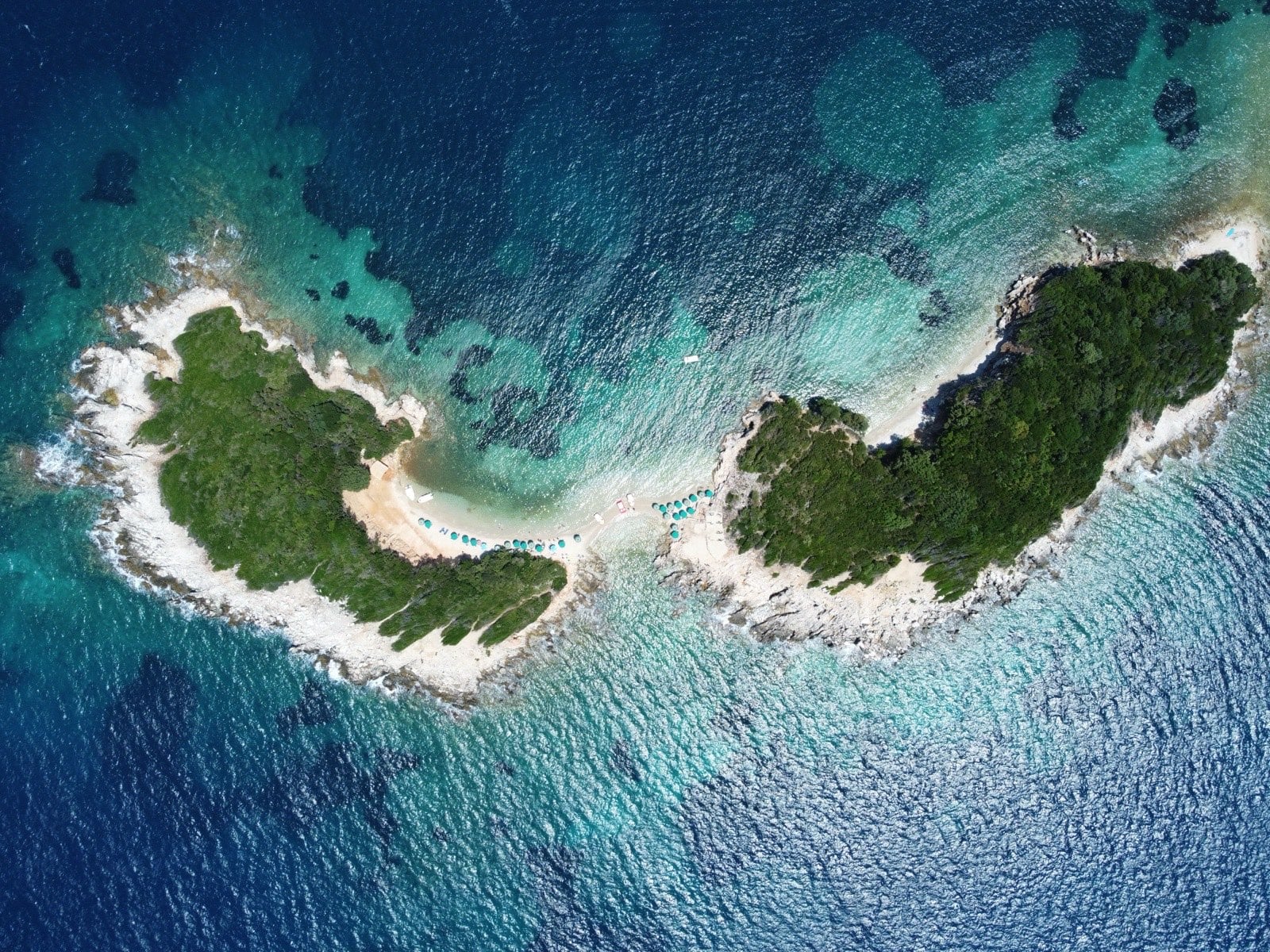
For quieter, more scenic swimming, drive 15 to 25 minutes south along the bay to Radhimë and Orikum. Radhimë has a series of small coves backed by olive groves, with crystal-clear water and far fewer crowds than the city beaches. Orikum, near the entrance to Llogara National Park, is a small resort town with a marina, a sandy beach, and the archaeological site of ancient Oricum, a Greek and Roman port that has been excavated since the 1950s.
Day Trips: Sazan, Karaburun, and Llogara Pass
Sazan Island
Sazan Island, about 15 kilometers offshore, is one of the most unusual day trips in the Mediterranean. A closed military base during the communist era, Sazan was for decades completely off-limits. In recent years it has slowly opened to limited, regulated tourism. Visitors can take a boat tour to see the abandoned bunkers, the small village built for Albanian and (briefly) Soviet personnel, and the surrounding marine area. The island is part of the protected zone that includes the Karaburun Peninsula, and there has been ongoing debate about how to develop tourism without damaging the ecosystem. For background on the conservation issues, see our recent report on threats to Sazan, Vjosa, and Narta wildlife.
Karaburun Peninsula
The Karaburun Peninsula, the long mountainous spit that shelters the Bay of Vlorë from the open Ionian, is Albania’s only marine national park (jointly with Sazan). It is uninhabited, accessible only by boat, and home to a string of sea caves, dramatic limestone cliffs, and pristine swimming coves. Half-day and full-day boat tours leave from Vlorë’s port and the marina at Orikum, typically costing 25 to 50 euros per person depending on the size of the group. Bring snorkeling gear; the water clarity is exceptional.
Llogara Pass
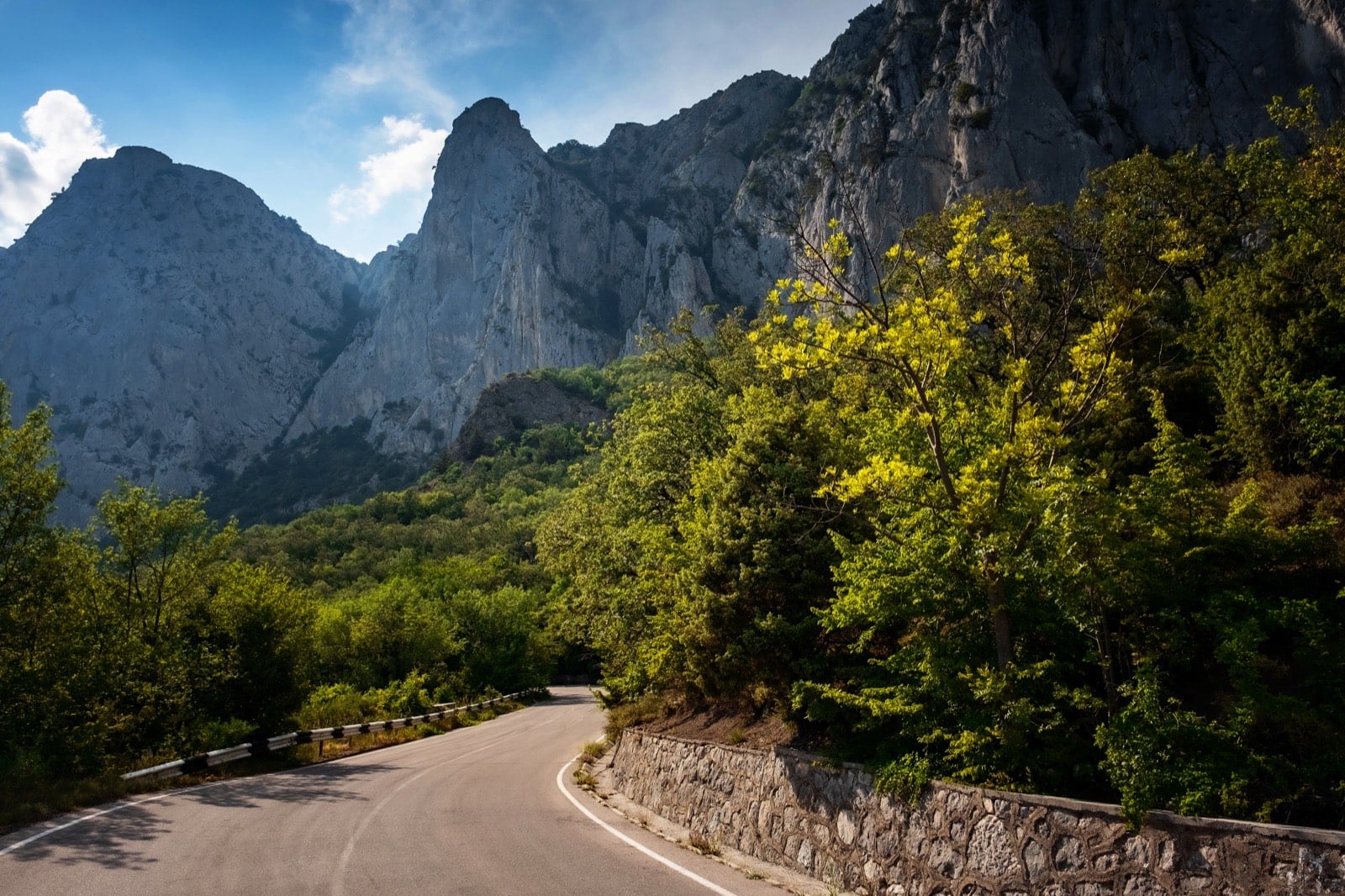
The Llogara Pass, climbing to 1,043 meters through Llogara National Park, is the most cinematic drive in Albania. The road switchbacks up through pine forests, opens onto a viewing point with one of the most spectacular sea views in the Mediterranean (you can see Corfu on a clear day), and then drops down into the Riviera. If you only have time for one day trip, do this one: drive up to Llogara for lunch at one of the pine-forest restaurants, then continue down to Dhërmi or Himarë for an afternoon swim, and return to Vlorë for dinner.
Where to Eat in Vlorë
Seafood, the Vlorë Specialty
Vlorë is a fishing city, and the kitchens reflect it. Expect grilled sea bass and bream, octopus salad, fried calamari, mussels from Lake Narta just north of the city, and small whole fish like barbun (red mullet) and gjuhëz (sole). A signature local dish is llakatum, a rich stew of mussels and seafood cooked with rice, onion, and the deep golden olive oil produced in the hills behind the city. Expect to pay 1,500 to 3,500 lek for a full seafood meal at a midrange restaurant, more at the high-end places along the Lungomare.
Olive Oil, Coffee, and Byrek
The hills around Vlorë produce some of the best olive oil in the Balkans, and you will taste it in everything from a simple village salad to the bread brought to your table. Stop at a small shop in the old town and bring a bottle home. For breakfast, look for a bakery serving fresh byrek, the flaky savory pie filled with cheese, spinach, or meat. And remember that coffee in Albania is a ritual, not a transaction. Order an espresso, sit down, and watch the city move for as long as you like. Want to translate the experience for your own neighborhood? Find an Albanian restaurant near you to keep the flavors going at home.
Where to Stay in Vlorë
City Center vs. New Beach vs. Radhimë
Where you sleep depends on what you came for. If history and the Lungomare promenade are your priority, stay in the city center near the old town, where smaller hotels and apartments rent for around 40 to 80 euros a night in shoulder season. If you want a beach holiday with easier access to sun loungers, swimming, and nightlife, the New Beach area has the largest selection of mid-range hotels and apartment rentals. For peace, sea views, and a base for boat trips, head south to Radhimë, where boutique hotels and small resorts run from 70 to 150 euros a night. In July and August, book well ahead; Albanian families and diaspora visitors fill the city to capacity.
How to Get to Vlorë
By Car
From Tirana International Airport (TIA), Vlorë is about 150 kilometers by road, roughly two and a half to three hours depending on traffic around Fier. The route is straightforward: take the SH4 south, then the SH8 to the coast. Renting a car is the most flexible way to explore both the city and the Riviera, and rates start around 30 euros a day in shoulder season.
By Bus or Furgon
Frequent buses and minibuses (called furgons) run between Tirana and Vlorë throughout the day, typically taking three to three and a half hours. A one-way ticket costs around 600 to 800 lek. There is also direct service to and from Sarandë, Berat, and Gjirokastër. The new Vlora International Airport, located between Vlorë and Fier, opened to commercial flights in 2025 and is expected to add direct seasonal connections to several European cities.
By Ferry from Italy
Overnight ferries connect Vlorë and Brindisi, Italy, several times a week, taking roughly eight hours. This is a popular option for travelers driving through the Balkans or for Italian-Albanian diaspora families heading home for the summer.
Why Vlorë Matters for the Diaspora
For Albanian-Americans, Albanian-Canadians, Albanian-Australians, and the broader diaspora, Vlorë carries a weight that no other Albanian city quite matches. Every year on November 28, Flag Day, communities from the Bronx to Detroit to Melbourne raise the same black-eagle banner that Ismail Qemali raised here in 1912. Children in Albanian Saturday schools learn the same story, recite the same words, sing the same anthem. For many diaspora families, a visit to Vlorë is the moment that story stops being abstract and becomes physical: this is the balcony, this is the square, this is where it actually happened.
If you are bringing children or grandchildren on their first trip to Albania, plan to be in Vlorë on November 28 if you can. The city celebrates with parades, concerts, and fireworks, and the atmosphere is something you will remember. If you cannot travel in November, the Independence Museum and the Monument in the square are open year-round, and a quiet morning visit is just as meaningful. And if a visit makes you think about staying longer, our guide for Americans who move to Albania covers the practical steps.
Frequently Asked Questions
Is Vlorë worth visiting?
Yes, especially if you care about Albanian history. Vlorë combines the symbolic weight of the independence story with excellent beaches, easy access to the Albanian Riviera, and very good seafood. It is less polished than Sarandë or Ksamil, but that is part of its charm.
How many days do you need in Vlorë?
Two to three days lets you see the old town, swim at the local beaches, and do one major day trip (either the Karaburun boat tour or the Llogara Pass drive). If you are using Vlorë as a base to explore the full Riviera, plan for four to five nights.
Is Vlorë safe for tourists?
Yes. Albania has very low rates of violent crime, and Vlorë is no exception. Standard travel precautions apply: watch your belongings on busy beaches and in crowded markets. Driving on coastal roads requires attention because of curves and occasional aggressive overtaking.
When is the best time to visit Vlorë?
May, June, and September are ideal: warm enough for swimming, but without the August crowds. July and August are peak season and the city fills up with both Albanian families and international visitors. November 28 is special if you want to experience Flag Day.
Do they speak English in Vlorë?
In hotels, restaurants, and shops aimed at tourists, yes, especially among younger Albanians. Italian is also widely understood given the proximity to Italy. Learning a few words of Albanian (faleminderit for thank you, mirëdita for good day) goes a long way.
Can you swim in Vlorë in October?
Often, yes. Sea temperatures in early October typically hover around 22 to 24 degrees Celsius (72 to 75 Fahrenheit), and many locals swim into November. Air temperatures are usually pleasant for sunbathing through mid-October.
What is the difference between Vlorë and Vlora?
None. Vlorë is the definite form of the city name in Albanian; Vlora is the indefinite form, often used in English and Italian. Both refer to the same city.
Is Vlorë better than Sarandë?
They serve different purposes. Vlorë is bigger, more urban, more historically significant, and the natural gateway to the Riviera. Sarandë is smaller, has Greek-island feel, and offers easier access to Ksamil and Butrint. Many travelers do both on the same trip.
Read Next
- When Did Albania Gain Independence? The full story behind the November 28, 1912 declaration.
- Sarandë, Albania Travel Guide The southern Riviera capital and gateway to Ksamil and Butrint.
- Ksamil, Albania Travel Guide The turquoise islands and white-sand beaches at Albania’s southern tip.
- Albanian Iso-Polyphony The UNESCO-listed group singing of southern Albania, explained.
- Berat, Albania Travel Guide The UNESCO-listed “City of a Thousand Windows” inland from Vlorë.
- Tirana, Albania Travel Guide The colorful capital, your most likely starting point.
Sources and further reading: Wikipedia: Vlorë, Wikipedia: Albanian Declaration of Independence, Lonely Planet Albania.

Author: Val Demiri
Valbona is an editor and writer at ALB Connection, where she covers the people, businesses, and culture shaping the Albanian diaspora. A journalism graduate of the University of Iowa, her work spans community profiles, success stories, and features on Albanian life across the US, Europe, and beyond. She is drawn to stories that celebrate Albanian achievement and keep the community connected across borders.