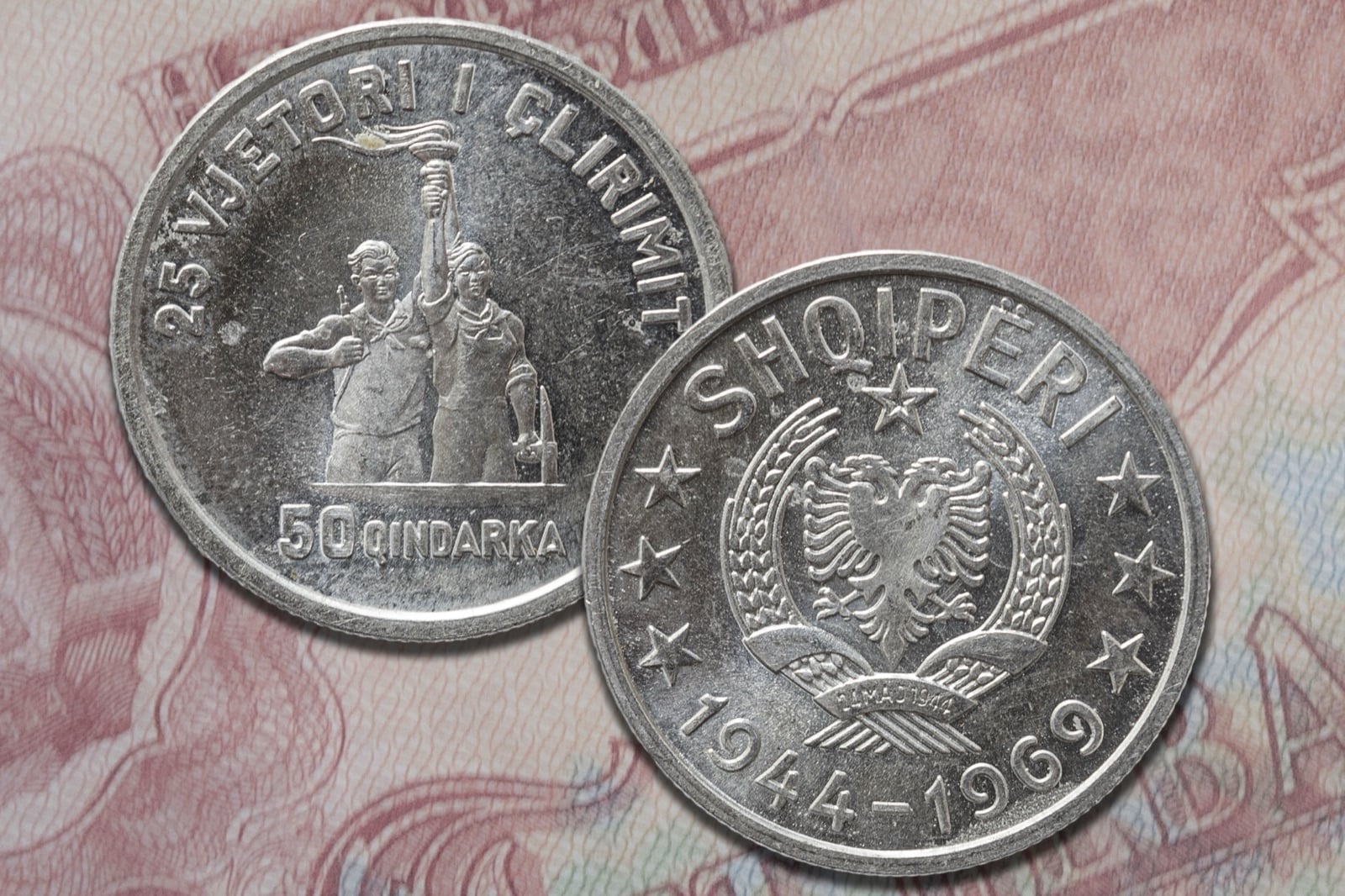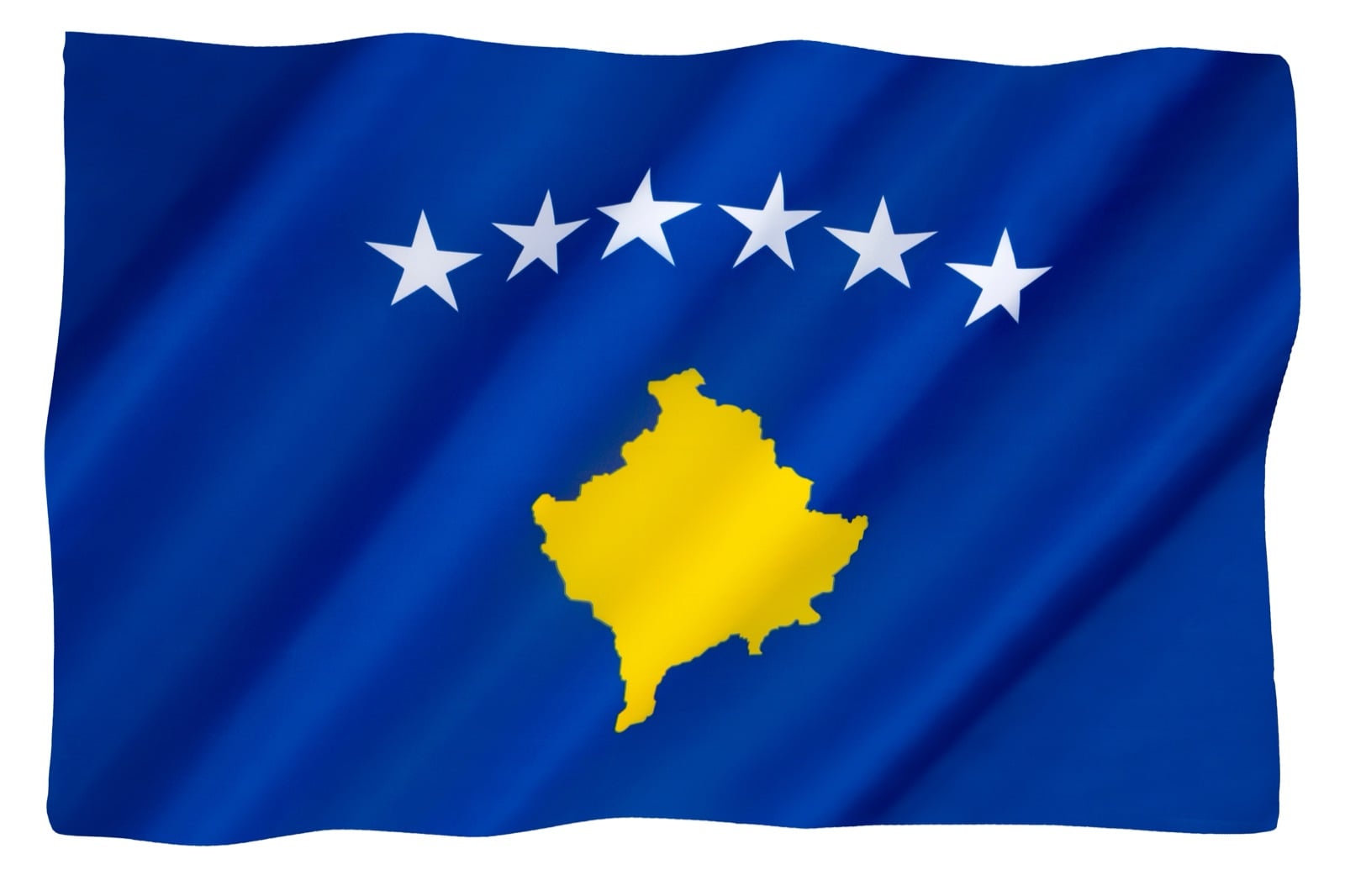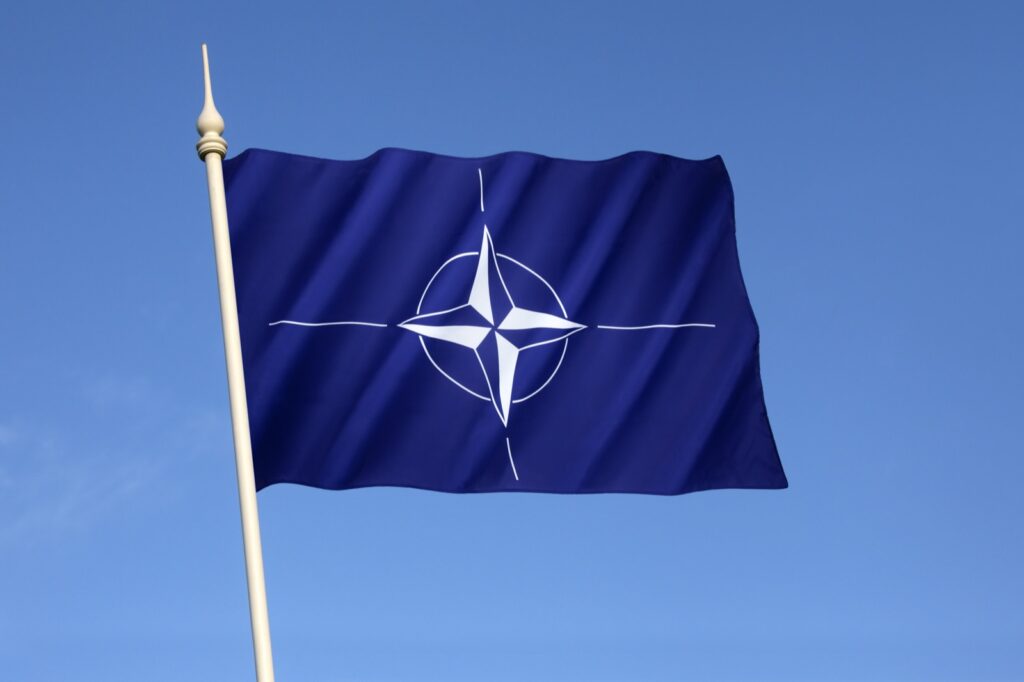

Yes, Albania is in NATO. It became a full member on April 1, 2009, when its ambassador deposited the instrument of accession in Washington, and it joined together with Croatia, taking the Alliance from 26 to 28 members, according to NATO’s own account of the accession ceremony held in Brussels on April 7, 2009. Kosovo is not a NATO member and is not in NATO’s partnership programs, but it has hosted the NATO-led Kosovo Force, KFOR, since June 12, 1999.
This page sets out the dates that matter, what Albania contributes as an ally, where Kosovo stands, and how every country in the Balkans relates to the Alliance, in one table. The sources are NATO’s official pages, NATO’s annual defence spending reports, Albania’s Ministry of Defence and a Congressional Research Service report written at the time of accession.
Fakte të shpejta
- Albania joined NATO: April 1, 2009, with Croatia, in the sixth round of enlargement.
- Path to membership: Partnership for Peace 1994, Membership Action Plan 1999, invitation at the Bucharest summit April 2008, accession protocols signed July 9, 2008.
- Defence spending: NATO’s July 2026 figures estimate Albania’s core defence spending at 2.15 percent of GDP in 2026, up from 1.48 percent in 2025. Since the 2025 Hague summit, allies have committed to reach 5 percent of GDP (3.5 percent core defence plus 1.5 percent defence- and security-related) by 2035.
- Kosova: not a member; KFOR has been deployed since June 12, 1999 under UN Security Council Resolution 1244.
- KFOR today: 4,739 troops from 31 countries in June 2026, including 123 from Albania.
- NATO now: 32 members after Finland (April 4, 2023) and Sweden (March 7, 2024).
Në këtë faqe
- Albania’s NATO Membership: The Dates
- NATO Status of Every Balkan Country
- What Albania Contributes
- Is Kosovo in NATO? KFOR Explained
- Serbia, Bosnia and the Neighbors
- Why It Matters to Albanian-Americans
- Pyetje të shpeshta
Albania’s NATO Membership: The Dates
Albania’s route into the Alliance took fifteen years. President Sali Berisha signed NATO’s Partnership for Peace framework document on February 23, 1994, according to NATO’s list of signatures, and Albania entered the Membership Action Plan in 1999, the year of the Kosovo war. At the Bucharest summit of April 2 to 4, 2008, the allies invited Albania and Croatia to begin accession talks, as the Congressional Research Service report of April 14, 2009 records. Foreign ministers signed the accession protocols on July 9, 2008, and after ratification by all existing members, both countries deposited their instruments of accession at the US State Department on April 1, 2009.
NATO’s enlargement page lists 2009 as one of the Alliance’s rounds of growth, after 1952 (Greece and Türkiye), 1955 (West Germany), 1982 (Spain), 1999 (Czechia, Hungary, Poland) and 2004 (Bulgaria, Estonia, Latvia, Lithuania, Romania, Slovakia, Slovenia), and before 2017 (Montenegro), 2020 (North Macedonia), 2023 (Finland) and 2024 (Sweden). Albania and Croatia attended their first summit as full members in Strasbourg and Kehl on April 3 and 4, 2009, and their flags were raised at NATO headquarters on April 7 in the presence of Prime Minister Sali Berisha of Albania and Prime Minister Ivo Sanader of Croatia.
Membership is not a loose association. Article 5 of the North Atlantic Treaty commits every member to treat an armed attack on one as an attack on all, and Albania has been covered by that commitment since 2009. Albania’s status as a NATO member is separate from its European Union bid, which is still at the negotiation stage; see is Albania in the EU? for that question.
NATO Status of Every Balkan Country
The table covers the countries of the Balkan Peninsula and NATO’s own categories: member, Membership Action Plan (MAP) participant, Partnership for Peace (PfP) partner, or none. Accession years are from NATO’s member countries page; the defence spending column is NATO’s estimate of core defence expenditure for 2026, as a share of GDP at 2021 prices, from its Defence Investment of NATO Countries (2014 to 2026) release, with a cut-off date of July 3, 2026.
| Vendi | NATO status | Key dates | Core defence spending, 2026 estimate (% of GDP) |
|---|---|---|---|
| Shqipëri | Member | PfP 1994; MAP 1999; joined April 1, 2009 | 2.15 |
| Bosnjë dhe Hercegovinë | MAP participant (not a member) | PfP 2006; invited to MAP 2010; first Reform Programme 2019 | Not reported (not a member) |
| Bullgaria | Member | Joined 2004 | 2.22 |
| Kroacia | Member | Joined April 1, 2009, with Albania | 2.03 |
| Greqi | Member | Joined 1952 | 3.65 |
| Kosovë | Not a member, not a partner; hosts KFOR | KFOR deployed June 12, 1999 (UNSCR 1244) | Not reported (not a member) |
| Mali i Zi | Member | Joined June 5, 2017 | 2.17 |
| Maqedonia e Veriut | Member | Joined 2020 | 2.09 |
| Rumania | Member | Joined 2004 | 2.43 |
| Serbia | PfP partner; policy of military neutrality | PfP 2006; first Individual Partnership Action Plan 2015 | Not reported (not a member) |
| Slloveni | Member | Joined 2004 | 1.61 |
| Türkiye | Member | Joined 1952 | 2.85 |
Nine of the twelve are members. In NATO’s July 2026 figures, every member in the region except Slovenia is estimated at or above 2 percent of GDP in core defence spending for 2026, and Albania’s share rises from 1.20 percent in 2022 and 1.48 percent in 2025 to an estimated 2.15 percent in 2026. The yardstick has also moved: at the 2025 Hague summit allies committed to spend 5 percent of GDP by 2035, of which 3.5 percent on core defence. NATO revised its basis between reports, so its June 2025 report, which estimated Albania at 2.01 percent for 2025, should not be compared directly with the 2026 figures.
What Albania Contributes
Albania’s contribution is small in absolute terms and steady. NATO’s KFOR placemat for June 2026 lists 123 Albanian troops in the Kosovo Force, out of a total of 4,739 from 31 contributing nations. Albania’s Ministry of Defence states that the Albanian Armed Forces have taken part in KFOR since July 2009, first with staff in the KFOR headquarters and in the NATO advisory group that works beside the Kosovo Security Force, and that during 2023 Albania had 14 personnel at KFOR headquarters in Prishtina and 76 with the Western Regional Command in Peja. The ministry puts the total contribution from 2009 to the end of 2021 at 376 personnel, and it also notes a military police company assigned since October 2021 to NATO’s Operation Allied Solace, which sheltered Afghan NATO workers evacuated to Albania.
The CRS report from 2009 records that Albania had about 140 troops in Afghanistan with ISAF at the time of accession and had also contributed to peacekeeping in Bosnia. On money, NATO’s June 2025 defence expenditure report put Albania’s spending at 54.1 billion lek in 2025 (estimate), 2.01 percent of GDP on that report’s basis, with equipment at 42.12 percent of the total, well above the 20 percent guideline then in use. NATO’s July 2026 release estimates Albania’s core defence spending at 2.15 percent of GDP for 2026. Albania’s permanent delegation to NATO says Albania gives priority to increasing the defence budget.
Is Kosovo in NATO? KFOR Explained
No. Kosovo is not a NATO member and does not take part in the Partnership for Peace or the Membership Action Plan. Its relationship with the Alliance runs through KFOR, the NATO-led force that NATO’s KFOR page says deployed on June 12, 1999 after the air campaign, drawing its mandate from UN Security Council Resolution 1244 of June 10, 1999, and operating as a peace enforcement operation under Chapter VII of the UN Charter.
KFOR’s original tasks were to deter renewed hostilities, establish a secure environment, demilitarize the Kosovo Liberation Army, support the humanitarian effort and coordinate with the international civil presence. Today NATO describes its mission as contributing to a safe and secure environment and freedom of movement for all communities in Kosovo, in coordination with the Kosovo Police and the EU’s rule of law mission, EULEX. The NATO page gives its strength as approximately 4,600 troops from 31 allied and partner countries; the June 2026 placemat lists 4,739, with the largest contingents from Italy (984), the United States (590), Türkiye (420) and Hungary (410). On June 12, 2026, NATO announced a gradual adjustment of KFOR’s posture over the following year, citing the improved security situation, and said the change could be reversed if conditions require.
NATO also supervised the creation and training of the Kosovo Security Force, which its KFOR page describes as a lightly armed volunteer force with a maximum strength of 2,500 active personnel and 800 reservists, responsible for security tasks that are not appropriate for the police. That NATO advisory role is where Albania’s first KFOR staff were assigned in 2009. In December 2018 Kosovo’s Assembly moved to transition the KSF toward a broader defence role. NATO’s Secretary General called the move ill-timed, said it went against the advice of many allies, and said NATO would have to examine its level of engagement with the KSF. For background on the war that led to KFOR, see our Lufta e Kosovës page, and for the diplomatic side, vendet që e njohin Kosovën.
Serbia, Bosnia and the Neighbors
Two Balkan countries sit between membership and non-alignment. Bosnjë dhe Hercegovinë joined the Partnership for Peace in 2006 and was invited to join the Membership Action Plan in 2010; NATO’s page notes that MAP participation does not prejudge any decision on membership. Bosnia presented its first Reform Programme under the MAP in 2019, set up a Commission for Cooperation with NATO in early 2021, and hosts a NATO headquarters in Sarajevo, reinforced in July 2024 with a Political Engagement Support Cell.
Serbia also joined the Partnership for Peace in 2006 and agreed its first Individual Partnership Action Plan in 2015, but, in NATO’s words, the Alliance “fully respects Serbia’s policy of military neutrality,” and unlike the other Western Balkan partners Serbia does not aspire to membership. Serbia and NATO cooperate on KFOR through a Joint Implementation Council based on the 1999 Military Technical Agreement.
The other neighbors are all members: Montenegro since June 5, 2017, North Macedonia since 2020, Greece since 1952, and Bulgaria, Romania and Slovenia since 2004. So three of Albania’s four land neighbors (Montenegro, North Macedonia and Greece) are allies, and the fourth, Kosovo, is protected by KFOR rather than by Article 5.
Why It Matters to Albanian-Americans
NATO membership is the security link between the United States and Albania, and it is the reason American and Albanian soldiers serve side by side in Kosovo: the June 2026 placemat shows 590 US troops and 123 Albanian troops in the same force. It also shapes travel and business in a practical way. Membership requires interoperable armed forces, defence procurement to NATO standards and a stable security environment, which are part of why Albania is considered safe for visitors and investors. If you follow the news, the numbers to watch each year are NATO’s defence expenditure report, published in the summer, and the KFOR placemat, which NATO updates as contingents rotate.
For the longer story of Albania’s turn to the West after 1991, and of the 1999 war that put Kosovo under NATO protection, see kur Shqipëria fitoi pavarësinë dhe Dita e Pavarësisë së Kosovës.
Pyetje të shpeshta
Is Albania a NATO member?
Yes. Albania became a full member of NATO on April 1, 2009, when it deposited its instrument of accession in Washington, on the same day as Croatia. The two countries were the 27th and 28th members and attended their first summit as allies in Strasbourg and Kehl on April 3 and 4, 2009.
When did Albania join NATO?
April 1, 2009. The steps before that were Partnership for Peace in 1994, the Membership Action Plan in 1999, the invitation at the Bucharest summit in April 2008 and the signing of accession protocols on July 9, 2008. The flag-raising ceremony at NATO headquarters in Brussels took place on April 7, 2009.
Is Kosovo in NATO?
No. Kosovo is not a NATO member and is not part of the Partnership for Peace or the Membership Action Plan. NATO’s presence there is KFOR, the Kosovo Force deployed on June 12, 1999 under UN Security Council Resolution 1244, which had 4,739 troops from 31 countries in June 2026, including 123 from Albania.
Does Albania meet NATO’s 2 percent spending target?
On NATO’s latest figures, yes for 2026. NATO’s July 2026 release estimates Albania’s core defence spending at 2.15 percent of GDP in 2026, up from 1.48 percent in 2025 and 1.20 percent in 2022. The target itself has changed: at the 2025 Hague summit allies committed to 5 percent of GDP by 2035, including 3.5 percent for core defence, so 2 percent is now a floor rather than the goal.
Which Balkan countries are not in NATO?
Bosnia and Herzegovina (a Membership Action Plan participant since 2010), Serbia (a Partnership for Peace partner since 2006 that follows a policy of military neutrality) and Kosovo (neither member nor partner, host of KFOR). Albania, Bulgaria, Croatia, Greece, Montenegro, North Macedonia, Romania, Slovenia and Türkiye are all members.
How many troops does Albania have in Kosovo?
NATO’s KFOR placemat for June 2026 lists 123 Albanian troops. Albania’s Ministry of Defence says the Albanian Armed Forces have served in KFOR since July 2009, with 90 personnel in 2023 split between KFOR headquarters in Prishtina and the Western Regional Command in Peja, and 376 personnel in total from 2009 to the end of 2021.
Burimet
- NATO: Ceremony marks the accession of Albania and Croatia to NATO (April 7, 2009)
- NATO: Member countries
- NATO: Enlargement and Article 10
- NATO: NATO’s role in Kosovo (KFOR)
- NATO: KFOR Key Facts and Figures placemat (June 2026)
- NATO: Relations with Serbia
- NATO: Relations with Bosnia and Herzegovina
- NATO: Defence Investment of NATO Countries (2014 to 2026), press release, July 2026
- NATO: Signatures of the Partnership for Peace Framework Document
- NATO: Statement by the Secretary General following conversations with President Vučić and Mr Haradinaj (December 6, 2018)
- NATO: Defence Expenditure of NATO Countries (2014 to 2025), June 2025
- Ministry of Defence of Albania: International missions, Kosovo
- Permanent Delegation of Albania to NATO: Priorities
- Congressional Research Service: NATO Enlargement: Albania, Croatia, and Possible Future Candidates (April 14, 2009)
Lexime të Ngjashme
- A është Shqipëria në BE?
- Lufta e Kosovës
- Vendet që e njohin Kosovën
- A është e sigurt Shqipëria?
- A është e sigurt për të vizituar Kosovën?
- The Albanian Flag and Its Meaning

Autor: Dardanë Halimi
Dardanë Halimi është një shkrimtare dhe profesioniste e komunikimit me titull magjistër në Shkrim, Retorikë dhe Komunikim Teknik nga Universiteti James Madison. Puna e saj përqendrohet në tregimin e historive, përmbajtjen digjitale, arsimin e lartë dhe komunikimin strategjik, me përvojë në shkrimin për organizata akademike, jofitimprurëse dhe marketingu si në Shtetet e Bashkuara ashtu edhe në Kosovë.