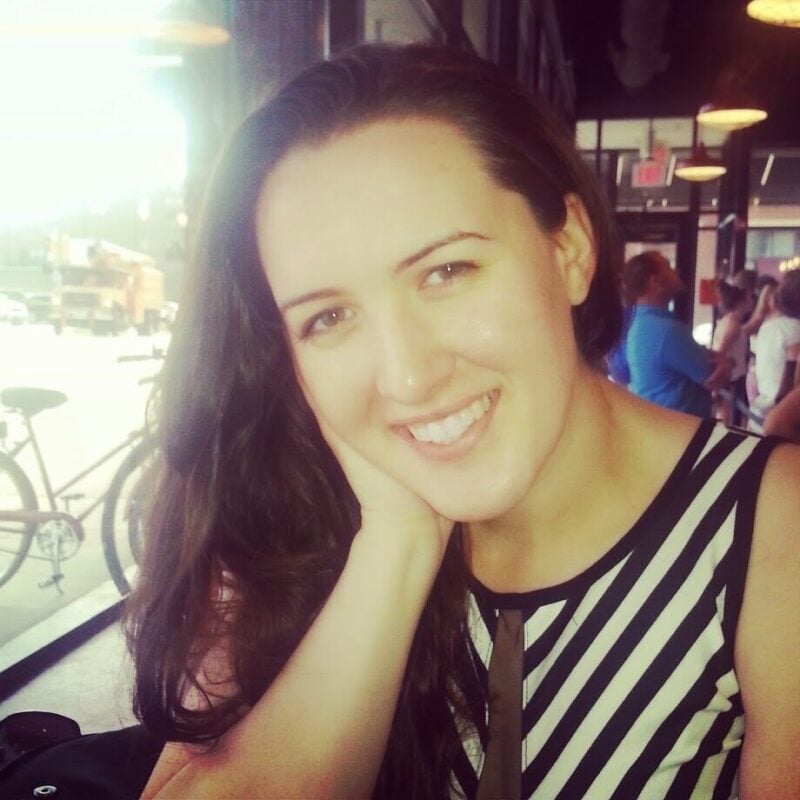
Inva Mula is the Albanian lyric soprano whose voice millions have heard without knowing her name: she is credited as the Diva’s singing voice in Luc Besson’s 1997 film Elementi i Pestë (IMDb), the blue alien Plavalaguna whose aria turns into the Diva Dance. Born in Tirana in 1963 (AllMusic), she left Albania in September 1991 and won a prize at the first Operalia competition in Paris in 1993.
She has since sung at the Metropolitan Opera, La Scala, the Paris Opera and the Vienna State Opera, recorded Lisette on the Gramophone Record of the Year, and been decorated by both France and Albania. This profile keeps to what opera houses, competitions, the film’s own credits, Albania’s National Diaspora Agency and major outlets have published, with a link at each claim.
Fakte të shpejta
- Born in Tirana in 1963, the daughter of the composer and singer Avni Mula and the soprano Nina Mula (AllMusic, Dielli).
- Won the Singer of Albania competition in 1987, a prize at the George Enescu Competition in Bucharest and the Madama Butterfly Grand Prix in Barcelona in 1992 (AllMusic).
- One of four winners of the first Operalia, Plácido Domingo’s competition, in Paris in 1993 (Operalia).
- Credited as the Diva’s singing voice in Elementi i Pestë (1997) (IMDb).
- Made her Metropolitan Opera debut in La Bohème on October 1, 2001 (Metropolitan Opera Archives).
- Named Chevalier des Arts et des Lettres by France in 2005 and awarded Albania’s Nderi i Kombit (Honor of the Nation) in November 2012 (National Diaspora Agency of Albania).
Në këtë faqe
- A Musical Family in Tirana
- Leaving Albania and the Competition Years
- The Fifth Element and the Diva Dance
- The Opera Houses
- Career Timeline
- Recordings and Honors
- Why This Matters to Albanian-Americans
- Pyetje të shpeshta
A Musical Family in Tirana
Mula was born in Tirana in 1963, according to AllMusic, and grew up in one of the city’s best-known musical households. Her parents, Avni and Nina Mula, were both opera singers, as the Albanian-American newspaper Dielli recorded in a 2016 interview; her father was also a composer. Albania’s National Diaspora Agency says her parents recognized her talent early, encouraged piano and voice training, and that she began singing lessons with her mother at sixteen. Albania’s broadcaster Top Channel describes her heritage as half from Gjakova, on her father’s side, and half Russian, on her mother’s.
She graduated from the Academy of Arts in Tirana, singing Violetta in La Traviata for her examination, and then spent five years as a soloist at the Tirana opera, where her roles included Rosina in The Barber of Seville, Leila in The Pearl Fishers, Mimì in La Bohème, Gilda in Rigoletto and works by Albanian composers (National Diaspora Agency). That was the communist-era Albania described in our guide to the country as the first atheist state, where travel abroad was all but impossible and a singer’s world stopped at the border.
Leaving Albania and the Competition Years
Her competition record began at home. In 1987 she won first prize in the Singer of Albania competition in Tirana (AllMusic). Dielli adds a win at the George Enescu competition in Bucharest in 1988, and AllMusic records that after the fall of the communist government she was able to travel to Bucharest in September 1991 as a prizewinner at the Enescu competition. She told Dielli she was 28 when she left Albania in September 1991 (Dielli).
In 1992 she won the Grand Prix Madama Butterfly in Barcelona (AllMusic). The breakthrough came the next year. The official winners list of Operalia, the competition Plácido Domingo founded, records the 1993 competition in Paris and names four winners: Ainhoa Arteta of Spain, Inva Mula of Albania, Nina Stemme of Sweden and Kwangchul Youn of South Korea. According to AllMusic, the prize led to a gala concert with Domingo at the Opéra Garnier, released on Sony Classical, in which she sang Bellini’s “Qui la voce sua soave” and duets from L’elisir d’amore, Don Giovanni dhe La Traviata, and the program was repeated in Brussels, Munich and Oslo.
The Fifth Element and the Diva Dance
Four years after Operalia, Mula recorded the voice that made her known far beyond opera. In Luc Besson’s Elementi i Pestë (1997), the alien Diva Plavalaguna, played on screen by Maïwenn Le Besco, sings the mad scene aria “Il dolce suono” from Donizetti’s Lucia di Lammermoor, which then breaks into the electronic Diva Dance. IMDb credits Inva Mula as the Diva’s singing voice, and AllMusic says she sang the Donizetti aria straight and the Diva Dance “with, presumably, electronic assists” on its highest notes.
How she got the part is told by Albania’s Top Channel: Besson wanted to use an early Maria Callas recording, but the 1950s recording was not clean enough for a 1997 soundtrack, and Callas’s former agent, Michel Glotz, introduced him to Mula. Top Channel also reports, citing a later documentary about the film, that her voice in the Diva Dance was not digitally modified. We repeat that as Top Channel’s account rather than as an established fact; AllMusic, by contrast, presumes electronic help on the highest notes, so the two sources disagree.
The Opera Houses
By 2000 a Los Angeles concert program listed among her roles Violetta in La Traviata, Musetta in La Bohème, Antonia in The Tales of Hoffmann, Gilda in Rigoletto and Juliette in Roméo et Juliette; it said she had opened that season as Nannetta in Falstaff at the Lyric Opera of Chicago, a role she was to repeat at La Scala under Riccardo Muti, and it announced her Metropolitan Opera debut as Musetta in the 2001 to 2002 season (The Ford, Los Angeles).
That debut is on the record. The Metropolitan Opera Archives list her Met debut in La Bohème on October 1, 2001, followed by seven more performances of the opera through November 8, 2001. She told Dielli that 2001 also took her to La Scala and the Arena di Verona, that she sang L’elisir d’amore in Toulouse in 2007 and the title role in Gounod’s Mireille at the Paris Opera in 2009.
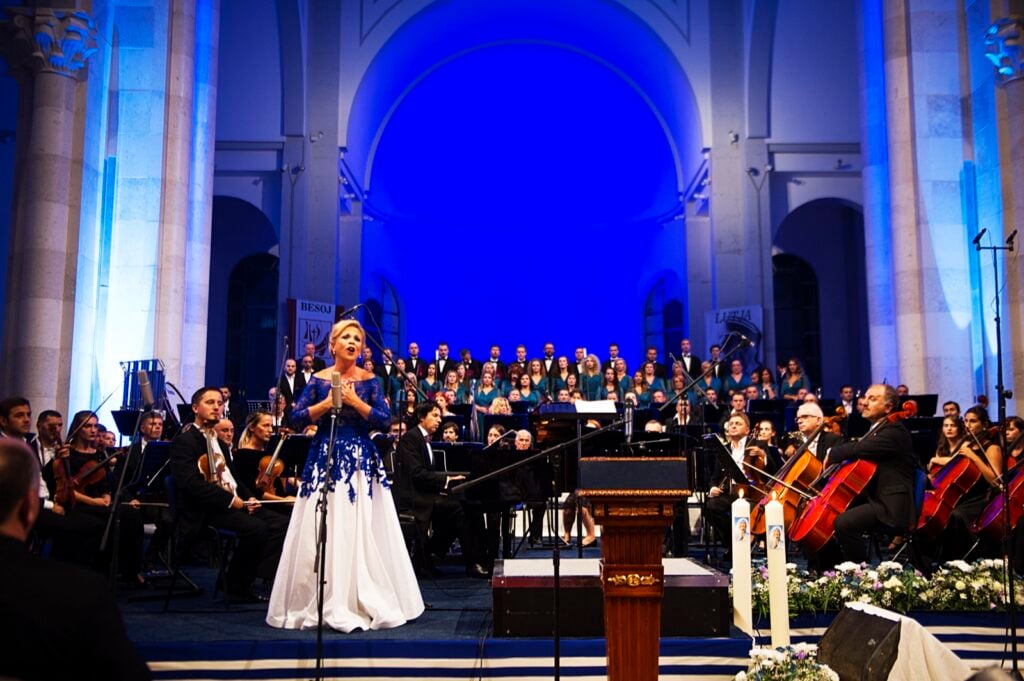
The National Diaspora Agency lists her stages as the Arena di Verona, Deutsche Oper Berlin, the Liceu in Barcelona, the Maggio Musicale Fiorentino, the Paris Opera, La Scala, the Teatro Real in Madrid, the Metropolitan Opera, the Théâtre des Champs-Élysées and the Vienna State Opera, with further appearances in Los Angeles, Washington, Chicago, Moscow, St. Petersburg, Toulouse and Las Palmas. AllMusic adds Los Angeles Opera, which invited her back several times, and notes that she makes her home and bases her career in Paris, which is why she also appears in our guide to Shqiptarët në Francë.
Career Timeline
| Viti | Ngjarje | Burimi |
|---|---|---|
| 1963 | Born in Tirana | AllMusic |
| 1987 | First prize, Singer of Albania competition, Tirana | AllMusic |
| 1988 and 1991 | Prizes at the George Enescu Competition, Bucharest | Dielli, AllMusic |
| 1992 | Grand Prix Madama Butterfly, Barcelona | AllMusic |
| 1993 | Winner, first Operalia competition, Paris | Operalia |
| 1997 | Diva’s singing voice, Elementi i Pestë; Lisette on the EMI La rondine, Gramophone Record of the Year | IMDb, AllMusic |
| 2001 | Metropolitan Opera debut, La Bohème, October 1 | Met Opera Archives |
| 2005 | Chevalier des Arts et des Lettres, France | National Diaspora Agency |
| 2009 | Title role in Gounod’s Mireille, Paris Opera | Dielli |
| 2012 | Sings at the independence centenary concert; awarded Nderi i Kombit | National Diaspora Agency |
Recordings and Honors
Her best-known studio recording is Puccini’s La rondine for EMI, conducted by Antonio Pappano with Angela Gheorghiu and Roberto Alagna, in which she sings the maid Lisette. AllMusic records that the release won the Gramophone Award as Record of the Year in 1997. (She gave the recording year as 2005 in her Dielli interview, which appears to be a slip; the award date is 1997.)
Two states have honored her. According to Albania’s National Diaspora Agency, France named her Chevalier des Arts et des Lettres in 2005, and in November 2012 she sang at the concert marking 100 years of Albanian independence and received from the President of the Republic the title Nderi i Kombit, Honor of the Nation. Our guide to kur Shqipëria fitoi pavarësinë explains what that centenary marked. She has described her bond with Albania as something that exists powerfully in her being, and art as a necessity for an enlightened society rather than a luxury (Dielli).
Her voice type, in AllMusic‘s description, is a lyric soprano with strong bel canto and coloratura abilities, particularly valued in Mozart, with a range wide enough for the lighter Verdi roles such as Nannetta and Gilda as well as Violetta.
Why This Matters to Albanian-Americans
For a generation of Albanian-Americans, the Diva scene in Elementi i Pestë was the first time they heard an Albanian voice in a Hollywood blockbuster, even if the credits went by too fast to catch the name. Mula’s career also traces the arc of the country itself: trained inside a closed state, then released onto the world’s stages within two years of Albania’s first free elections. She left in September 1991, in the same years covered by our history of Albanian immigration to the US.
She matters to the American story specifically because she sang here: eight nights at the Metropolitan Opera in the autumn of 2001, plus Chicago, Los Angeles and Washington. She belongs alongside the pop names in our guide to këngëtarë të famshëm shqiptarë and on the list of gra të famshme shqiptare, and her story is a reminder that Albania’s classical tradition, covered in our overview of Muzikë shqipe, produced world-class artists long before the diaspora’s pop stars.
Pyetje të shpeshta
Who sang the Diva Dance in The Fifth Element?
The Albanian soprano Inva Mula is credited by IMDb as the Diva’s singing voice in Elementi i Pestë (1997). On screen the Diva Plavalaguna was played by Maïwenn Le Besco. The scene begins with “Il dolce suono” from Donizetti’s Lucia di Lammermoor and moves into the electronic Diva Dance.
Is Inva Mula Albanian?
Yes. She was born in Tirana in 1963 to the Albanian composer and singer Avni Mula and the soprano Nina Mula, trained at the Academy of Arts in Tirana, sang five seasons at the Tirana opera and left Albania in September 1991. Albania’s president awarded her the Nderi i Kombit title in November 2012.
Was Inva Mula’s voice digitally altered in The Fifth Element?
Sources disagree. Albania’s Top Channel reported in 2011 that her voice in the Diva Dance was not digitally modified. AllMusic’s biography presumes electronic help on the highest notes. The Donizetti aria that opens the scene is, by both accounts, sung straight. We have not found a statement from the film’s producers settling the question.
Did Inva Mula sing at the Metropolitan Opera?
Yes. The Metropolitan Opera Archives record her debut in La Bohème on October 1, 2001, followed by seven further performances through November 8, 2001. A Los Angeles concert program from 2000 had announced the debut in advance as the role of Musetta.
What competitions did Inva Mula win?
She won the Singer of Albania competition in 1987, prizes at the George Enescu Competition in Bucharest, the Grand Prix Madama Butterfly in Barcelona in 1992 and, most importantly, a winner’s prize at the first Operalia in Paris in 1993, alongside Ainhoa Arteta, Nina Stemme and Kwangchul Youn, according to Operalia’s official winners list.
Where does Inva Mula live?
AllMusic says she makes her home and bases her career in Paris, and Top Channel reported in 2011 that she lives in the city’s 16th arrondissement. She has said her bond with Albania remains strong, and she returned to Tirana to sing at the independence centenary concert in November 2012.
Burimet
- IMDb: The Fifth Element (1997), Inva Mula as Diva’s Singing Voice
- AllMusic: Inva Mula-Tchako, biography by Joseph Stevenson
- Operalia: Winners (1993, Paris)
- Metropolitan Opera Archives: performances by Inva Mula
- National Diaspora Agency of Albania: Inva Mula
- The Ford (Los Angeles): Inva Mula, artist biography (February 2000)
- Top Channel: Inva Mula, The Diva Dance (September 29, 2011)
- Dielli: Flet Inva Mula, diva e muzikës operistike (March 24, 2016)
Lexime të Ngjashme
- Këngëtarë të famshëm shqiptarë
- Gra të famshme shqiptare
- Albanian Music
- Shqiptarët në Francë
- Udhëzues Udhëtimi për në Tiranë
- Kur e fitoi pavarësinë Shqipëria?

Autor: Val Demiri
Valbona është redaktore dhe shkrimtare në ALB Connection, ku ajo mbulon njerëzit, bizneset dhe kulturën që formësojnë diasporën shqiptare. E diplomuar në gazetari në Universitetin e Ajovës, puna e saj përfshin profile të komunitetit, histori suksesi dhe reportazhe mbi jetën shqiptare në të gjithë SHBA-në, Evropën dhe më gjerë. Ajo tërhiqet nga historitë që festojnë arritjet e shqiptarëve dhe e mbajnë komunitetin të lidhur përtej kufijve.