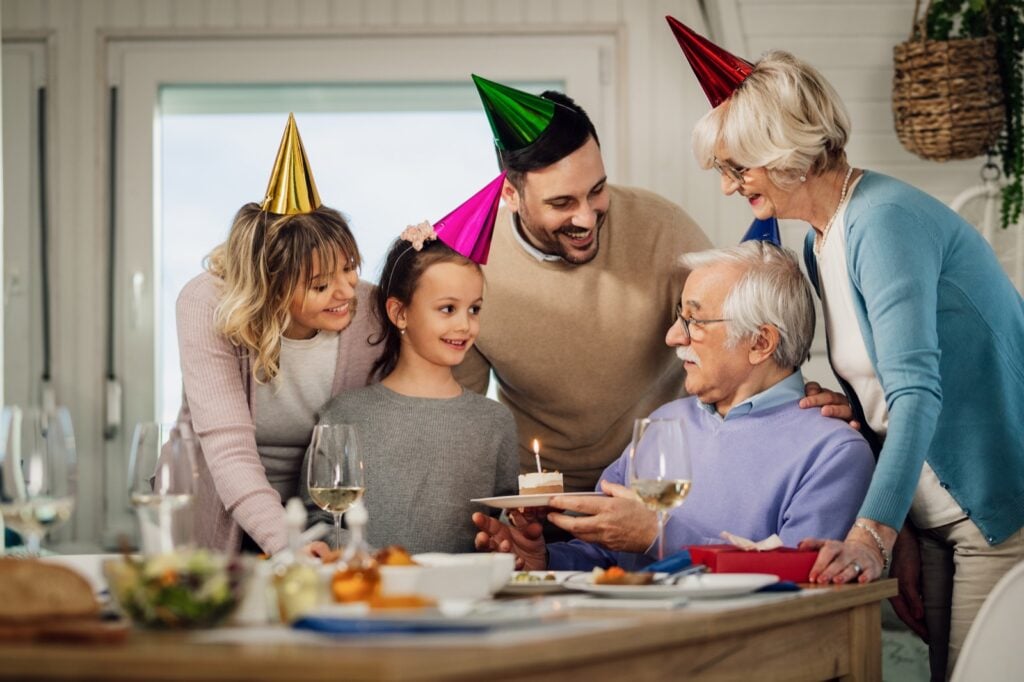

Happy birthday in Albanian is Gëzuar ditëlindjen, pronounced roughly guh-ZOO-ar dee-tuh-LEEN-dyen. You will also hear Urime ditëlindjen, and the traditional wish that follows both is U bëfsh njëqind vjeç, “may you live to be a hundred.”
The first word, gëzuar, opens most other celebrations too: Christmas, New Year, Easter, Bajram and every toast at the table. This guide covers the wishes Albanians use for birthdays, holidays, weddings, new babies and achievements, and ends with the words for offering condolences. Each phrase was checked against the Albanian Academy of Sciences dictionary or another source listed at the end.
Fakte të shpejta
- The Academy of Sciences dictionary lists gëzuar as an interjection used for wishes and gives two examples: gëzuar Vitin e Ri! and gëzuar ditëlindjen!
- Ditëlindje is a compound of ditë (day) and lindje (birth), exactly like the English word “birthday.”
- U bëfsh njëqind vjeç! appears in the same dictionary as a set wish. It means “may you become one hundred years old.”
- Gëzuar! on its own is the Albanian “cheers,” taught in the Peace Corps Albania language course.
- The wedding wish U trashëgofshi! and the condolence phrase Të rroni vetë! are both recorded in the dictionary with a note on when they are said.
- Albania’s official holiday calendar for 2026, published by the Bank of Albania, includes Christmas, Catholic and Orthodox Easter, both Bajram holidays and two days for New Year.
Në këtë faqe
- Happy Birthday: Gëzuar Ditëlindjen
- U Bëfsh 100 Vjeç and What It Means
- Christmas, New Year, Easter and Bajram
- Cheers in Albanian: Gëzuar
- Congratulations, Good Luck and Life Events
- How to Reply to a Wish
- Condolences: What to Say After a Loss
- Common Mistakes
- Pyetje të shpeshta
Happy Birthday: Gëzuar Ditëlindjen
Gëzuar comes from the verb gëzoj, “to bring joy” or “to rejoice.” As an adjective the dictionary defines it as feeling or showing joy. As an interjection it is tagged with the abbreviation ur., short for urim (a wish), and the dictionary spells out the sense: “may you be joyful,” “may you spend it joyfully.” The stress is on the middle syllable, gëzúar, and Wiktionary’s phonetic transcription agrees.
Ditëlindje is “birthday.” The dictionary defines it as the day of someone’s birth, or of the founding of something, and the yearly celebration of that day. In the greeting it takes the ending -n (ditëlindjen) because it is the object of the wish, the same ending you see in Natën e mirë and Vitin e Ri.
Urime ditëlindjen
The second common greeting uses urime, the plural of urim. The dictionary defines urim as words said to someone to express a good wish for the future, and notes that the plural is what you use to congratulate someone on an occasion. Its own example is urime për ditëlindjen, literally “congratulations for the birthday.” The shorter Urime ditëlindjen is listed in the Glosbe Albanian to English dictionary with the translation “happy birthday.”
A birthday present is dhuratë për ditëlindje, another example from the dictionary entry. To ask about age, the dictionary gives Sa vjeç mbushi? (how old did he or she turn?).
U Bëfsh 100 Vjeç and What It Means
After the greeting comes the wish. U bëfsh njëqind vjeç! is printed in the Academy dictionary under the verb bëhem (to become), tagged as a wish. Word by word: u bëfsh is “may you become,” njëqind is “one hundred,” and vjeç states age. In cards and messages you will also see it written with the numeral: U bëfsh 100 vjeç!
The verb form is the optative, a mood Albanian uses for blessings and wishes. Wiktionary labels the parallel forms qofsh and paç as the second person singular optative of jam (to be) and kam (to have). You can see the pattern across the wishes in this guide: forms ending in -fsh address one person (u bëfsh, e gëzofsh, qofsh), and forms ending in -fshi address more than one (u trashëgofshi, said to a couple).
The dictionary offers another long-life wish that suits a birthday. Për shumë vjet! means “for many years!” and the entry (under vit, year) says it is used on birthdays or holidays.
| shqip | English meaning | Shqiptimi | Kur ta përdorni |
|---|---|---|---|
| Gëzuar ditëlindjen! | Happy birthday | guh-ZOO-ar dee-tuh-LEEN-dyen | The standard birthday greeting, any age |
| Urime për ditëlindjen! | Congratulations on your birthday | oo-REE-meh puhr dee-tuh-LEEN-dyen | Spoken or written; often shortened to Urime ditëlindjen |
| U bëfsh njëqind vjeç! | May you live to be 100 | oo BUHFSH nyuh-TYEEND VYECH | Right after the birthday greeting, to one person |
| Për shumë vjet! | For many years | puhr SHOO-muh VYET | Birthdays and holidays |
| Gëzuar Krishtlindjet! | Merry Christmas | guh-ZOO-ar kreesht-LEEN-dyet | Krishtlindje |
| Gëzuar Vitin e Ri! | Happy New Year | guh-ZOO-ar VEE-teen eh REE | New Year |
| Gëzuar Pashkët! | Happy Easter | guh-ZOO-ar PAHSH-kuht | Catholic and Orthodox Easter |
| Gëzuar Bajramin! | Happy Bajram (Eid) | guh-ZOO-ar bye-RAH-meen | Both Bajram holidays |
| Gëzuar! | Cheers | guh-ZOO-ar | Raising a glass |
| Urime! | Congratulations | oo-REE-meh | Any good news |
| Paç fat! | Good luck | pahch FAHT | Before an exam, a trip or a new start |
| U trashëgofshi! | A wish for a long, happy married life | oo trah-shuh-GOHF-shee | To a bride and groom |
| Ngushëllime | Condolences | ngoo-shuh-LEE-meh | After a death, to the family |
A note on the respellings: the letter q in njëqind is a soft sound between “ty” and “ch,” ë is the “uh” in “around,” and rr is a rolled r. Stress follows the marks in the Academy dictionary (gëzúar, ditëlíndje, urím, bajrám, ngushëllím). The dictionary marks stress on the base word only, so for forms with endings, such as ditëlindjen or trashëgofshi, the stressed syllable shown is that of the base word.
Christmas, New Year, Easter and Bajram
The holiday greetings all follow the birthday pattern: Gëzuar plus the name of the holiday with a definite ending. Omniglot‘s Albanian phrase list gives Gëzuar Krishtlindjet for Christmas and Gëzuar Pashkët for Easter, and the Academy dictionary itself prints gëzuar Vitin e Ri! as an example.
- Christmas. Krishtlindje is a compound of Krisht (Christ) and lindje (birth). The dictionary defines it as the feast of the birth of Christ on December 25, which is an official holiday on the Bank of Albania calendar.
- New Year. Vitin e Ri is “the new year.” The 2026 calendar lists January 1 and 2 together as Festat e Vitit të Ri. Our article on Si e festojnë shqiptarët Vitin e Ri explains the customs.
- Easter. The 2026 calendar lists Catholic Easter Sunday and Orthodox Easter Sunday as separate holidays, a week apart. Gëzuar Pashkët works for both. In Orthodox services the priest proclaims Krishti u ngjall! (Christ is risen!) and the faithful answer Vërtet u ngjall! (Truly he is risen!), as described by the Orthodox Autocephalous Church of Albania. The exchange doubles as a greeting: the church’s roundup of Easter messages from state leaders in 2020 includes it alongside Gëzuar Pashkët!
- Bajram. The dictionary defines bajram as each of the two main Muslim feasts, and the official calendar names them Bajrami i Madh and Kurban Bajrami, with a note that their dates may change with the lunar calendar. The greeting is Gëzuar Bajramin! Voice of America’s Albanian service used exactly that phrase for the closing line of the White House holiday message in 2016. Our guide to Gëzuar Bajramin and the Albanian Eid has the full set of Bajram wishes.
For the full list of official days and what each one means, see our guide to Festat shqiptare.
Cheers in Albanian: Gëzuar
Cheers in Albanian is simply Gëzuar! The Peace Corps Albania course teaches it under the heading “Cheers!” next to Të bëftë mirë! (enjoy your meal), and Omniglot lists it first among Albanian toasts, followed by Shëndeti tuaj! (your health!).
The word for a toast is dolli, which the dictionary defines as raising a glass to someone’s health at a wedding or a dinner. Shëndet (health) can itself mean a toast: the dictionary gives the example ngriti dy shëndete, “he raised two toasts.” Shëndet! is also what you say when someone sneezes, according to Omniglot. If the glass holds raki, see our explainer on Nga çfarë bëhet rakia.
Congratulations, Good Luck and Life Events
Urime! is the all-purpose “congratulations.” Omniglot pairs it with Përgëzime!, and the dictionary defines the related verb përgëzoj as greeting and congratulating someone warmly on finishing something successfully. For a graduation, a new job or a passed exam, either works.
Good luck
Fat means luck or fate. Omniglot gives Paç fat! for “good luck,” literally “may you have luck.” The phrase me fat means “with luck”; the dictionary records it in është me fat, “he or she is lucky.” For someone starting a task, the dictionary lists Punë e mbarë! (may the work go well) and, for a traveler, Udhë e mbarë! (have a good trip).
Dasma
The classic wedding wish is U trashëgofshi! The dictionary explains the verb in this sense as “to spend family life in joy,” and lists a longer form as well: Të rroni dhe të trashëgoni! (may you live and enjoy a long life together). Under the word dasmë (wedding) it also records Në dasmë të djalit! and Në dasmë të vajzës!, literally “at the son’s wedding!” and “at the daughter’s wedding!”, wishes that look ahead to a child’s wedding day. Our guide to Traditat e dasmave në Shqipëri covers the celebration itself.
A new baby, a new outfit, a new home
When a child is born, the dictionary gives T’ju rrojë e me jetë të gjatë! (may the child live, and with a long life). For anything new that a person will use or wear, the wish is E gëzofsh! (may you enjoy it); the dictionary examples are E gëzofsh kostumin! for a new suit and E gëzofsh të ritë! for youth itself.
How to Reply to a Wish
The reply to almost every wish on this page is Faleminderit (fah-leh-meen-DEH-reet). The Academy dictionary defines it as the word used to express gratitude to someone “for a good deed, for a wish,” so it is built for exactly this situation. Our guide to thank you in Albanian has more options.
- To a birthday or holiday greeting: thank the person with Faleminderit, and for a shared holiday say the greeting back.
- To a toast: raise your glass and say Gëzuar! back.
- To Shëndet! after a sneeze: Omniglot lists Faleminderit and Shëndet paç (may you have health) as replies.
- To the Orthodox Easter greeting: Krishti u ngjall! is answered with Vërtet u ngjall!
Condolences: What to Say After a Loss
Some days the right words are not festive. The Albanian word for condolences is ngushëllime, the plural of ngushëllim. The dictionary defines the verb ngushëlloj as trying to ease someone’s pain with kind words, and expressing your sorrow and warm feelings to someone who has lost a relative. Its example of a full sentence is Shpreh ngushëllimet e mia: “I express my condolences.”
The dictionary also records three traditional phrases and says when each is used:
- Të rroni vetë! (tuh RROH-nee VEH-tuh), “may you yourselves live.” The dictionary describes it as the consolation offered to the family when someone dies.
- Vetë shëndoshë! (VEH-tuh shuhn-DOH-shuh), “may you yourselves be in good health,” listed as a consolation in case of death.
- Ndjesë pastë! (NDYEH-suh PAHS-tuh), said of the person who has died, as a sign of respect and sorrow.
When speaking about the person, Albanian places i ndjeri (for a man) or e ndjera (for a woman) before the name or the family word, as in i ndjeri baba, “the late father.” The dictionary notes that this is done as a mark of respect. If you are unsure what is appropriate at a particular funeral or memorial, a quiet, sincere Ngushëllime is a safe choice.
Common Mistakes
- Using Gëzuar for sad occasions. Gëzuar means “joyful.” It belongs to birthdays, holidays and toasts, never to a condolence visit.
- Dropping the endings. It is Gëzuar ditëlindjen, Gëzuar Vitin e Ri, Gëzuar Krishtlindjet and Gëzuar Bajramin. Every source we checked prints these definite forms after gëzuar, not the bare words ditëlindje, vit or Bajram.
- Losing the ë and ç. Gezuar, ditelindjen and vjec are common in text messages, but the correct spellings are gëzuar, ditëlindjen and vjeç.
- Saying U bëfsh to a group. The -fsh form addresses one person. The dictionary’s plural wishes end in -fshi, as in U trashëgofshi.
- Stressing the first syllable. The dictionary marks gëzúar: say guh-ZOO-ar, not GEH-zoo-ar.
Pyetje të shpeshta
How do you say happy birthday in Albanian?
Happy birthday in Albanian is Gëzuar ditëlindjen, pronounced roughly guh-ZOO-ar dee-tuh-LEEN-dyen. A second greeting, Urime për ditëlindjen or the shorter Urime ditëlindjen, means “congratulations on your birthday.” Either one is usually followed by the wish U bëfsh njëqind vjeç, which means “may you live to be one hundred.”
What does u bëfsh 100 vjeç mean?
It means “may you become one hundred years old.” U bëfsh is a wish form of the verb bëhem (to become), njëqind is one hundred, and vjeç is the word used with numbers to give someone’s age. The Academy of Sciences dictionary lists the phrase as a set wish. It is addressed to one person.
How do you say Merry Christmas in Albanian?
Merry Christmas in Albanian is Gëzuar Krishtlindjet, pronounced roughly guh-ZOO-ar kreesht-LEEN-dyet. Krishtlindje combines the words for Christ and birth. For the week that follows, the New Year greeting is Gëzuar Vitin e Ri. Both are answered by repeating the greeting or with Faleminderit, thank you.
How do you say cheers in Albanian?
Cheers in Albanian is Gëzuar, pronounced guh-ZOO-ar. It is the same word that starts the birthday and holiday greetings, and it literally means “joyful.” You may also hear Shëndeti tuaj, “your health.” The reply is simply Gëzuar, said back as you raise your glass.
How do you say congratulations in Albanian?
Congratulations in Albanian is Urime, pronounced oo-REE-meh. Përgëzime is a second option with the same meaning. For a wedding, the traditional wish is U trashëgofshi. For good luck before an exam or a new job, say Paç fat. For a new purchase or a new outfit, say E gëzofsh, “may you enjoy it.”
What do you say in Albanian when someone dies?
The word for condolences is Ngushëllime, pronounced ngoo-shuh-LEE-meh. The Academy dictionary also records Të rroni vetë and Vetë shëndoshë, both said to the family, and Ndjesë pastë, said of the person who has died. When in doubt, a quiet Ngushëllime is a safe choice.
Burimet
- Fjalorthi: Fjalor i gjuhës shqipe (Academy of Sciences of Albania, 2006), entry gëzuar
- Fjalorthi: Fjalor i gjuhës shqipe (Academy of Sciences of Albania, 2006), entry bëhem (u bëfsh njëqind vjeç)
- Fjalorthi: Fjalor i gjuhës shqipe (Academy of Sciences of Albania, 2006), entries urim and ditëlindje
- Fjalorthi: Fjalor i gjuhës shqipe (Academy of Sciences of Albania, 2006), entries trashëgoj and trashëgohem
- Fjalorthi: Fjalor i gjuhës shqipe (Academy of Sciences of Albania, 2006), entries rroj, ngushëlloj, ndjesë and shëndoshë
- Peace Corps Albania: The Albanian Language, Gjuha shqipe, për të ftuarit (PDF)
- Omniglot: Fraza të dobishme në shqip
- Bank of Albania: Kalendari i festave zyrtare për vitin 2026
- Orthodox Autocephalous Church of Albania: E Diela e Shenjtë e Pashkës së Madhe
- Orthodox Autocephalous Church of Albania: Urime për Pashkë nga autoritetet e larta shtetërore dhe politikanë
- Voice of America (Zëri i Amerikës): Presidenti Obama përcjell urime për Fitër Bajramin
- Glosbe: urime ditëlindjen, Albanian to English
Lexime të Ngjashme
- Gëzuar Bajramin: The Albanian Eid
- Si e festojnë shqiptarët Vitin e Ri
- Albanian Holidays
- Traditat e Dasmave Shqiptare
- Frazat e zakonshme në shqip
- Faleminderit në shqip
- Good Morning in Albanian
- Family Words in Albanian

Autor: Val Demiri
Valbona është redaktore dhe shkrimtare në ALB Connection, ku ajo mbulon njerëzit, bizneset dhe kulturën që formësojnë diasporën shqiptare. E diplomuar në gazetari në Universitetin e Ajovës, puna e saj përfshin profile të komunitetit, histori suksesi dhe reportazhe mbi jetën shqiptare në të gjithë SHBA-në, Evropën dhe më gjerë. Ajo tërhiqet nga historitë që festojnë arritjet e shqiptarëve dhe e mbajnë komunitetin të lidhur përtej kufijve.