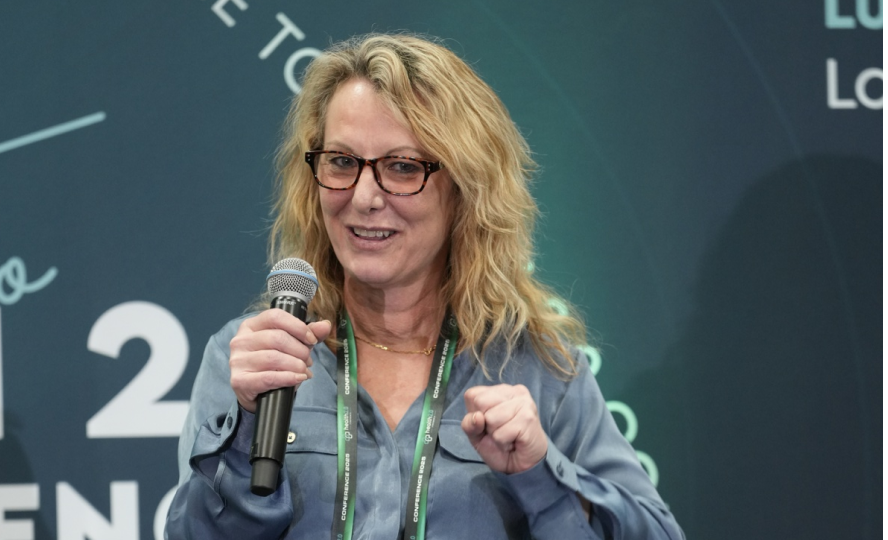

Loreta Doga did not arrive at psychotherapy because she believed she had all the answers. She arrived there because life forced her to question some of the answers she had been given.
As the founder of UMATTERCARE and a Registered Nurse and Psychotherapist, Doga has built her work around mental health, addiction, trauma, relationships, and the emotional struggles people often carry quietly. But at the heart of her work is something even more fundamental: the belief that people need to know they matter before they can truly begin to heal.
Her journey toward that belief began in 2001, after a motor vehicle accident left her with significant physical injuries and forced her to confront a definition of strength that had shaped much of her life.
She had been taught to push through. To keep going. Not to complain. Not to be weak.
When her body could no longer simply cooperate with those expectations, she struggled to accept it. What should have been an opportunity to recognize that she was going through something profound instead became, for a time, a judgment against herself.
The result was years of depression.
That experience changed the way she understood strength, resilience, healing—and ultimately, herself.
Today, Doga’s work is rooted in a different philosophy: strength does not mean never struggling, and resilience does not mean suffering silently. Sometimes the strongest thing a person can do is acknowledge that they need help.
Through UMATTERCARE, Doga is now working toward something larger than treatment alone: creating a culture where mental health care becomes part of prevention and well-being, rather than something people seek only when life has already reached a crisis point.
Pikat kryesore
- Loreta Doga, a Nurse Psychotherapist, founded UMATTERCARE after a 2001 motor vehicle accident fundamentally changed the way she understood strength and resilience.
- Years of depression following the accident forced her to question the belief that being strong meant simply pushing through pain and never asking for help.
- Her work in psychotherapy focuses on understanding the person beneath the behaviour, particularly in areas involving addiction, trauma, relationships, anxiety, depression, and family dynamics.
- Doga believes meaningful recovery requires both accountability and compassion, without reducing a person to their struggles or behaviours.
- Her connection to her Albanian heritage remains deeply important. She embraces values such as family, loyalty, perseverance, keeping one’s word, and pride in being Albanian, while questioning cultural messages that can equate strength with silence or endurance.
- UMATTERCARE is built around a simple philosophy: people need to believe they matter and are worthy of care.
- Doga’s long-term vision is to move mental health care further upstream—from responding to crisis to preventing crisis and helping people build healthier, more fulfilling lives.
Profil i shpejtë
- OBSH: Loreta Doga, RN, BN, Nurse Psychotherapist
- Cfarë: Founder of UMATTERCARE, offering mental health and addiction services
- Ku: 97 Bonnyview Drive, Etobicoke, ON
- Focus areas: Trauma, addiction, relationships, anxiety, depression, family dynamics
- Kontakti: 416-822-0132 | umattercare.com
The Accident That Changed Her Definition of Strength
In 2001, Loreta Doga experienced a motor vehicle accident that resulted in significant physical injuries. But the deepest impact of the accident was not only physical.
It forced her to confront a belief system she had carried for much of her life.
“At that time, my understanding of strength and resilience was deeply rooted in the belief that you simply had to ‘do it,’ keep going, don’t complain, and, most importantly, don’t be weak.”
That philosophy had once seemed like strength. After the accident, however, it became a source of enormous internal pressure.
Her body was telling her that she could not simply continue as before. She struggled to accept that reality.
“I could not understand why I couldn’t simply push through,” she explains. “Instead of recognizing that I was going through something profound, I saw my limitations as a personal failure.”
That inability to accept her own limitations contributed to years of depression.
Looking back, Doga recognizes that the problem was not that she lacked strength. It was that she had been given a definition of strength that left no room for vulnerability, healing, or asking for support.
Her understanding of resilience is very different today.
“Strength is not the absence of struggle, and resilience does not mean pretending that you are not hurting.”
Sometimes resilience means continuing. Sometimes it means stopping.
Sometimes it means asking for help, setting a boundary, accepting that something is not working, or allowing yourself the time and space necessary to heal.
“There is a difference between perseverance and ignoring what you need.”
That distinction has become central to the way Doga approaches her clients.
People often arrive believing they need to become stronger. What they may actually need is to recognize that they have already been strong for too long.
“Sometimes they need someone to help them understand that they have already been strong for too long, and that there is no shame in needing support.”
Why Psychotherapy, Why Addiction
Doga was drawn to psychotherapy because she wanted to understand what exists beneath behaviour.
A behaviour is often only the visible part of a much deeper story.
Addiction is a particularly powerful example. It is easy to focus on the substance or behaviour itself. But meaningful recovery requires looking at the person behind it: their experiences, coping mechanisms, relationships, emotional needs, and the ways they learned to survive.
For Doga, understanding does not mean removing responsibility.
Her philosophy is built around both accountability and compassion.
“I believe people need both accountability and compassion. We can acknowledge harmful patterns without defining a person by those patterns.”
That balance is important. People need to be responsible for their choices, but they also need the opportunity to understand why they are making those choices in the first place.
Without understanding, people can remain trapped in the same patterns even when they genuinely want to change.
Doga’s role is not to label people by their struggles. It is to help them understand themselves more clearly so they can begin making different choices.
A Day in the Work
No two days look exactly the same, and that variety is one of the things Doga values about her work.
Her practice touches on relationships, trauma, addiction, life transitions, self-worth, anxiety, depression, and family dynamics. While the presenting problem may differ from one person to another, the deeper work often involves helping people understand what is happening beneath the surface.
What is the behaviour trying to communicate?
What pattern keeps repeating?
What need is not being recognized?
What has the person learned to tolerate?
What are they afraid will happen if they finally set a boundary?
These questions can lead somewhere deeper than simply trying to eliminate a symptom.
Alongside client work, Doga also writes and develops resources designed to make psychological knowledge more accessible outside the traditional therapy room.
Her work as an author reflects that same commitment to examining difficult subjects. She is the author of Inside a Manipulator’s Mind dhe Bloody Freedom, continuing her efforts to bring conversations about manipulation, relationships, emotional pain, and human behaviour into the open.
The Barriers She Sees Most Often
One of the biggest barriers Doga sees is still stigma.
Many people have been taught that asking for help means they are weak, incapable, or somehow failing. Others are afraid of judgment or worry about what people will think if they admit they are struggling.
For some, the fear is so strong that they wait until their situation becomes overwhelming.
There are also practical barriers—cost, accessibility, uncertainty about where to begin, and the belief that therapy is something people should seek only when they are in crisis.
Doga challenges that idea.
“People should not have to reach a crisis point before they feel entitled to ask for help.”
Mental health deserves the same kind of attention we give other areas of our lives. Waiting until something becomes unbearable is not the only way to seek support.
Prevention matters.
Learning how to communicate, recognize unhealthy patterns, understand emotional triggers, build boundaries, strengthen relationships, and care for yourself can be valuable long before a crisis develops.
What She Wants People to Understand About Therapy
Doga believes there is a common misconception about what therapy is supposed to do.
Therapy is not about someone sitting across from you and giving you all the answers.
“Therapy is not about someone giving you all the answers. It is about creating a space where you can understand yourself more clearly and begin making different choices.”
That process is not always comfortable, and it is rarely linear.
There may be progress, setbacks, difficult realizations, and moments of clarity. A setback does not erase the progress that came before it.
Most importantly, seeking help does not mean someone is broken.
“Sometimes it means you have finally decided that you deserve something different.”
For Doga, the goal is not to create a life where nothing difficult ever happens. It is to help people develop the awareness, tools, boundaries, and confidence to respond differently when life becomes difficult.
Redefining Resilience Through Her Clients, and Herself
Doga’s understanding of resilience has continued to evolve through both her personal experience and the people she has worked with.
She once understood resilience as pushing through almost anything.
Now she sees resilience as something much more nuanced.
It can mean getting through a difficult day.
It can mean admitting that a relationship is hurting you.
It can mean setting a boundary for the first time.
It can mean saying, “I need help.”
And sometimes, it can simply mean allowing yourself to stop fighting reality long enough to understand what you actually need.
One of the most important distinctions she makes is between perseverance and self-neglect.
Continuing despite difficulty can be courageous.
Ignoring your own needs indefinitely is something else.
“Resilience should not mean that people have to suffer alone. We are not meant to carry everything by ourselves.”
That lesson is one Doga learned personally, and it has become one of the messages she wants to pass on professionally.
Heritage, Kept and Questioned
Doga’s relationship with her Albanian heritage is deeply personal, but she does not believe that honouring a culture means accepting every belief or mentality that has been passed down through generations.
Her own experience forced her to examine what she had learned about strength, endurance, responsibility, and what it means to be there for others.
She did not reject her heritage.
Instead, she became more intentional about what she wanted to carry forward.
“Love for family, being there for one another, keeping your word, loyalty, perseverance, and the pride I feel in being Albanian.”
Those are values she continues to hold closely.
At the same time, she questions the idea that caring for yourself is selfish, that asking for help is weakness, or that setting boundaries somehow makes someone disloyal.
Her message to the Albanian community is therefore not about abandoning tradition.
It is about allowing the culture to evolve.
“Caring for yourself does not mean you care less about your family. Setting boundaries does not mean you are disloyal. Asking for help does not make you weak. And choosing your own mental health does not mean you are rejecting your culture.”
She believes it is possible to honour where we come from while also changing what no longer serves us.
“We can respect where we come from while still evolving.”
For someone in the Albanian community who is struggling but afraid to seek help, her message is simple:
“You do not have to wait until things become unbearable. You can be strong and still need help. You can love your family and still need boundaries. You can be successful and still struggle emotionally.”
Sometimes, the hardest sentence to say is also one of the most important:
“I’m not okay.”
Why UMATTERCARE, Why That Name
The name UMATTERCARE came from a simple belief that Doga wanted to place at the centre of everything she does:
You matter.
Before healing, recovery, or growth can truly begin, people need to believe that they are worthy of care.
The name itself is therefore a message.
You matter—not because of what you accomplish, how much you earn, how much you do for other people, or how well you appear to be coping.
You matter because you are a person.
Doga wants people who enter UMATTERCARE to feel seen rather than judged, understood rather than labelled, and supported rather than alone.
But she also wants therapy to lead somewhere practical.
Insight is important, but insight alone does not necessarily change a person’s life.
The goal is for people to leave with greater awareness, practical tools, healthier boundaries, and greater confidence in their ability to make different choices.
Most importantly, she wants people to leave with hope—not the unrealistic promise that life will suddenly become perfect, but the belief that change is possible.
Çfarë Vjen Tjetër
Doga’s vision for UMATTERCARE extends well beyond treating problems after they become severe.
She wants it to become a place of prevention and well-being—a resource people can turn to before they reach crisis.
Her long-term question is not simply:
“How do we treat the problem?”
It is:
“How do we prevent the problem from becoming a crisis in the first place?”
That means creating opportunities for people to understand themselves earlier, develop healthier coping strategies, strengthen relationships, recognize unhealthy patterns, establish boundaries, and invest in their mental health before they are overwhelmed.
In that vision, UMATTERCARE is not simply a place people go when something is wrong.
It becomes a place people go to learn, grow, prevent problems, strengthen their relationships, and create healthier and more fulfilling lives.
Doga also believes strongly in the responsibility of the helping profession itself.
Her advice to young professionals entering mental health work is straightforward:
“Learn to listen before you learn to fix.”
Knowledge matters. Training matters. Continued learning matters.
But so do curiosity, humility, emotional awareness, and the ability to recognize that every person sitting across from you has a story you do not yet know.
And professionals cannot sustainably care for others while completely neglecting themselves.
Burnout is real.
Self-care is not a luxury for people in helping professions. It is part of being able to continue helping.
Konkluzion
Loreta Doga’s story is not simply one of overcoming a difficult experience.
It is a story about questioning.
Questioning what she had been taught about strength.
Questioning the idea that pushing through everything is always resilience.
Questioning the belief that asking for help means weakness.
And, ultimately, choosing what she wanted to carry forward.
The 2001 accident changed her physically, but the years that followed changed something deeper. They forced her to reconsider the expectations she had placed on herself and to recognize that strength can include vulnerability, support, boundaries, healing, and the courage to say that something is not okay.
That realization became part of the foundation for UMATTERCARE.
Today, Doga brings that philosophy into her work with people facing addiction, trauma, relationship struggles, anxiety, depression, and other forms of emotional pain. She continues to challenge conversations that are often kept behind closed doors.
And she is building toward something bigger: a culture in which people do not have to wait until they are falling apart before they are allowed to care for themselves.
Her message is ultimately simple.
You do not have to earn the right to be cared for.
You do not have to prove your strength by suffering silently.
And you do not have to wait for a crisis to decide that your mental health matters.
You matter.
Connect with UMATTERCARE
Faqja e internetit: umattercare.com
Phone: 416-822-0132
Adresa: 97 Bonnyview Drive, Etobicoke, ON M8Y 3G8
Email: support@umattercare.com
Discover more Albanian diaspora success stories në direktorinë ALB Connection. Dorëzoni historinë tuaj!
Pyetje të shpeshta
What inspired Loreta Doga to start UMATTERCARE?
A 2001 motor vehicle accident and the years of depression that followed reshaped her understanding of strength and resilience, becoming the foundation for UMATTERCARE’s philosophy that people are worthy of care.
What does UMATTERCARE offer?
Mental health and addiction services covering trauma, relationships, anxiety, depression, family dynamics and life transitions, based in Etobicoke, Ontario.
How does Loreta Doga define resilience?
She distinguishes resilience from simply pushing through pain, describing it instead as recognizing when help is needed, setting boundaries, and refusing to carry everything alone.
How does Loreta Doga’s Albanian heritage shape her work?
She kept values like loyalty, family, and perseverance while questioning beliefs that taught silence and self-neglect, and now tells her community that self-care and cultural pride are not in conflict.
What does the name UMATTERCARE represent?
It reflects the belief that before healing or recovery can happen, people need to understand that they are seen and that they matter.
What are UMATTERCARE’s future plans?
Loreta Doga wants to expand UMATTERCARE beyond treating addiction and mental health crises into a broader resource for prevention and wellbeing.
Lidhur me: Toronto’s Albanian community.

Autor: Dardanë Halimi
Dardanë Halimi është një shkrimtare dhe profesioniste e komunikimit me titull magjistër në Shkrim, Retorikë dhe Komunikim Teknik nga Universiteti James Madison. Puna e saj përqendrohet në tregimin e historive, përmbajtjen digjitale, arsimin e lartë dhe komunikimin strategjik, me përvojë në shkrimin për organizata akademike, jofitimprurëse dhe marketingu si në Shtetet e Bashkuara ashtu edhe në Kosovë.