Buying property in Albania is open to foreigners when it comes to apartments, houses and other buildings, but Albanian law restricts foreign ownership of land: agricultural land, forests, meadows and pastures cannot be bought by foreigners at all, and other land can be acquired only under investment conditions. Every sale must be made by notarial deed and registered with the State Cadastre Agency, known by its Albanian initials ASHK.
The harder part is making sure the seller truly owns what is being sold: both the U.S. State Department and the Komisioni Evropian describe unclear and overlapping titles as a long-running problem. This guide sets out what official sources say, for Albanian Americans dealing with a family home or an inheritance and for other Americans looking at Albanian real estate. It is not legal, tax or investment advice.
Fakte të shpejta
- The U.S. State Department’s 2025 Investment Climate Statement says there are no restrictions on foreigners buying private residential property in Albania.
- Foreigners cannot own agricultural land, forests, meadows or pastures, but may lease them for up to 99 years (Albanian Investment Development Agency, AIDA).
- Transfers of real estate must be made by notarial deed and registered (AIDA). The registry is run by the State Cadastre Agency, created in 2019.
- The European Commission’s 2025 report says about 80 percent of previously registered property data has not yet been verified for accuracy.
- Albanian consulates do not draw up powers of attorney for buying or selling real estate, according to the Ministry for Europe and Foreign Affairs.
Në këtë faqe
- Can Foreigners Own Property in Albania?
- The Title Problem, According to Official Reports
- How a Purchase Works: Notary and Cadastre
- Due Diligence Before You Pay
- Common Risks: A Plain Warning
- Taxes and the House Price Index
- Inherited Property and Acting From the United States
- U.S. Reporting Pointers
- Pyetje të shpeshta
Can Foreigners Own Property in Albania?
The State Department’s 2025 Investment Climate Statement describes Albania’s foreign investment regime as liberal, with limited exceptions that mostly concern real estate. Together with AIDA, the government’s investment agency, it sets out the rules this way:
- Residential property: no restrictions on the purchase of private residential property (State Department).
- Agricultural land, forests, meadows and pastures: foreigners cannot acquire ownership, but may lease for up to 99 years (AIDA).
- Other land: foreign persons may buy land once they have carried out an investment, in line with the construction permit, worth at least three times the value of the land (AIDA). The State Department adds that foreigners cannot buy land as individuals, only after establishing a company in Albania.
- Albanian companies: the restrictions do not apply to a new Albanian company, even one wholly owned by a foreign investor (AIDA).
The government aims to remove these limits in a new investment law that has been in drafting for several years, the State Department reports. The European Commission’s 2025 report confirms the agricultural land limit is still in force, even for EU nationals.
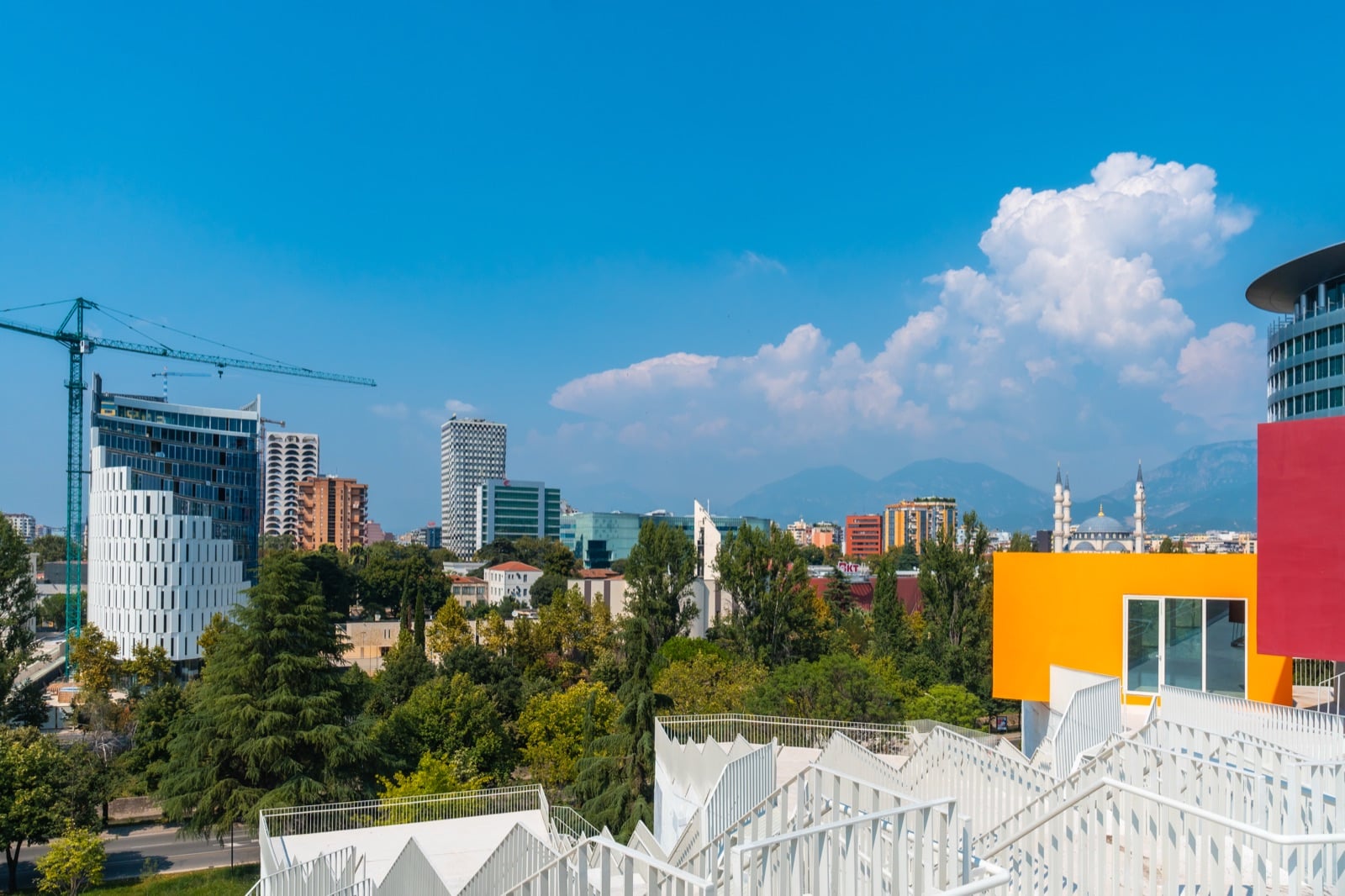
In practice, an American can buy an apartment in Tirana or on the Riviera Shqiptare in a personal name, while a purchase that includes a plot, a farm or fields needs legal advice on structure first. These limits apply to foreign nationals; if you also hold Albanian citizenship, ask your lawyer how that changes your position. Our guide to Albanian citizenship by descent explains who may qualify.
The Title Problem, According to Official Reports
The roots go back to the communist period, when the state confiscated private property. The restitution and compensation process began in 1993, according to the State Department, and some 400,000 applications to legalize informal buildings have been filed, according to the European Commission. The registry is still catching up.
U.S. State Department, 2025 Investment Climate Statement:
- Clear title is difficult to obtain, and overlapping property titles are widespread.
- Registration procedures are cumbersome and prone to corruption, and the public perceives the property sector as one of the most exposed to corruption.
- Initial registration of titles is not complete, especially in highly valued southern coastal areas and in mountain areas.
- Many U.S. citizens of Albanian origin have been engaged in long-running restitution disputes.
- Its summary is that “potential investors should exercise caution” in property transactions.
European Commission, Albania 2025 Report (November 2025):
- So far 91 percent of lands have been registered. Digitalization was complete for 43 percent of ownership titles and 10 percent of cadastral maps.
- About 80 percent of previously registered data has not been verified for accuracy, and many transactions still rely on outdated documents with unclear data.
- The cadastre’s roadmap aims to finish first-time registrations by December 2028.
- About 64 percent of those legalization applications had been approved.
None of this makes a safe purchase impossible. It means the checking has to be done property by property, by someone who works for you.
How a Purchase Works: Notary and Cadastre
AIDA describes two stages: the right is acquired through a contract, then the transfer is completed by registering the title documents in the property register. The register is kept by the State Cadastre Agency, established in April 2019 by merging the bodies responsible for registration, compensation and legalization (State Department).
The notary’s duties are set out in Law No. 110/2018 “On the Notary.” For a transfer of immovable property, Article 105 requires the notary to declare in the deed that the seller’s ownership was verified in the electronic property register, and to attach the relevant register contents, such as the property card (kartela e pasurisë) and the indicative map (harta treguese). The deed must state how the price is paid, and the law provides for a special notary bank account. It must also declare the marital property regime. Under Article 100, deeds are drawn up in Albanian; if a party does not know the language, the notary or an accepted interpreter translates the full content.
| Step | Who is involved | What document you get |
|---|---|---|
| 1. Hire independent help | You; an Albanian lawyer of your choosing | Engagement letter; a special power of attorney if you will not be present |
| 2. Verify title in the register | Lawyer or notary; State Cadastre Agency (ASHK) | Current extract of the property card (kartela) and indicative map (harta treguese) |
| 3. Verify the building’s legal status | Lawyer; seller; ASHK for legalized buildings | Construction permit or legalization document, matched to the registered property |
| 4. Sign the sale contract | Buyer, seller, notary, and an interpreter if you do not know Albanian | Notarial deed of sale stating the price, how it is paid and the marital property regime |
| 5. Pay the price as the deed provides | Buyer, seller, notary, banks | Bank transfer record; the law provides for a special notary account |
| 6. Register the transfer | Notary or your representative; ASHK | Updated register entry and ownership certificate in your name |
| 7. After purchase | You; the tax authorities; Border and Migration authorities if you apply | Annual building tax record; optional residence permit for property owners |
Ask your lawyer to confirm the current sequence, deadlines and fees. To find professionals in the United States who work with Albanian clients, see find an Albanian lawyer, find an Albanian real estate agent and our page on Albanian real estate agents and property services.
Due Diligence Before You Pay
Before buying property in Albania, and before you send any deposit, have your own lawyer confirm each item in writing.
- Title certificate and property card. Get a current extract from the cadastre, not a photocopy supplied by the seller.
- Cadastral map. Check that the indicative map matches the property on the ground: location, boundaries and surface area.
- Encumbrances. Ask for confirmation that the register shows no mortgage, seizure or court restriction. The Bank of Albania reports that about 61 percent of properties sold by surveyed agents in late 2025 were bought with a bank loan.
- All owners and spouses. Make sure every co-owner, spouse and heir has signed or is validly represented.
- Restitution claims. Ask whether former owners have ever claimed the land.
- Legalization status. If the building was put up informally, ask for the legalization document.
- Construction permit. For newer buildings, confirm that a permit was issued and that what was built matches it, including the floor, the unit and any parking space.
Common Risks: A Plain Warning
Overlapping titles. The State Department calls them widespread and reports instances of individuals allegedly manipulating the court system to obtain illegal land titles. A cadastre extract is the start of the check, not the end, and court cases can go on for years.
Informal construction. The European Commission noted country-wide demolitions of allegedly illegal constructions launched in the summer of 2025. An unpermitted extra floor or extension is a risk that passes to the buyer.
Off-plan purchases. The official reports reviewed for this guide do not discuss buying a unit before it is built, but the weaknesses they describe (permits, registration, slow courts) weigh most heavily on a building that does not exist yet. Have your lawyer verify the title to the land, the construction permit, the form of contract, and how and when the unit will be registered in your name.
Taxes and the House Price Index
Albania’s taxes are administered by the General Directorate of Taxes. The points below are from PwC’s Worldwide Tax Summaries for Albania (last reviewed 22 July 2026). Confirm current rules with the tax authority or an accountant.
- Selling: the transfer of ownership of real estate is subject to a 15 percent tax on the capital gain realized from the sale.
- Owning: an annual tax on buildings; PwC lists 0.05 percent of the building’s value for residential property.
- Inheriting or receiving a gift: the rate is 15 percent, with exemptions that include inheritances and gifts between legal heirs of the first and second rank and between siblings, and gifts and inheritances of immovable property up to ALL 5 million.
We have not listed notary or registration fees because we could not confirm current official tariffs. The State Department notes that anyone entering or leaving Albania must declare cash or valuables above 1,000,000 lek, and that Albania has no bilateral taxation treaty with the United States.
For Albania real estate prices, the official gauge is the Bank of Albania’s house price index, built from a twice-yearly survey of construction firms and real estate agents. Its report for the second half of 2025, published in April 2026, found:
- Nationally, the index rose 28 percent from a year earlier, which the bank attributes to higher prices for properties sold in coastal areas.
- In Tirana, the index was almost unchanged from the previous half year and 4.4 percent higher than a year earlier, after an annual rise of 32.6 percent in the first half of 2025.
- About 25 percent of homes sold were reported as bought by non-residents.
We do not quote prices per square meter, because the central bank does not publish them. For the places themselves, see our Tirana guide.
Inherited Property and Acting From the United States
The inheritance certificate
Under Law No. 110/2018, the inheritance certificate (dëshmi trashëgimie) is issued by a notary, for inheritance by law or by will. The notary first asks the National Chamber of Notaries to check the national registers of wills and of inheritance certificates. The certificate names the heirs and their shares, and the law says the applicant must deposit a copy with the property registration office within 30 days. Where a will names a foreign citizen as heir, that person’s identity is verified with a birth certificate carrying an apostille or consular legalization.
Settle this before any sale: a buyer’s notary has to verify the seller’s ownership in the register.
Powers of attorney: what the consulate can and cannot do
Albania’s Ministry for Europe and Foreign Affairs states that its consular posts act as notaries only for Albanian citizens living in their jurisdiction, and only for a fixed list of special powers of attorney. The list includes collecting civil registry documents or a pension, court representation, and submitting or collecting documents at institutions.
The ministry is just as clear about what consuls do not issue: general powers of attorney, and powers of attorney for contracts that transfer ownership of property, such as the sale or purchase of an apartment. For those it directs people to local notaries, and notes that a power of attorney made before a foreign notary must be legalized or apostilled to be recognized in Albania. Both countries are parties to the Hague Apostille Convention, and USA.gov explains that state-issued documents receive their apostille from that state’s secretary of state.
That points to one route for a sale or purchase handled from America: a power of attorney signed before a U.S. notary, apostilled in that state, with wording drafted by your Albanian lawyer. For the consulates themselves, see our page on the Albanian consulates in the United States.
U.S. Reporting Pointers
Pointers only; speak with a U.S. tax professional who handles foreign assets.
- FBAR (FinCEN Form 114). FinCEN states that a U.S. person must file if the combined value of foreign financial accounts exceeds $10,000 at any time in the calendar year.
- Form 8938. This IRS form covers specified foreign financial assets above higher thresholds. The IRS comparison table says foreign real estate held directly is not reportable on either form, but if it is held through a foreign entity, the entity itself is reportable on Form 8938 and its value includes the real estate.
- Income and gains. The IRS states that U.S. citizens are taxed on worldwide income, which includes rent and sale gains from property abroad.
Pyetje të shpeshta
Can Americans buy property in Albania?
Yes. The U.S. State Department’s 2025 Investment Climate Statement says there are no restrictions on foreigners buying private residential property in Albania. Limits apply to land: foreigners cannot own agricultural land, forests, meadows or pastures, and other land purchases are tied to investment conditions or made through a company registered in Albania.
Is it safe to buy real estate in Albania?
It can be, but only with careful checks. The State Department says clear title is difficult to obtain and overlapping titles are widespread. The European Commission reports that about 80 percent of previously registered property data has not been verified for accuracy. Use an independent lawyer, verify the cadastre records, and never pay on the strength of a photocopy.
Do I get residency if I buy property in Albania?
Not automatically. Albania’s Law No. 79/2021 on foreigners provides for a residence permit for owners of immovable property, issued for up to one year and renewable while you remain the owner. U.S. citizens may already stay up to one year without a permit, according to the U.S. Embassy in Tirana.
What taxes do you pay when selling property in Albania?
According to PwC’s Worldwide Tax Summaries (last reviewed July 2026), the transfer of ownership of real estate is subject to a 15 percent tax on the capital gain realized from the sale. U.S. citizens must also report the gain on their U.S. return. There is no income tax treaty between the two countries, so ask a professional about foreign tax credits.
How do I claim property my parents left in Albania?
Start with an inheritance certificate from an Albanian notary, which names the heirs and their shares after a check of the national registers of wills and inheritance certificates. A copy is then deposited with the property registration office. If you cannot travel, ask an Albanian lawyer about acting through a representative with an apostilled power of attorney.
Can the Albanian consulate give me a power of attorney to sell a house?
No. The Ministry for Europe and Foreign Affairs states that consuls do not issue general powers of attorney or powers of attorney for contracts transferring ownership of property. It directs applicants to local notaries in the country where they live. The document must then be apostilled or legalized to be recognized in Albania.
Burimet
- U.S. Department of State: 2025 Investment Climate Statements, Albania
- European Commission: Albania Report 2025
- Albanian Investment Development Agency (AIDA): Acquiring property
- Republic of Albania: Law No. 110/2018 “On the Notary” (in Albanian)
- Ministry of Interior of Albania: Law No. 79/2021 “On Aliens” (English text)
- State Cadastre Agency (ASHK): official website
- Bank of Albania: Real estate market survey and house price index, second half of 2025 (in Albanian)
- Bank of Albania: Survey on the developments in the real estate market in Albania
- PwC Worldwide Tax Summaries: Albania, Individual, Income determination
- PwC Worldwide Tax Summaries: Albania, Individual, Other taxes
- Ministry for Europe and Foreign Affairs of Albania: Application for a special power of attorney (in Albanian)
- Hague Conference on Private International Law: Apostille Convention status table
- USA.gov: Authenticate an official document for use outside the U.S.
- U.S. Embassy in Albania: Entering and Residing
- FinCEN: Report foreign bank and financial accounts
- IRS: Comparison of Form 8938 and FBAR requirements
- IRS: U.S. citizens and resident aliens abroad
Lexime të Ngjashme
- Albanian Real Estate Agents and Property Services
- Gjeni një avokat shqiptar
- Albanian Consulates in the United States
- The Albanian Riviera
- Udhëzues Udhëtimi për në Tiranë
- Investimi në bizneset shqiptare

Autor: Val Demiri
Valbona është redaktore dhe shkrimtare në ALB Connection, ku ajo mbulon njerëzit, bizneset dhe kulturën që formësojnë diasporën shqiptare. E diplomuar në gazetari në Universitetin e Ajovës, puna e saj përfshin profile të komunitetit, histori suksesi dhe reportazhe mbi jetën shqiptare në të gjithë SHBA-në, Evropën dhe më gjerë. Ajo tërhiqet nga historitë që festojnë arritjet e shqiptarëve dhe e mbajnë komunitetin të lidhur përtej kufijve.