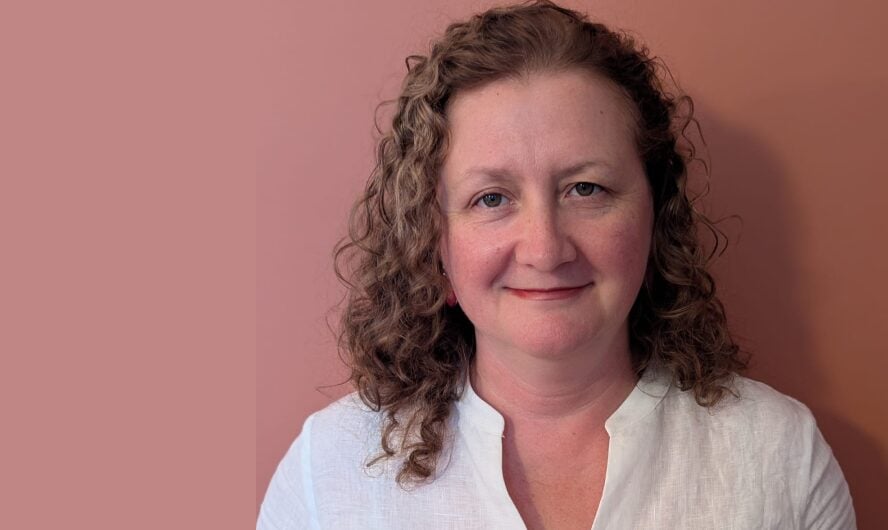
Smoki Musaraj is a Professor of Anthropology at Ohio University, where she researches and teaches the anthropology of capitalism, theories of money, corruption, migration, tourism massification, and urban transformations in postcommunist and Mediterranean cities.
Musaraj was born and grew up in Tirana, as did her parents. Her extended family is from Vlora, Gjirokastra, and Shkodra. She left Albania in 1995, at the age of 16, to pursue a scholarship-based international program in Canada, by herself. Most of her family, including her parents and their siblings, remain in Tirana, while her brother and many of her cousins are spread across North America and Europe.
Her academic path began with Political Studies and Cultural Studies. She came to anthropology later, while completing her first MA in Political Science at the New School for Social Research in New York City. There, courses in Anthropology of Borders and Anthropology of the Mediterranean drew her immediately to the anthropological approach and methods for exploring political and cultural questions. She subsequently pursued a PhD in Cultural Anthropology at the New School.
Migration and Remittances
Musaraj describes the literature on Albanian migration over the past few decades as rich and comprehensive. Researchers have examined the reasons for migration, remittances as a source of economic development, and socio-cultural dynamics including inter-generational conflicts and gaps and gendered migration patterns. She says she has “a lot of respect” for the work of her colleagues and finds it difficult to point to gaps.
In her own work, Musaraj has emphasized the grassroots nature of remittances. They can constitute a lifeline for people living at the margins of Albanian society who have no access to governmental or international development programs and aid. When migrants send remittances directly to parents or siblings, she says, they are also able to circumvent bureaucracy and the endemic corruption that affects development aid.
Musaraj also argues that remittances and development can sometimes be viewed through what she calls a “simplistic one-way vector.” The typical narrative, she explains, is that remittances increase the country’s GDP and improve families’ economic lives.
“In reality,” she says, “migration flows are more erratic and unpredictable and multi-directional.”
Many Albanian residents have benefited, and continue to benefit, from remittances. But the flow can be interrupted by global or regional events, such as the 2008–2009 Global and EU financial crisis, as well as by personal circumstances and estranged relationships.
Sometimes migrants help their families in Albania make ends meet or build assets such as housing. At other times, families in Albania help migrants when they encounter hard times.
Migrants may also invest back home or move back home to build a business they own rather than remain in a low-paying, low-skilled job. Musaraj notes that a number of successful small businesses in Albania have been established by returning migrants. She describes this as an example of development that involves not just money, but “building capacities and entrepreneurship on the ground.”
She gives the example of the slow-food restaurant Mrizi i Zanave. In such cases, returned migrants bring money and skills acquired through migration, develop local expertise, and train others in new skills.
Another aspect of remittances that Musaraj has explored is how they are “intertwined with social ties” among transnational immigrant families, and how those ties shape, and are shaped by, remittances.
Research by scholars including Julie Vullnetari, Natasa Bon, Zana Vathi, and Ermira Danaj has also shown that remittances are not only cash and are not only connected to economic development. They can take the form of furniture, clothes, or food, and these flows can reinforce or reconfigure social ties.
Musaraj connects these flows to cultural norms of reciprocity and obligation, which are shaped by family structure and gender expectations.
During her research, she encountered men who had been happy in migration but returned to care for their parents because they were the youngest child. In other cases, she encountered people who had used migration, or been empowered by migration, to reshape family dynamics and expectations.
She particularly points to migrant women who found more independence within the family structure through the financial power of their remittances or through their ability to move and build a life elsewhere.
“All in all,” Musaraj says, “sometimes, the socio-cultural reasons for migration have been eclipsed by the more standard narratives of economic incentives.”
Policy and People’s Lives
Musaraj describes the gap between policy and the reality of people’s lives in Albania as “very stark.”
Over the past decade, she says, Albania has made “enormous progress” in aligning its legal and policy infrastructure with EU standards. Yet she says implementation and application are “not at all where it should be.”
She gives property issues as an example. There have been multiple privatization laws and initiatives intended to combat informality and resolve property issues. Yet a large number of families still lack proper property titles, which can lead to property disputes, court cases, and frustration in dealing with state institutions over an issue that she says should have been resolved two decades ago.
Musaraj says these gaps between policy and experience lead to a general sense of cynicism and a desire to leave Albania, which also helps explain the ongoing waves of migration.
Personal Experience and Research
Musaraj’s own background has shaped the questions she asks in her research.
She grew up in Albania during the late-communist period and came of age during the country’s transition to democracy and capitalism. Her own migration journey has also shaped her research questions.
The experiences of family members and friends in Albania and abroad, whom she sees regularly, also shape her questions. She describes making efforts to talk to people on the ground about issues discussed in the media and through official channels.
At the same time, she says she always tries to talk to people who are not related to her or to her family and friends so that she is exposed to other points of view and experiences.
“While Albania is a small country,” she says, “I have found that people have very different experiences and perspectives and I want to be able to reflect that diversity in my work.”
Albania and the Diaspora
Musaraj compares Albania with other countries that have large diaspora populations and long histories of migration, including India and Lebanon. Over time, she says, patterns of communication, travel, cultural exchange, and investment develop between those who leave and those who stay.
She believes the Albanian diaspora has reached a point of economic and cultural maturity and is more able to be present in Albania “physically, economically, and emotionally.”
The diaspora provides economic support that targets different sectors, from investment in tourism to healthcare alternatives for parents or relatives who cannot find adequate care in Albania. Musaraj also describes regular family visits and tourism among her peers in the diaspora, often alongside investment in the country of origin and the introduction of new cultural influences.
“A lot of us want to choose Albania for vacation for emotional and cultural reasons,” she says, “as well as from a desire and commitment to give back.”
Musaraj says these economic exchanges and investments are beneficial for both sides and have the potential to become stronger over time, provided there is more investment in the infrastructure supporting tourism and hospitality, healthcare systems, and travel systems.
She also sees a role for the diaspora in investing more strongly in Albania’s local economy and for Albanian products to be exported to diaspora hubs.
She recalls being happy to find Borsh olive oil and Gjirokastra feta cheese at a grocery store in the Bronx, New York. In Marseille, however, she was disappointed to find that an organic grocery store selling olive oil and other produce from across the Mediterranean did not carry Albanian products because they did not comply with EU standards.
“There is a lot of potential for economic exchanges that go both ways between the diaspora and Albania,” Musaraj says. But she adds that the Albanian government needs to make a “much stronger effort” to protect and promote Albanian business beyond construction and real estate.
Beyond remittances, Musaraj describes transnational Albanian families as exchanging care and cultural knowledge and forging economic and social bonds.
Family members in Albania may travel to visit their children and grandchildren abroad and often provide childcare or other forms of care to the diaspora.
Musaraj says forms of exchange and support between the diaspora and people in Albania should be considered from “a more complex perspective,” taking into account their intertwined economic and socio-cultural benefits.
Tales from Albarado
Musaraj left Albania in 1995. At the time, pyramid schemes were already operating and many people had invested in them. She says that no one seemed to foresee the economic and political catastrophe that their collapse in late 1996 would trigger.
When the schemes collapsed, Musaraj was studying in Canada and followed the news through international media. There were no smartphones, WhatsApp, or access to the internet. She was confused by what was happening and did not understand how events had precipitated so dramatically.
When she was able to return in the winter of 1997 and the following summer, she listened to the stories of family and friends. Those experiences remained of interest to her.
When planning her PhD research, she decided to include the pyramid schemes as one chapter in her broader investigations into corruption. The research opened up different avenues, and during the writing stage she decided to dedicate a book to the topic.
There were several things she found surprising.
She was surprised that the schemes had been considered legitimate businesses and supported by the state and other public actors. She was also surprised by how much remittances had played a role in fueling the schemes and how social ties between local and transnational families had played a role in the circulation of money and in establishing trust in the schemes.
She was also surprised by how much transactions in and through the schemes paralleled those at banks or the stock market, while lacking the safety mechanisms and forms of audit expected in those institutions.
Research and Teaching
Musaraj describes one of the most rewarding moments of her work as being able to integrate her research into her teaching.
At Ohio University, where she has taught for thirteen years, she teaches courses including “Economic Anthropology” and “Cultures of the Mediterranean.” She incorporates examples from her research on Albanian and Mediterranean economies, politics, and cultures into those courses.
She might use her research on the Albanian pyramid schemes in “Economic Anthropology” to expand on the concept of intertwined money and social ties. She might also address the longue durée of migration flows in the Mediterranean by examining the history of kurbet, or migration and movement, in the inter-war period alongside recent experiences of Albanian migration to Italy and Greece.
Finding a Researcher’s Own Voice
For a young Albanian researcher studying Albania, Musaraj describes studying one’s country of origin as both a benefit and a challenge.
A personal connection to the research subject and fluency in a language that very few people speak can provide deeper knowledge and care and can enrich the research experience and findings.
At the same time, she says, conducting social science research requires suspending one’s own biases and looking for new observations and ideas to emerge from empirical observations.
It also involves translating local knowledge into broader analytical systems, which, as anthropologists know, are not culturally neutral.
For young Albanian researchers, Musaraj describes the challenge as balancing these different influences and forms of knowledge and finding one’s own voice, one that can speak to the broader discipline while staying true to local knowledge and perspectives.
“It is a beautiful challenge, I think,” she says.
If pursued with sincerity and dedication, she says, it can generate new ways to think about Albania as well as broader socio-cultural questions.
“Mediterranean Dreaming”
Musaraj has started a new project entitled “Mediterranean Dreaming: Tourism Massification and Migration in Maritime Cities.”
The project involves multi-sited research in Barcelona, Marseille, and Vlora. She has already started research in Barcelona and Marseille.
For the next three years, she will be based at the Mesopolhis Research Lab at Aix-Marseille University in France through the Safe Space for Science Program by the AMIDEX foundation.
The grant will allow her to expand the project and explore and analyze over time urban renewal projects, local social movements, and urban forms of living that shape contemporary Northern Mediterranean cities.
Musaraj describes having “a deep love for the Mediterranean and for the vibrant cities situated at its shores.” She is “thrilled” to have the opportunity to be immersed in the three cities and to better understand urban processes of touristification and gentrification, as well as practices of urban resistance and creativity.
Frequently Asked Questions
1. Who is Smoki Musaraj?
Smoki Musaraj is an anthropologist whose research explores Albania, migration, remittances, political and economic change, and social relationships. She is a professor at Ohio University.
2. What does Smoki Musaraj research?
Her research examines Albanian migration, remittances, transnational families, economic and social relationships, and the ways people experience political and economic change.
3. How do remittances affect Albania?
Musaraj explains that remittances support families and individuals in Albania, sometimes providing a lifeline to people with limited access to government or international aid. She also emphasizes that these exchanges are not always one-way: families in Albania may also support relatives living abroad.
4. What role does the Albanian diaspora play in Albania’s economy?
According to Musaraj, the diaspora contributes through family support, tourism, investment, cultural exchange, and other economic connections. She also sees potential for stronger exchanges between Albanian businesses and diaspora communities.
5. What is the connection between migration and family relationships?
Musaraj’s research explores how migration and remittances are intertwined with social ties. These relationships can involve financial support, care, food, clothing, and other exchanges, while also shaping family responsibilities and expectations.
6. What is Tales from Albarado about?
Tales from Albarado examines Albania’s pyramid scheme collapse in the 1990s. Musaraj’s research explores how the schemes operated, how people came to trust them, and how remittances and relationships between local and transnational families contributed to the circulation of money.
7. What advice does Smoki Musaraj offer young Albanian researchers?
She encourages young researchers to draw on their personal knowledge and connection to Albania while remaining attentive to their own biases. She emphasizes listening to different perspectives and staying true to local knowledge while engaging with broader academic conversations.

Author: Dardanë Halimi
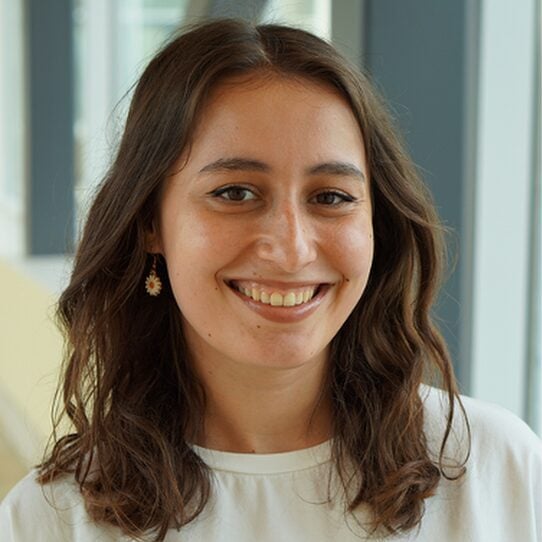
Dardanë Halimi is a writer and communications professional with an M.A. in Writing, Rhetoric, and Technical Communication from James Madison University. Her work focuses on storytelling, digital content, higher education, and strategic communication, with experience writing for academic, nonprofit, and marketing organizations in both the United States and Kosovo.