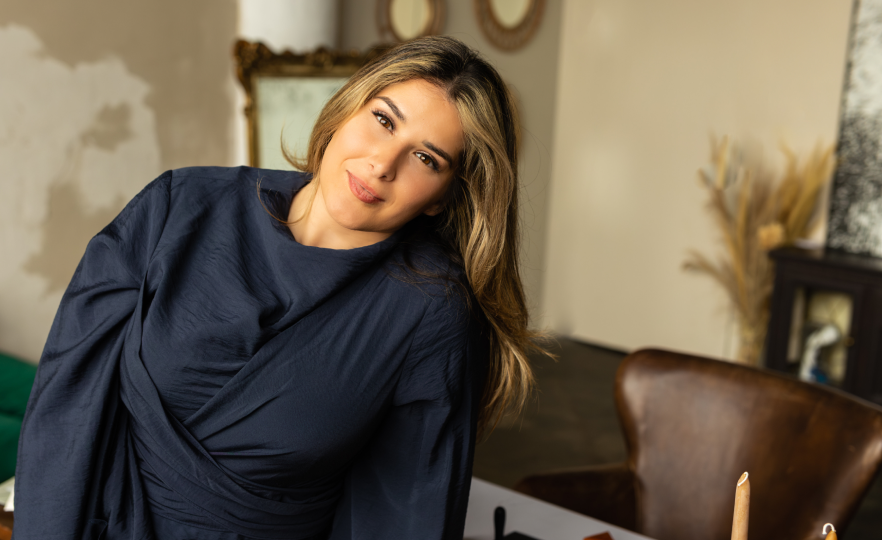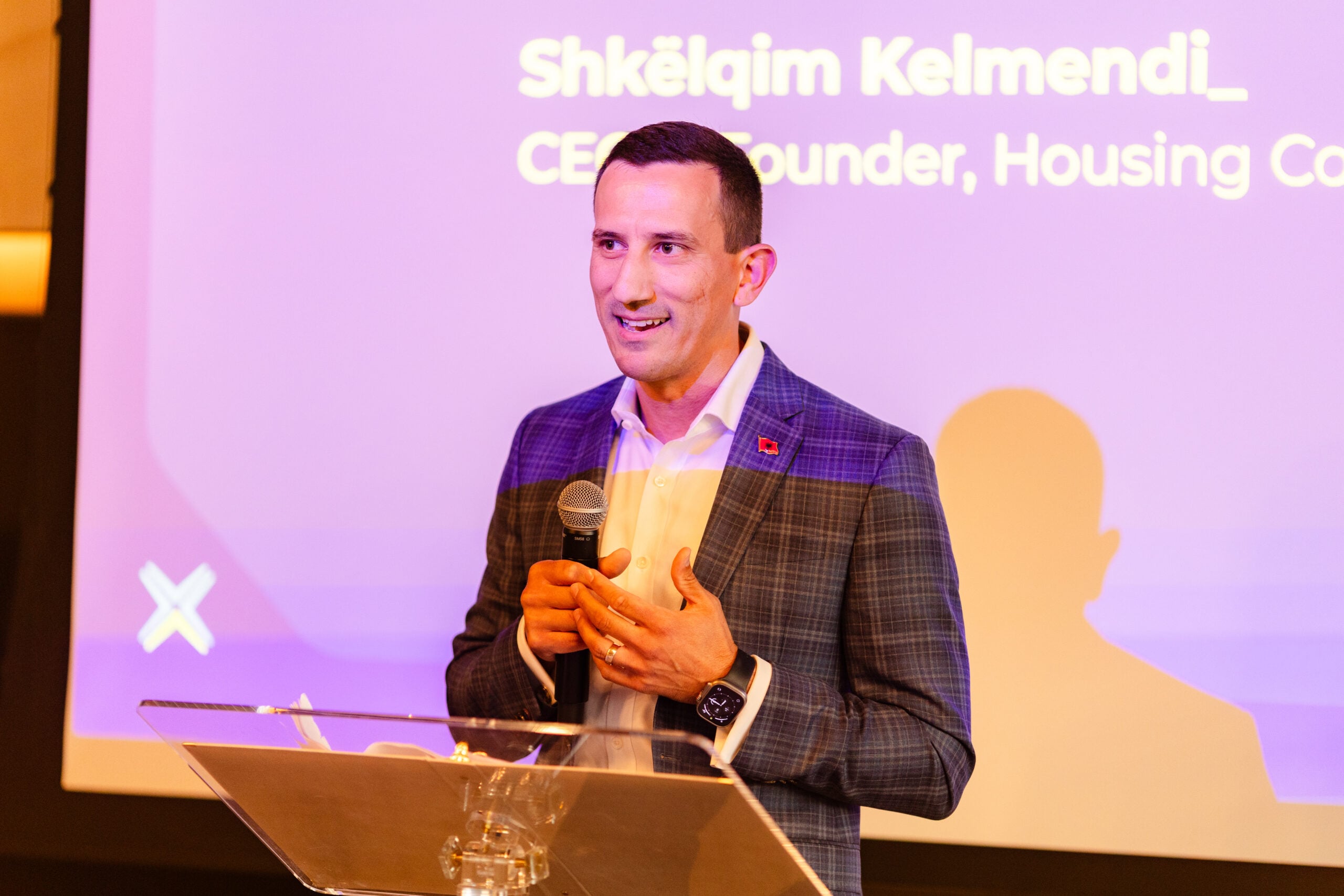
Ilir Tsouko is an Albanian-Greek documentary photographer and film director based between Berlin, Tirana and Athens. Born in Albania in 1990 and raised in Athens from age six, he studied Visual Journalism and Documentary Photography at Hochschule Hannover, where he worked with Magnum photographers Enri Canaj and Chien-Chi Chang. He left a second job in Berlin in 2021 to work in photography full-time and moved partly to Tirana. His long-term projects, including Life in Limbo and the ARTE documentary about nurses in northern Albania, bring Albanian stories to international audiences while resisting the easy narratives usually attached to the country.
Key Takeaways
- Ilir Tsouko is an Albanian-Greek documentary director and photographer who works between Berlin, Tirana, and Athens, focusing on identity, migration, social change, and memory.
- His photography and films have been published or commissioned by The New York Times, The Washington Post, The Guardian, DIE ZEIT Magazin, Le Monde Magazine, NZZ, Bloomberg, De Volkskrant and ARTE.
- He was born in Albania in 1990 and moved to Athens at age six, an experience that shapes how he photographs people living between countries.
- His photo essay Life in Limbo followed Afghan evacuees housed in an Albanian seaside resort in 2021, returning monthly for nearly a year.
- His film Albgreko, produced with Onassis, was nominated for the 2026 Iris Awards of the Hellenic Film Academy.
- He is developing an archival documentary with historian Elidor Mëhilli about Albania’s communist past and how history gets constructed and preserved.
Ilir Tsouko was six years old when his family left Albania for Athens. He could not speak Greek. He could not talk to the children in his classroom. So he found a way to measure the hours until someone came for him.
“I remember being at school, unable to communicate with the other children, looking underneath the main door hoping to recognize my mother’s shoes when she came to pick me up.”
Three decades later, his photographs appear in The New York Times, The Washington Post, The Guardian, DIE ZEIT Magazin, Le Monde Magazine, NZZ, Bloomberg, De Volkskrant and ARTE. He directs films, builds exhibitions and runs educational projects across Europe. He splits his life between Berlin, Tirana and Athens. And the subject he keeps returning to is the one he learned first, under a classroom door, waiting.
Quick Profile
Name: Ilir Tsouko (b. 1990)
Work: Documentary director, photographer and producer
Based: Berlin, Tirana and Athens
Focus: Identity, migration, social change, memory, and the relationship between people and place
Published or commissioned by: The New York Times, The Washington Post, The Guardian, DIE ZEIT Magazin, Le Monde Magazine, NZZ, Bloomberg, De Volkskrant, ARTE
Website: ilirtsouko.com
From Albania to Athens: A Long Lesson in Being an Outsider
Tsouko does not describe his childhood in Greece as a hardship story. He describes it as an education in how quickly people decide who counts as different, and how that decision can change.
“Years later, I once told the family of my then-girlfriend that I was speaking French on the phone because she had asked me not to tell them I was Albanian. She apologized to me many years later, and that meant a lot. People can change, societies can change, and we can learn to accept what we once considered ‘different.’ That gives me hope, especially today when I see migration again being used to create fear.”
That hope sits underneath almost everything he shoots. He is not documenting migration as a crisis. He is documenting people who are living through one.
The Year Photography Stopped Being a Side Job
The turn came in 2018, when he began working regularly with German journalist Lena von Holt. He photographed, but he also translated, fixed, organized and helped build the reporting across Greece and Albania. He kept two jobs for three more years because he wanted proof that the work could support him.
Then he quit his job in Berlin and moved partly to Tirana.
“It was one of the best decisions I ever made.”
He is direct about what got him there, and it is not the answer young photographers usually expect.
“I was not more talented than everybody else. I simply understood how German-speaking media and international productions worked, spoke four languages, and was willing to work very hard. I have always preferred finding a solution rather than explaining why something cannot be done.”
What Enri Canaj and Chien-Chi Chang Taught Him
During his time studying Visual Journalism and Documentary Photography at Hochschule Hannover, Tsouko also had the opportunity to work independently with two Magnum photographers. One of them, Enri Canaj, shares almost the same biography: born in Albania, raised in Greece, ten years ahead.
They travelled Europe together for close to two years.
“That is where I really learned to photograph: search for the story, find the protagonist, keep walking, don’t give up, and wait for the photograph that is somewhere out there.”
Chien-Chi Chang gave him something different.
“Chien-Chi Chang taught me something equally important: success does not have to make you complicated. Stay humble, respect your work, and above all respect the people who allow you into their lives. I feel very lucky to have learned from both of them.”
Community Spotlight Tsouko is a member of Agentur Focus in Hamburg and was nominated by Der Greif to join the FUTURES European Photography Platform. He holds a second degree, an M.Sc. in Health Sciences, and works in German, Greek, English and Albanian.
Life in Limbo: Waiting Inside a Five-Star Resort
In 2021, Tsouko heard that Afghan evacuees were being housed in an Albanian seaside resort. The contradiction pulled him in immediately.
“People who had just lost their country were suddenly living in a place designed for holidays.”
He returned every month for close to a year. What he found was not a story about an unusual hotel.
“Very quickly, the story stopped being about the unusual hotel and became about waiting: people suspended between the life they had lost and a future they could not yet begin.”
Ask him what the people he photographed taught him about that waiting, and the answer strips the setting of any glamour.
“A beautiful hotel, the sea and good food mean very little when you do not know what will happen to your life. Waiting changes time. Days become weeks and months. At some point, even paradise can feel like a prison if you cannot decide when you can leave or where you are going next.”
The project exhibited at Tulla Culture Center in Tirana and Space 52 in Athens. Albanian audiences read it through their own history.
“In Albania, Life in Limbo immediately became a conversation about our own history. Almost every Albanian family has someone who migrated, so people understood the experience of leaving, waiting and depending on another country.”
One response has stayed with him.
“One woman at the exhibition told me that this was a moment when she felt proud to be Albanian: when our country could give hope to people who had lost almost everything. I never forgot that.”
European audiences reacted to the same photographs very differently.
“In Europe, audiences were often shocked by the idea of refugees being housed in a five-star resort because the European visual language of migration has become camps, fences and deprivation. That contrast opened a very different discussion.”
The Nurse Who Stayed
For ARTE, Tsouko co-directed a documentary about health care workers in northern Albania. The protagonist, Kastriot, could earn far more in Germany.
“He could easily leave for Germany and earn more, but he stays because his family, his patients and his community need him. In some places, after him there may simply be nobody left.”
For a photographer who has never belonged completely to one place, that choice landed hard.
“Kastriot reminded me that a ‘better life’ is not always somewhere else and cannot always be measured in salary or numbers. For me, he is the kind of hero we often recognize only after he is gone.”
The Ethics Line He Will Not Cross
Tsouko works with people at their most exposed. He keeps one rule above all others.
“The photograph is never more important than the person in it.”
He explains what that means in practice.
“Someone may give you access during one of the most difficult moments of their life. That does not mean you have the right to take everything. I constantly ask myself whether an image gives somebody dignity and complexity or simply uses their vulnerability. For me, trust also continues after the camera is gone and after the story is published.”
Moving Between Stills and Film
Photography and filmmaking ask different things of him.
“Photography is very instinctive for me. You reduce an entire situation into one frame and trust your eye and timing.”
Film changes the calculation.
“Film forces me to think much more about structure, time, sound, rhythm and what comes before and after an image. As a director and producer, I also enjoy bringing people together and building a team around an idea. Sometimes filmmaking is 20 percent creativity and 80 percent making sure the impossible somehow happens.”
His short documentary Albgreko, produced with Onassis, follows stories that belong to both Albania and Greece at once. It was nominated for the 2026 Iris Awards of the Hellenic Film Academy.
Berlin, Tirana, Athens: What Each City Gives Him
“Berlin gave me professional structure, international networks and a very high standard of working. Tirana gives me energy, access and the feeling that stories are happening in front of me every day. Athens is more emotional. It is where I grew up, where many of my closest relationships are, and where I learned what it means to live between identities. I probably need all three because none of them alone completely feels like home.”
That triangulation shapes how he handles Albania for foreign readers.
“Albania is often reduced to a handful of familiar narratives: dictatorship, crime, migration, bunkers, beaches, and now luxury tourism. I’m interested in what lies beyond those labels – the people, contradictions and everyday realities that rarely fit into a simple headline.”
Advice for Albanian Photographers and Filmmakers in the Diaspora
His answer to young diaspora creatives who see no path into this profession starts with one line.
“Don’t wait for someone to invite you in. Start building your own path.”
What follows is practical:
- Learn the craft, then learn everything around it. He names languages, production, communication, budgeting, fixing and how an editorial team actually works.
- Be reliable. In his words, “Talent helps, but being reliable, curious and able to solve problems will take you very far.”
- Treat living between cultures as an asset. “For years I thought being between Albania, Greece and Germany made me an outsider. Today, that same experience is one of the strongest tools I have.”
- Solve, don’t explain. His preference for finding a solution over explaining why something cannot be done shows up in how he describes his own break into the industry.
Community Spotlight Tsouko spent three months in residency at Vila 31 x Art Explora in Tirana in 2026 and serves as artistic director of the Polichnitos Cultural Festival on Lesvos, Greece.
What He Is Building Next
Tsouko is moving further into directing and producing. One project sits closest to him right now.
“Right now, one of the projects closest to me is an archival documentary I am developing with the award-winning author, Associate Professor of History, Public Policy, and Human Rights at Hunter College and the Graduate Center of the City University of New York, and a visiting professor at Columbia University historian Elidor Mëhilli around Albania’s communist past, memory and the way history is constructed and preserved.”
Beyond any single film, he wants to connect people who would otherwise never meet.
“Through films, photography, workshops and collaborations, I want people who might never otherwise meet to work together. I think there is enormous creative potential in the Albanian community worldwide, and we have only started connecting it.”
That is a fair description of the work itself. A boy who once watched for his mother’s shoes under a door now builds the doors other people walk through.
Connect with Ilir Tsouko
- Website: ilirtsouko.com
- Instagram: @ilirtsouko
- LinkedIn: Ilir Tsouko
- Film: Albgreko and selected documentary work
- Life in Limbo: Photo essay
Frequently Asked Questions
Who is Ilir Tsouko?
Ilir Tsouko is an Albanian-Greek documentary director and photographer born in 1990. He works between Berlin, Tirana and Athens on projects about identity, migration, social change and memory. His photography and films have been published or commissioned by The New York Times, The Washington Post, The Guardian, DIE ZEIT Magazin, Le Monde Magazine, NZZ, Bloomberg, De Volkskrant and ARTE.
What is the Life in Limbo project about?
Life in Limbo documents Afghan evacuees housed in an Albanian seaside resort beginning in 2021. Tsouko returned every month for close to a year. The project moved past the novelty of the setting and became a study of waiting, of people suspended between a country they lost and a future they could not yet start.
Where did Ilir Tsouko study photography?
He studied Visual Journalism and Documentary Photography at Hochschule Hannover, University of Applied Sciences and Arts. During this period, he also worked with Magnum photographers Enri Canaj and Chien-Chi Chang. He holds an M.Sc. in Health Sciences from CNAM University in Paris and Athens.
What is Albgreko?
Albgreko is a short documentary directed by Tsouko and produced with Onassis. It follows stories that are both Albanian and Greek rather than one or the other. The film was nominated for the 2026 Iris Awards of the Hellenic Film Academy.
Why does Ilir Tsouko live in three cities?
Berlin gave him professional structure and international networks. Tirana gives him energy and daily access to stories. Athens holds his upbringing and closest relationships. He has said he needs all three because none of them feels completely like home.
What does Ilir Tsouko say about photographing vulnerable people?
He holds one line above all others: the photograph is never more important than the person in it. He asks whether an image gives a person dignity and complexity or simply uses their vulnerability, and he treats trust as something that continues after publication.
What advice does he give young Albanian photographers in the diaspora?
He encourages them not to wait for an invitation, but to start creating their own opportunities. Learn the craft, but also learn languages, production, budgeting, fixing, and how editorial teams work. He argues that reliability and problem-solving carry a career further than talent alone, and that living between cultures is an advantage rather than a handicap.
What is Ilir Tsouko working on now?
He is developing an archival documentary with historian Elidor Mëhilli about Albania’s communist past, memory and how history is constructed and preserved. He is also working to build more creative bridges between Albania and the diaspora through films, workshops and collaborations.
Featured on ALB Connection – Albanian Excellence Worldwide.
Photography credit: © Ilir Tsouko. Photographs are provided for this ALB Connection feature and its related promotion on ALB Connection’s own channels. For any additional publication, reuse, third-party distribution or separate commercial use, please contact Ilir Tsouko directly.
Disclaimer: This feature is based on written responses provided by Ilir Tsouko and on publicly available information from his official website. ALB Connection publishes profiles for informational and community purposes and does not endorse specific commercial services.

Author: Val Demiri
Valbona is an editor and writer at ALB Connection, where she covers the people, businesses, and culture shaping the Albanian diaspora. A journalism graduate of the University of Iowa, her work spans community profiles, success stories, and features on Albanian life across the US, Europe, and beyond. She is drawn to stories that celebrate Albanian achievement and keep the community connected across borders.