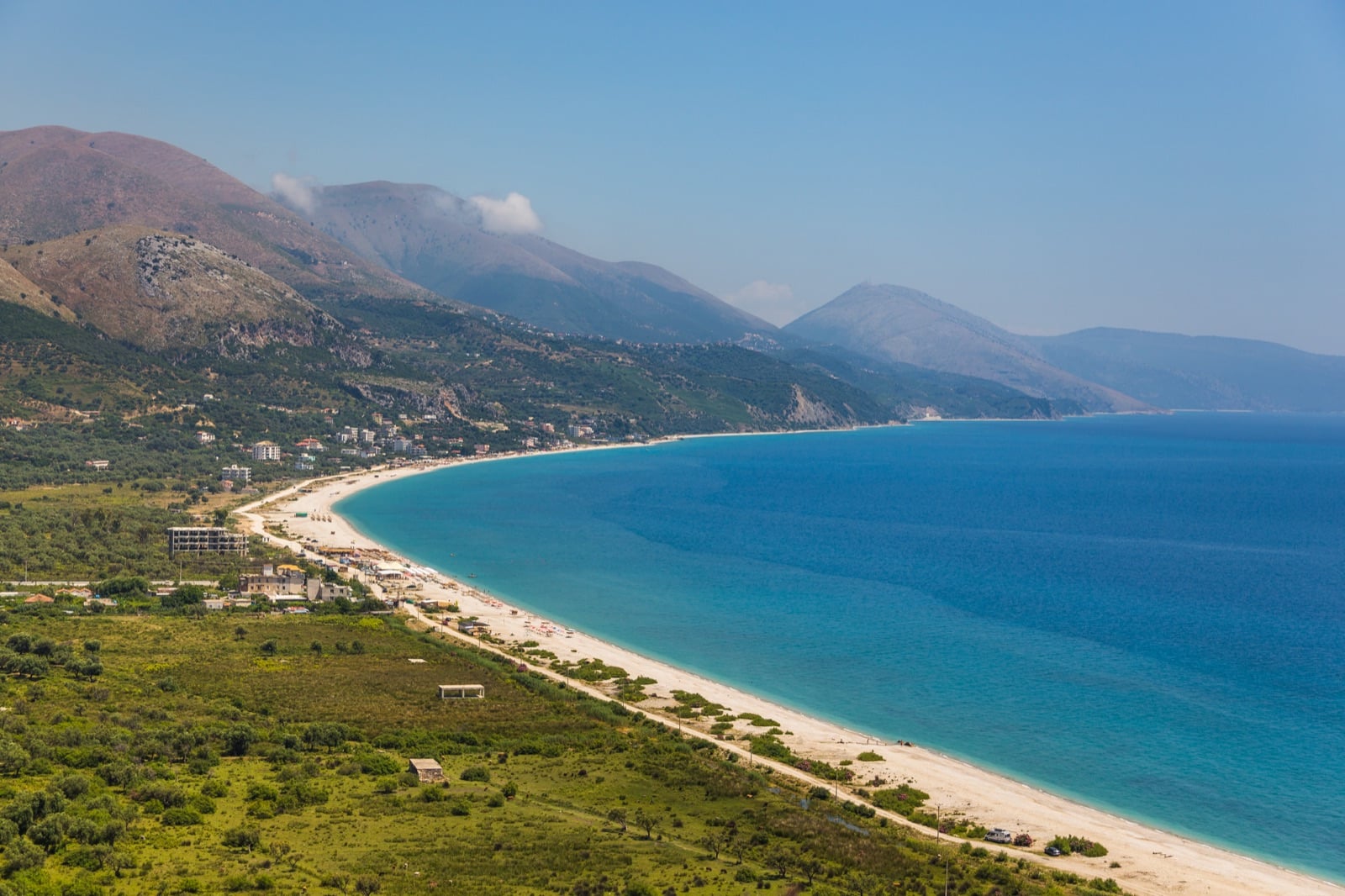


Shëngjin is a popular beach resort on Albania’s northern Adriatic coast, near the historic town of Lezha, known for its long sandy beaches, a lagoon and pine forest nearby, and a fast-growing tourism scene. As one of the main beach destinations of the north, Shëngjin offers sandy, family-friendly shores and easy access from Tirana and Shkodër, making it a convenient coastal stop in the northern half of the country. This guide covers the beaches, the setting, and how to visit.
Why Visit Shëngjin?
Shëngjin is the north’s answer to the beach resorts of the central coast: long sandy beaches, warm shallow water and a lively summer atmosphere, close to the historic sites of the north. It is especially handy for travelers exploring Lezha, Shkodër and the gateway to the Alps, offering a beach break within easy reach. For where it fits, see the best places to visit in Albania.
The Beaches
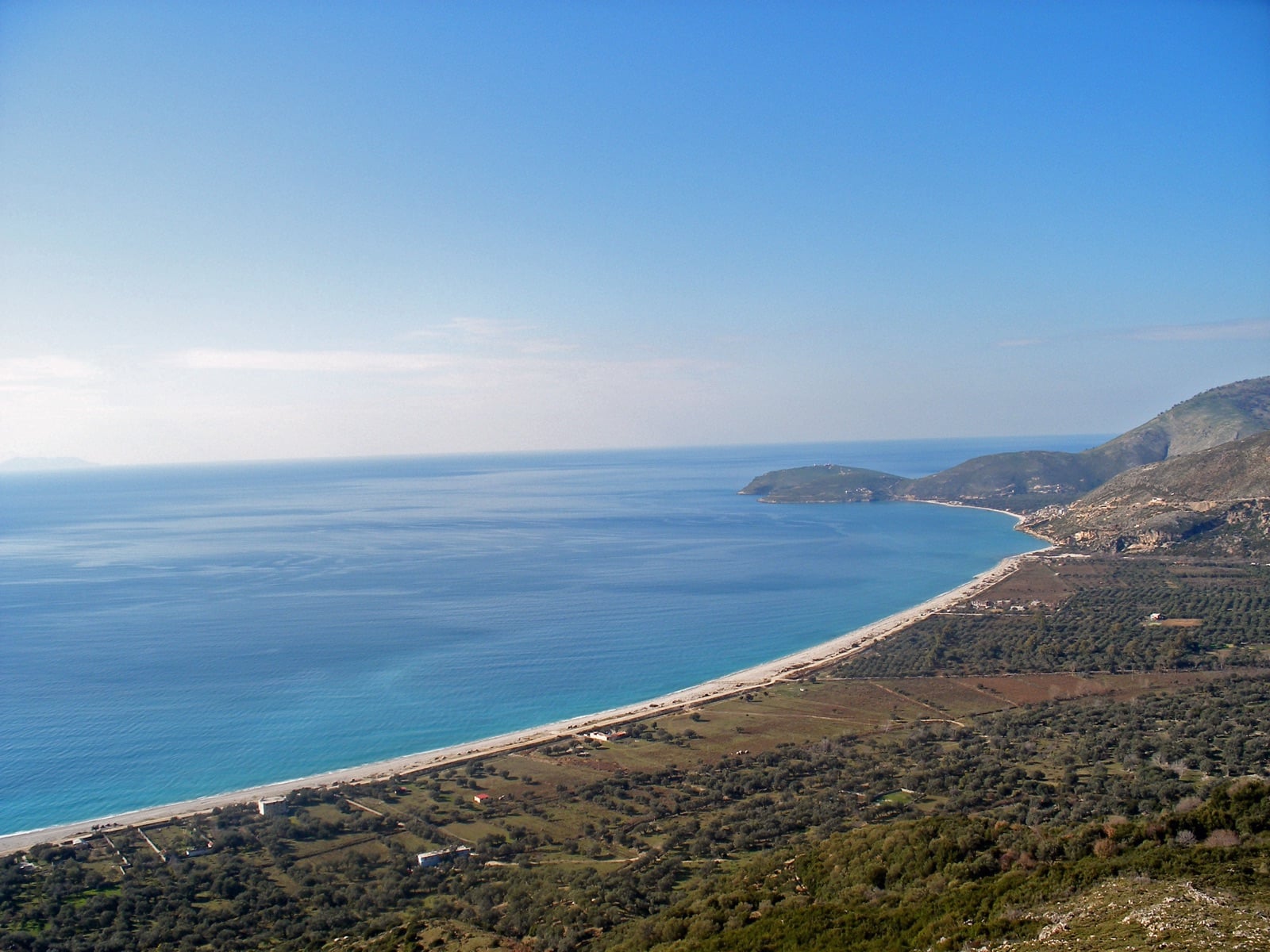
Shëngjin’s main draw is its sandy coastline, a change from the pebble beaches of the southern Riviera. The town beach is broad and shallow, well suited to families, and lined with hotels, bars and restaurants. To the south stretches a longer, quieter shore backed by a protected pine forest and lagoon, offering a more natural setting away from the busy resort strip.
The Lagoon and Pine Forest
Beyond the resort, the Kune-Vain lagoon and pine forest form a protected natural area rich in birdlife, with quiet beaches and walking among the trees. This green, watery landscape gives Shëngjin an ecological dimension alongside its beach tourism, and it is a pleasant contrast to the developed seafront.
The Town and Development
Shëngjin has grown rapidly as a resort, with significant new hotel and apartment development, especially aimed at summer visitors from Albania, Kosovo and abroad. This means good amenities and a lively season, but also a more built-up feel in the main resort area than at quieter beaches. It is busiest and most energetic in high summer.
How to Get to Shëngjin
- From Tirana: roughly 1 to 1.5 hours by car, on the route north.
- From Lezha: Shëngjin is just a short drive from Lezha, with which it pairs naturally.
- From Shkodër: an easy trip from the northern city and Alps gateway.
When to Go
Summer, June to September, is the season, with July and August busiest and liveliest. June and September are warm and calmer. See the best time to visit Albania. Albania is generally safe, see is Albania safe to visit.
Shëngjin at a Glance
Shëngjin is a small place with a long seafront. Administratively it is not a town of its own: it is one of the administrative units of the municipality of Lezhë, and Albania’s national tourism agency places it about 6 km northwest of the city of Lezhë. The figures below come from the 2023 census, the national tourism agency and the National Agency of Protected Areas, so you can see where each number comes from.
| Fact | Detail | Source |
|---|---|---|
| Location | Adriatic coast of northern Albania, about 6 km northwest of Lezhë | National Tourism Agency (AKT) |
| Administrative status | Administrative unit of the municipality of Lezhë | INSTAT Census 2023 |
| Resident population, Shëngjin unit | 6,963 | INSTAT Census 2023 |
| Resident population, Lezhë municipality | 51,354 | INSTAT Census 2023 |
| Historic Italian name | San Giovanni di Medua | TIME, 1927; Balcanica, 2018 |
| Rana e Hedhun | Natural Monument about 4 km northwest of town, largest dune up to about 80 m | AKT |
| Kune-Vain-Tale and Patok-Fushëkuqe-Ishëm reserve | Managed Nature Reserve, IUCN category IV, 8,092.3 hectares | National Agency of Protected Areas (AKZM) |
| Bird species recorded in the reserve | 196 | AKZM |
The census figure counts people who live in Shëngjin all year. In July and August the number of people in town is far higher than that, which explains why a place with fewer than 7,000 residents has a seafront lined with hotels and apartment blocks.
From San Giovanni di Medua to Shëngjin: A Short Port History
Older maps and books call this harbor San Giovanni di Medua, the Italian form of the name, often shortened to Medua. Under that name it appears in one of the hardest episodes of the First World War in the Balkans. In the winter of 1915 to 1916 the retreating Serbian army and many civilians crossed the mountains of Albania to reach the Adriatic, and Medua was one of the harbors used to supply and then evacuate them.
Historian Miloš Ković, writing in the journal Balcanica in 2018, describes how British and French warships escorted Italian supply steamers from Brindisi to Medua. On 5 December 1915 an Austro-Hungarian squadron attacked the harbor and sank vessels at anchor, leaving the small port partly blocked with wrecks. The British admiral Ernest Troubridge then took charge as commander of the harbor. According to the same study, about 6,283 people had been evacuated from Medua by 19 January 1916, and the last transports left on 22 and 23 January, after which the evacuation continued from Durrës and Vlorë further south.
The port made the news again a decade later. On 19 September 1927, TIME magazine reported that the Albanian government had told the United States minister, Charles C. Hart, that Port San Giovanni di Medua would be renamed Port Wilson in honor of President Woodrow Wilson and his support for Albanian independence. TIME noted that the gesture had first been promised by Fan Noli when he was prime minister in 1924. Today the town is known by its Albanian name, Shëngjin, and the national tourism agency describes it as a beach resort with a working port and an established fishing trade.
Rana e Hedhun: The Dune Beach North of Town
The best known natural sight near Shëngjin is Rana e Hedhun. The national tourism agency lists it as a Natural Monument and describes it as a clean beach about 4 km northwest of the town, formed by sand dunes. The largest dune sits against the hillside and reaches a height of about 80 m, so from the water it looks as if sand is pouring from the mountain into the sea.
The agency promotes the area for hiking, dune climbing and photography, and notes that organized events and youth activities take place there in summer. If you want the dunes to yourself, go early in the day or outside July and August. Climbing loose sand in midday heat is tiring, so carry water and wear shoes you can walk in, not only beach sandals.
Kune-Vain in Detail: What the Reserve Protects
The lagoon south of the resort is more than a pleasant backdrop. The National Agency of Protected Areas (AKZM) records that the area was first set aside as a hunting reserve in 1940 because of its importance for waterbirds. Today it forms part of the Managed Nature Reserve “Kune-Vain-Tale and Patok-Fushëkuqe-Ishëm”, an IUCN category IV protected area whose current boundaries, 8,092.3 hectares, were set by a Council of Ministers decision of 26 January 2022. The Kune-Vain-Tale part lies in the delta of the Drin river and includes six lagoons covering roughly 32.4 square kilometers.
For the reserve as a whole, the agency lists about 277 species of vascular plants, 196 species of birds, 26 of fish, 29 of reptiles, 10 of amphibians and 23 of mammals. In the Kune-Vain section alone it identifies 16 natural habitat types, three of them priority habitats under the European Natura 2000 classification. The United Nations Environment Programme (UNEP) adds that BirdLife International has designated the lagoon an Important Bird Area and that it works as a corridor for migrating birds.
The lagoon also protects the town. UNEP reports that nearly one third of Albania’s 427 km coastline is affected by erosion and that Kune-Vain is separated from the open sea by a corridor of sand dunes only about 30 meters wide. A project run with the Albanian government and funded by the Global Environment Facility has replanted a 2,000 meter strip of those dunes with native trees that tolerate salt and flooding, to slow the sea’s advance.
For visitors, the tourism agency points to Kune Beach, a quiet stretch among tall pines with a small island separated from the shore by a narrow channel, and to an information point for the reserve. Bring binoculars, keep to the paths, keep dogs on a lead near nesting areas and take your litter back to town.
Adding Lezhë to a Beach Stay
Because Lezhë is only a few kilometers inland, it is easy to break up beach days with a half day of history. According to Encyclopaedia Britannica, Skanderbeg organized a league of Albanian princes in 1444 and was appointed its commander in chief, and he died in Lezhë on 17 January 1468. The national tourism agency notes that the Skanderbeg Memorial in the historic center holds the tomb of the national hero, and that Lezhë Castle stands on a hill 186 meters high east of the city, with views over the town and the Drin.
The same agency highlights Kallmet, a local red wine, among the specialties of the Lezhë area. For a wider look at what you are likely to find on the menu, see our guide to Albanian food, and if you are planning a trip around a festival or a concert, check Albanian events before you book.
Frequently Asked Questions
Where is Shëngjin?
On Albania’s northern Adriatic coast, near the historic town of Lezha, north of Tirana.
Why is Shëngjin popular?
For its long sandy beaches, warm shallow water and lively summer scene, plus a nearby protected lagoon and pine forest, all within easy reach of the north’s sights.
Is Shëngjin worth visiting?
Yes, especially as a beach break while exploring Lezha, Shkodër and the north, or for a sandy, family-friendly alternative to the southern pebble beaches.
How far is Shëngjin from Tirana?
Roughly 1 to 1.5 hours by car on the route north.
What was Shëngjin called in the past?
Older sources use the Italian name San Giovanni di Medua, often shortened to Medua. Under that name the harbor was used to supply and evacuate the Serbian army in the winter of 1915 to 1916. In 1927 TIME magazine reported an Albanian government plan to rename it Port Wilson, after President Woodrow Wilson. Today it is known as Shëngjin.
Is the Kune-Vain lagoon a protected area?
Yes. Albania’s National Agency of Protected Areas lists Kune-Vain-Tale as part of a Managed Nature Reserve, IUCN category IV, covering 8,092.3 hectares together with the Patok-Fushëkuqe-Ishëm wetlands. The area was first protected as a hunting reserve in 1940, and the agency records 196 bird species there. BirdLife International treats the lagoon as an Important Bird Area.
What is Rana e Hedhun?
Rana e Hedhun is a dune beach about 4 km northwest of Shëngjin that the National Tourism Agency lists as a Natural Monument. Its largest dune rests against the hillside and rises to about 80 meters, which makes the sand look as if it is pouring from the mountain into the sea. It is popular for walking, dune climbing and photography.
Explore More of Albania
Continue with Lezha, Shkodër, and our Albanian city travel guides.
Sources
- National Tourism Agency of Albania
- INSTAT: Population and Housing Census 2023, Lezhë
- National Tourism Agency of Albania: Shëngjin Beach
- National Tourism Agency of Albania: Rana e Hedhun, Shëngjin
- National Tourism Agency of Albania: Lezhë
- National Agency of Protected Areas (AKZM): Managed Nature Reserve Kune-Vain-Tale and Patok-Fushëkuqe-Ishëm
- UN Environment Programme: Albania, how a lagoon became a frontline defence against climate change
- Miloš Ković, Balcanica XLIX (2018): The British Adriatic Squadron and the Evacuation of Serbs from the Albanian Coast 1915 to 1916
- TIME, 19 September 1927: Albania, Port Wilson
- Encyclopaedia Britannica: Skanderbeg

Author: Val Demiri
Valbona is an editor and writer at ALB Connection, where she covers the people, businesses, and culture shaping the Albanian diaspora. A journalism graduate of the University of Iowa, her work spans community profiles, success stories, and features on Albanian life across the US, Europe, and beyond. She is drawn to stories that celebrate Albanian achievement and keep the community connected across borders.