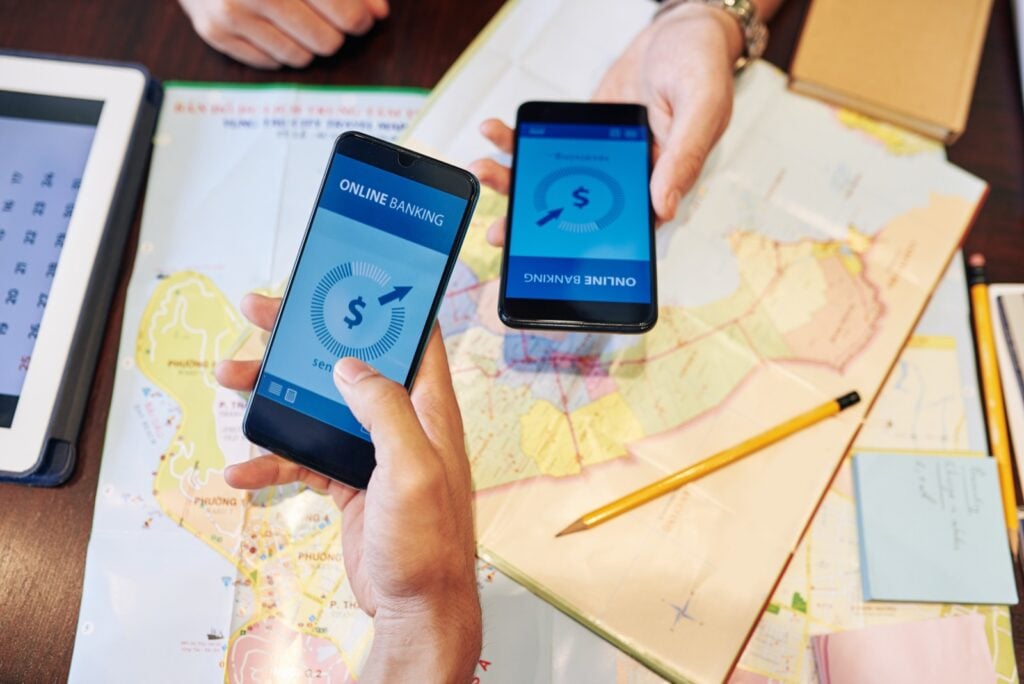

You can send money to Albania or Kosovo from the US through a bank wire, a money transfer company with cash pickup, or an app that pays into a bank account, and US law requires the provider to show you the exchange rate, the fees and the exact amount your family will receive before you pay. That disclosure lets you compare providers on the number that matters: what arrives.
This guide covers the legal channels, the well-known providers that say on their own websites that they serve Albania and Kosovo, the lek and the euro, US reporting rules and scams. It does not name a “best” provider, because the right choice depends on the amount, the speed and how your relative wants to be paid.
Quick Facts
- Albania uses the lek (ALL), issued by the Bank of Albania. Kosovo uses the euro.
- Bank of Albania quarterly data for 2025 show net remittances of about EUR 1.12 billion for the year. The Central Bank of Kosovo reports EUR 1.4 billion in remittances for 2025, up 4.3 percent.
- World Bank data put remittances received at 8.4 percent of Albania’s GDP and 17.3 percent of Kosovo’s in 2025.
- Under the federal remittance rule, you generally have 30 minutes to cancel an international transfer at no charge, and up to 180 days to report an error, according to the Consumer Financial Protection Bureau.
- The World Bank’s Remittance Prices Worldwide database has no United States to Albania or United States to Kosovo corridor.
- Banks must report cash transactions over $10,000 to FinCEN. Splitting cash to avoid that report is a federal crime called structuring.
- Since January 1, 2026, a 1 percent federal excise tax applies to remittance transfers paid for with cash, a money order or a cashier’s check (IRS).
On This Page
- Why Remittances Matter in Albania and Kosovo
- The Main Legal Ways to Send Money
- Providers That Say They Serve Albania and Kosovo
- Lek or Euro: What Your Family Receives
- How to Compare the Real Cost
- US Reporting Rules in Plain Terms
- Avoiding Money Transfer Scams
- How to Decide
- Frequently Asked Questions
Why Remittances Matter in Albania and Kosovo
Money sent home by emigrants is tracked closely by both central banks. The Bank of Albania’s balance of payments analysis for the fourth quarter of 2025 reports net remittances of EUR 302.3 million for that quarter alone, up 10.8 percent from a year earlier. Adding the four quarterly figures the bank publishes for 2025 (EUR 250.7 million, 281.1 million, 284.7 million and 302.3 million) gives about EUR 1.12 billion for the year.
The Central Bank of Kosovo’s Annual Report 2025 says remittances reached EUR 1.4 billion, an increase of 4.3 percent. Germany and Switzerland together accounted for 56.4 percent of the total, followed by the United States and other EU countries. In the bank’s quarterly table, the US share ranged from 6.8 to 8.1 percent during 2025.
The World Bank’s World Development Indicators put personal remittances received in 2025 at 8.4 percent of GDP for Albania and 17.3 percent for Kosovo. For a wider look at what immigrant families send and why, see our article on how much money immigrants send home.
The Main Legal Ways to Send Money
Every legal channel falls into one of four groups. The table describes them in general terms; the exact speed and options for your transfer appear on the provider’s disclosure before you pay.
| Method | Speed, as providers describe it | How the recipient gets it | What to check |
|---|---|---|---|
| Bank wire (SWIFT) | Varies by bank; the receipt must state the date the money will be available | Deposit into a bank account in Albania or Kosovo | Recipient’s IBAN and bank code, your bank’s wire fee, fees taken by other banks along the way, and the currency the account is held in |
| Money transfer operator, cash pickup | Often described as minutes once the transfer is approved | Cash at an agent location, with ID and a reference number | Agent locations near your relative, pickup currency, the name spelled exactly as on the recipient’s ID |
| App or online service, bank deposit | Varies by provider and payment method; the delivery date is shown before you pay | Deposit into a local bank account | Exchange rate versus the fee, whether paying by card costs more than paying from your bank account, transfer limits |
| Mobile wallet or phone top-up | Often described as minutes | Credit to a mobile wallet or prepaid phone number | Whether your relative actually uses that wallet or carrier; a top-up is phone credit, not cash |
Two informal habits are worth a word. Carrying cash on a summer visit is legal, but US Customs and Border Protection requires anyone entering or leaving the country with more than $10,000 in currency or monetary instruments to report it on FinCEN Form 105, and failure to file can mean forfeiture. The Central Bank of Kosovo’s annual report refers to a EUR 10,000 declaration threshold on its side as well.
If you are new to the US banking system, our new immigrant guide explains how to open the checking account that most of these services draw from. Business owners who send larger sums should read how to open a US business bank account as a non-citizen, since the federal remittance rule described below covers transfers sent by consumers.
Providers That Say They Serve Albania and Kosovo
We opened each company’s own US country page on September 21, 2026. The table lists only what those pages state. It is not a ranking, and we deliberately leave out fees and exchange rates, which change constantly and differ by amount and payment method.
| Provider | Albania, per the provider’s own page | Kosovo, per the provider’s own page |
|---|---|---|
| Western Union | Yes: bank account, cash pickup, mobile wallet; page shows USD to ALL | Yes: bank account, mobile wallet, cash pickup |
| MoneyGram | Yes: cash pickup, bank account or digital methods, depending on availability; receive currency choices shown include ALL, EUR and USD | Yes: cash pickup; page shows USD to EUR |
| Ria | Yes: cash pickup or bank deposit; page shows USD to ALL | Yes: bank deposit shown; USD to EUR |
| Remitly | Yes: bank deposit and cash pickup; USD to ALL | Yes: cash pickup and debit card deposit; USD to EUR |
| Wise | Yes: USD to ALL, paid into the recipient’s local bank account | Not confirmed; we could not find a US to Kosovo page |
| WorldRemit | Yes: bank transfer, cash pickup, mobile money and airtime top-up; USD to ALL | Not confirmed; we could not find a Kosovo page |
| Xoom | The Albania page we opened describes mobile phone reloads only | Not confirmed; we could not find a Kosovo page |
“Not confirmed” means only that we could not find a public page, not that the service is unavailable. Providers show the available destinations and payout options when you start a transfer. Your own bank or credit union can also send an international wire; ask for its fee schedule and for the disclosure form before you authorize anything.
Stick with licensed companies. Providers publish their licensing details on their websites (Ria’s page, for example, displays its NMLS ID number), and you can ask your state’s financial regulator if you are unsure about a company.
Lek or Euro: What Your Family Receives
The Bank of Albania states that the monetary unit of the Republic of Albania is the lek, and that the bank has the exclusive right to issue it. Kosovo is different: it uses the euro, and the Central Bank of Kosovo’s annual report describes its cooperation with the European Central Bank to protect “the euro as the currency in Kosovo.” Our guide to Albanian currency and the lek covers banknotes and everyday use.
For a transfer to Kosovo, the conversion is simple: dollars become euros once. For Albania there is a choice to make. Most provider pages we read convert dollars straight to lek, while at least one lets the sender choose lek, euros or dollars for pickup. Your relative may have some costs in euros, so ask which currency they actually need. If they receive euros and then need lek for daily spending, they will pay for a second conversion at an exchange office or bank.
One note for relatives in Europe: the Bank of Albania says Albania’s participation in the Single Euro Payments Area since October 2025 has reduced the cost of cross-border euro transfers. That does not apply to dollar transfers from the US.
How to Compare the Real Cost
The cost of a transfer has two parts: the fee and the exchange rate. A low fee can come with a weaker rate, and the federal remittance transfer rule makes both visible.
According to the Consumer Financial Protection Bureau, the rule covers electronic transfers of more than $15 sent by consumers in the United States to people or companies abroad through a remittance transfer provider. (Companies that send 500 or fewer such transfers a year are exempt.) Before you pay, the provider must generally tell you:
- the exchange rate, if one applies,
- the fees and taxes the provider collects, and
- the total amount expected to be delivered to the recipient.
After you pay, the receipt must repeat that information and add the date the money will be available, along with instructions for reporting errors and canceling.
A fair comparison in three steps
- Pick one amount, for example the sum you send every month, and one payout method.
- Get the pre-payment disclosure from two or three providers within the same hour, since rates move during the day.
- Compare the “total to recipient” line, in the currency your relative will actually receive. The fee and the rate are already reflected in that number.
Two of the provider pages we read advertised a special rate or fee for a first transfer, so repeat the comparison on your second or third transfer. The World Bank’s Remittance Prices Worldwide database is a public reference for transfer costs, but when we checked its list of country corridors, Albania appeared only as a destination from Germany, Italy, Switzerland and the United Kingdom, and Kosovo from Austria, Germany, Italy and Switzerland. There is no US corridor for either country, so your own side-by-side disclosures are the best data available.
Your rights if something goes wrong
The CFPB says you can generally cancel an international transfer within 30 minutes of paying, at no charge, as long as the money has not already been picked up or deposited. If the wrong amount arrives, or the money does not arrive by the promised date, you have up to 180 days to report the error to the provider, which must investigate within 90 days. You can also submit a complaint to the CFPB.
Your Protections at a Glance
| Situation | What the federal remittance rule says (CFPB) |
|---|---|
| Which transfers are covered | Electronic transfers of more than $15 sent by a consumer in the United States to a person or company abroad through a remittance transfer provider |
| Before you pay | The provider must show the exchange rate, the fees and taxes it collects, and the total amount expected to reach the recipient |
| On your receipt | The same figures again, plus the date the money will be available and instructions for canceling and reporting errors |
| Canceling | Generally within 30 minutes of paying, at no charge, if the money has not been picked up or deposited |
| Reporting an error | Up to 180 days, for example if the wrong amount arrives or the money is late |
| What the provider must do | Investigate within 90 days |
| If that does not resolve it | Submit a complaint to the Consumer Financial Protection Bureau |
US Reporting Rules in Plain Terms
Here is what the official pages say about “the $10,000 rule”, the new remittance tax and gifts. This is general information, not tax or legal advice.
- Cash at the bank. FinCEN explains that federal law requires financial institutions to report currency (cash or coin) transactions over $10,000 by or on behalf of one person, including several cash transactions that add up to more than $10,000 in one day. The bank files the report, called a Currency Transaction Report, and FinCEN notes there is no general prohibition on handling large amounts of cash.
- Do not split cash to stay under the line. The same FinCEN guide calls this “structuring” and says it is a federal crime that can bring up to five years in prison, a fine of up to $250,000, or both.
- The 1 percent remittance tax. A federal excise tax of 1 percent applies to certain remittance transfers made after 2025 when the sender pays with cash, a money order, a cashier’s check or a similar physical instrument, according to the IRS. The sender owes it and the provider collects it at the time of the transfer. Paying from a bank account or with a card is not among the payment methods the IRS lists, so ask the provider whether the tax applies to the way you plan to pay; it should appear among the taxes on your pre-payment disclosure.
- Gifts you send. The IRS says the donor is generally responsible for any gift tax, and lists an annual exclusion of $19,000 per recipient for 2025 and for 2026. Gifts above the exclusion are reported on Form 709. Whether any tax is actually due depends on your situation.
- Gifts you receive from abroad. Form 3520 applies to the person in the US who receives money, not the one who sends it. The IRS says a US person must report gifts or bequests from a nonresident alien individual or foreign estate when they total more than $100,000 in a tax year. A lower, inflation-adjusted threshold applies to gifts from foreign corporations or partnerships: $20,573 for 2026.
If you support parents every month, help a sibling buy an apartment, or move proceeds from a property sale, talk to a tax professional before you send, not after. Our directory of Albanian accountants and CPAs can help you find one who has handled cross-border family money before.
Avoiding Money Transfer Scams
The Federal Trade Commission‘s guidance is blunt: once you wire money, getting it back is nearly impossible, and you should never wire money to someone you have not met in person. The FTC lists the requests that should stop you cold:
- a caller claiming to be from a government agency who demands payment by wire (agencies do not do this),
- a “family emergency” call, which the FTC warns may now use a cloned voice, asking you to send money right away,
- an online romance that turns into a request for money,
- a rental listing or a prize that requires a wire up front, and
- anyone who insists that a money transfer is the only way to pay, or who pressures you to act immediately.
If you get an emergency call about a relative in Tirana or Pristina, hang up and call that relative, or another family member, on a number you already have. If you did send money to a scammer, the FTC advises contacting the transfer company immediately to ask for a reversal, and reporting it at ReportFraud.ftc.gov.
How to Decide
There is no single best way to send money to Albania, only a best way for a given transfer. Work through these questions:
- How will your relative collect it? A parent without a bank account needs cash pickup. A relative with an account may prefer a deposit.
- Which currency do they need? Lek for daily life in Albania, euros in Kosovo, and sometimes euros in Albania too.
- How fast? Pay for speed only when it matters. For routine monthly support, a slower option may be cheaper; the disclosure will tell you.
- How much? Providers set their own limits. For a large one-time transfer, such as a property purchase, talk to your bank and your accountant first.
- What does the disclosure say today? Compare the amount received, then check again every few months.
Supporting family from far away involves more than money. Our guide to caring for aging parents from abroad covers the rest.
Frequently Asked Questions
What is the best way to send money to Albania?
It depends on the amount, the speed and how your relative wants to be paid. Get the required pre-payment disclosure from two or three licensed providers for the same amount on the same day, then compare the total your recipient will receive in lek or euros, through a payout method that suits them.
Can I send money to Kosovo from the US?
Yes. On September 21, 2026, the US websites of Western Union, MoneyGram, Ria and Remitly each had a page for sending money from the United States to Kosovo, with cash pickup, bank deposit or card deposit depending on the company. Kosovo uses the euro, so your dollars are converted once. A bank wire to a Kosovo bank account is another option.
Should my family in Albania receive lek or euros?
Ask them what they will spend it on. Albania’s currency is the lek, but your relative may have some costs in euros. Receiving the wrong currency means a second conversion in Albania. Most provider pages we checked pay out in lek; at least one offers a choice of lek, euros or dollars.
Do I have to report sending money overseas to the IRS?
The official pages describe three separate rules. Banks report cash transactions over $10,000 to FinCEN. The IRS says gift givers report gifts above the annual exclusion, $19,000 per recipient for 2026, on Form 709. Form 3520 applies to people in the US who receive large foreign gifts, not to senders. Separately, since January 1, 2026, a 1 percent federal excise tax applies to transfers paid for with cash, a money order or a cashier’s check; the provider collects it from you. Confirm your own situation with a tax professional.
Can I cancel a money transfer to Albania after I pay?
Usually, if you act fast. The Consumer Financial Protection Bureau says you can generally cancel an international money transfer within 30 minutes of paying, without a fee, unless the recipient has already picked up the money or it has been deposited. After that, you can still report errors, such as a wrong amount or late delivery, for up to 180 days.
Sources
- Bank of Albania: Analysis of developments in the external sector of the economy, 2025 Q4
- Bank of Albania: Banknotes and coins
- Central Bank of the Republic of Kosovo: Annual Report 2025
- World Bank: Personal remittances, received (% of GDP), Albania and Kosovo
- World Bank: Remittance Prices Worldwide, country corridors
- Consumer Financial Protection Bureau: Sending money to another country
- Consumer Financial Protection Bureau: What is a remittance transfer?
- FinCEN: Notice to Customers, a CTR Reference Guide
- FinCEN: Frequently asked questions regarding the Currency Transaction Report
- U.S. Customs and Border Protection: Currency and monetary instruments
- Internal Revenue Service: Frequently asked questions on gift taxes
- Internal Revenue Service: Treasury, IRS issue proposed regulations on the new remittance transfer tax (April 10, 2026)
- Internal Revenue Service: Instructions for Form 720, excise tax on remittance transfers
- Internal Revenue Service: Gifts from foreign person
- Federal Trade Commission: What to know before you wire money
- Western Union: Send money to Albania
- MoneyGram: Send money to Albania from the United States
- Ria Money Transfer: Send money to Albania from the U.S.
- Remitly: Send money to Albania from the United States
- Wise: Send money to Albania from the US
- WorldRemit: Send money to Albania
- Xoom: Albania
Related Reading
- How Much Money Immigrants Send Home
- Albanian Currency: The Lek
- New Immigrant Guide to the US
- Open a US Business Bank Account as a Non-Citizen
- Find an Albanian Accountant or CPA
- Credit 101 for New Immigrants

Author: Val Demiri
Valbona is an editor and writer at ALB Connection, where she covers the people, businesses, and culture shaping the Albanian diaspora. A journalism graduate of the University of Iowa, her work spans community profiles, success stories, and features on Albanian life across the US, Europe, and beyond. She is drawn to stories that celebrate Albanian achievement and keep the community connected across borders.