The Albanian currency is the lek, abbreviated ALL and often shown as L, and while cash is still king in much of the country, cards are increasingly accepted in cities and tourist areas. For visitors, the main things to know are that you should carry lek for everyday spending, that euros are sometimes accepted but usually at a poor rate, and that ATMs are the easiest way to get cash. This guide covers everything you need to handle money in Albania.
The Albanian Lek
The lek (plural lekë) is Albania’s official currency, issued by the Bank of Albania. It comes in banknotes and coins, with notes in the larger denominations used for most purchases. You may occasionally hear prices quoted in “old lek,” an informal habit of multiplying by ten that survives from a past revaluation, so if a price sounds surprisingly high, check whether it is being quoted in old lek. When in doubt, confirm the figure.
Cash or Card?
Albania is still largely a cash economy, though this is changing:
- Cities and tourist areas: hotels, larger restaurants and many shops in Tirana, the coast and tourist centers increasingly accept cards.
- Rural areas, small businesses, markets, guesthouses and transport: often cash only.
The safe approach is to carry enough lek in cash for daily needs, especially outside the main cities, while using cards where accepted. If you are driving in Albania or heading into the mountains or countryside, carry more cash, as card acceptance drops.
ATMs and Getting Cash
ATMs are widely available in cities and towns and are the most convenient way to get lek, including at Tirana Airport on arrival. Tips:
- Withdraw on arrival so you have cash from the start.
- Watch for fees: some ATMs charge high withdrawal fees, and many offer a poor “conversion” if you let the machine convert to your home currency, always choose to be charged in lek.
- Use bank ATMs where possible over standalone machines.
Are Euros Accepted?
Euros are sometimes accepted, particularly in tourist areas, for hotels and larger purchases, but usually at an unfavorable exchange rate, and change will typically be given in lek. Relying on euros is not a good strategy: you will generally get better value paying in lek. Bring or withdraw lek for day-to-day spending rather than depending on euros.
Exchanging Money
Exchange offices are common in cities and often offer competitive rates with low or no commission, sometimes better than banks. Compare a couple if you are exchanging a larger amount. Avoid changing large sums at the airport, where rates are usually poorer, changing just enough to get started and using ATMs or town exchange offices for the rest.
Money Tips for Albania
- Carry cash, especially outside cities and in rural and mountain areas.
- Pay in lek rather than euros for better value.
- Choose to be charged in lek at ATMs and on card machines, declining home-currency conversion.
- Keep small notes for taxis, markets, tips and small vendors.
- Budget generously in cash if heading to the Albanian Alps or remote coast.
Albania is very affordable, so your money goes a long way, part of what makes it such good value, as we cover in the best places to visit in Albania.
The Lek at a Glance
| Item | Detail |
|---|---|
| Name and code | Lek, plural lekë; international code ALL |
| Issued by | The Bank of Albania, which has issued the currency since 1926 |
| Banknotes in use | 200, 500, 1,000, 2,000, 5,000 and 10,000 lekë; the 200 note is polymer and the 10,000 was introduced in 2021 |
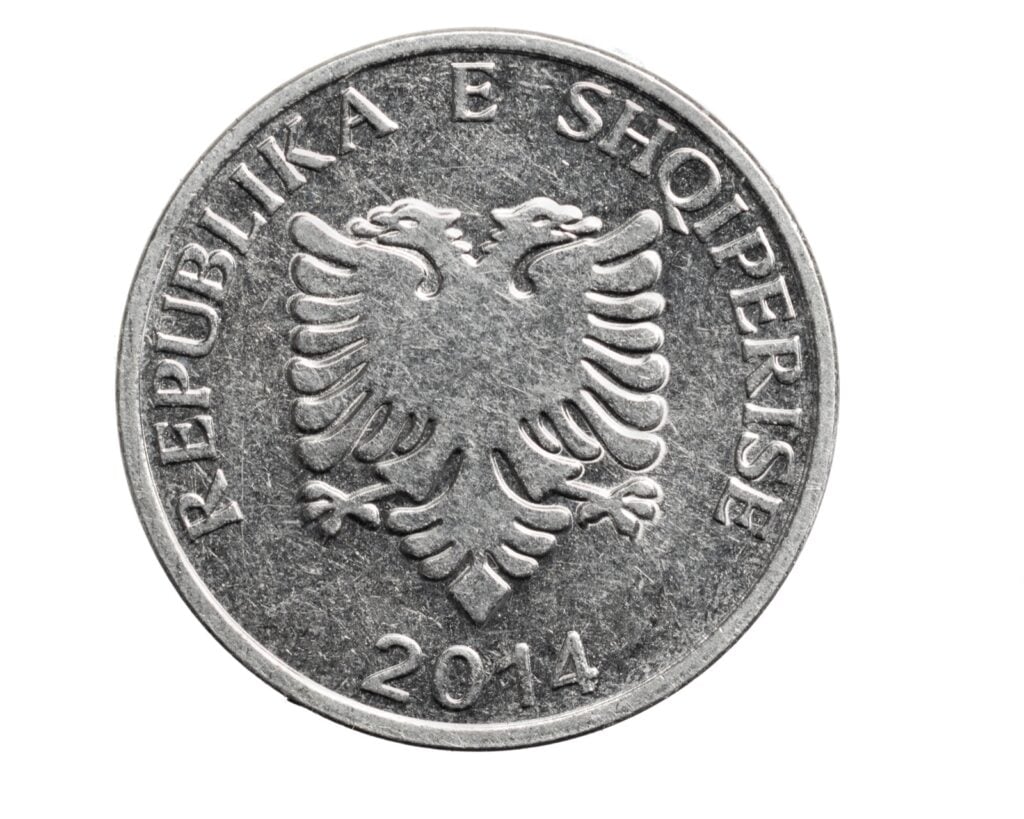
| Coins | 1, 5, 10, 20, 50 and 100 lekë |
| Subunit | The qindarka, 100 to a lek, no longer in circulation |
| Origin of the name | Named after Alexander the Great, Leka i Madh in Albanian, whose portrait appeared on the first coins |
The Old Lek Habit
The single most confusing thing about money in Albania is that many people still quote prices in old lekë. A revaluation in 1965 removed a zero from the currency, and sixty years later shopkeepers, taxi drivers and market sellers routinely say a price ten times higher than the figure on the note. If a coffee is quoted at 1,000 lekë, the real price is 100. The rule is simple once you know it: if a price sounds ten times too high, it is old lekë, and the notes and coins in your hand are always in new lekë. When in doubt, ask for the price in new lekë, lekë të reja, or look at the receipt.
Cash, Cards and What Things Cost
Albania is still a cash economy outside the cities. Cards are accepted in hotels, supermarkets, larger restaurants and shops in Tirana and on the coast, but guesthouses, taxis, markets, small cafes and mountain villages expect cash, and some card terminals charge a fee or are quietly out of order. Carry more cash than you would in western Europe, and keep small notes, because change for a 5,000 note is often a problem. Euros are accepted for hotels and some tourist services, usually at a poor rate, but paying in lekë is cheaper everywhere and expected in daily life. For tips on getting the most out of a trip, see our guides to safety in Albania and where to stay.
Typical Prices in Lekë
| Item | Typical price in lekë | Roughly in dollars |
|---|---|---|
| Espresso in a Tirana cafe | 100 to 150 | About 1.20 to 1.80 |
| Byrek from a bakery | 100 to 200 | 1.20 to 2.40 |
| Lunch at a local restaurant | 800 to 1,500 | 10 to 18 |
| Dinner for two with wine, good restaurant | 4,000 to 7,000 | 48 to 85 |
| Intercity bus, Tirana to Shkodër | 400 to 500 | 5 to 6 |
| Taxi across Tirana | 500 to 800 | 6 to 10 |
| Guesthouse room in the Alps, with dinner and breakfast | 3,000 to 5,000 per person | 36 to 60 |
| Beach sunbed on the Riviera | 500 to 1,500 | 6 to 18 |
Prices are indicative and rise every year, fastest on the coast in summer; they are given to show scale rather than exact figures. The dollar column uses about 83 lekë to the dollar, close to the Bank of Albania average rate in late 2025 and early 2026. The lek has strengthened (it was over 100 to the dollar in 2022), so check the current rate before you travel.
Tipping in Albania
Tipping in Albania is a custom, not a rule. There is no fixed percentage and it is always your choice. Check the bill first: if a service charge is already included, no extra tip is needed.
- Restaurants: rounding up the bill, or leaving around 10% for good service, is common practice, according to travel guides written by Albanians such as Chasing the Donkey.
- Cafes and bars: tips are smaller and less expected; leaving the change is enough.
- Taxis: a tip is not expected. Rounding up the fare is a friendly extra if the driver helped with luggage.
- Hotels: appreciated but not expected. Up to about 200 lekë a day for housekeeping is generous.
- Tour guides: about 10% of the tour price is a common rule of thumb.
Tip in cash, in lekë: you usually cannot add a tip to a card payment, so keep a few small notes for it. In family-run places, staff may politely refuse a tip at first. That is courtesy, and you can insist if you want to leave one.
Sending Money to Albania
Remittances from the diaspora are one of the largest sources of income in Albania, and the practical side has changed. Bank transfers are reliable but slow and involve fees at both ends; the money transfer chains have offices in every town and pay out in lekë or euros within minutes; and app-based services now offer the best rates for smaller sums. Whichever you use, the recipient will need an ID card, and larger sums are easier through a bank account, which most Albanians now have. For Albanian Americans supporting family, the guide to how much money immigrants send home covers the wider picture.
A Note on Euros and Prices Quoted Abroad
Because so much of Albania’s tourist trade is with Italy, Greece and the diaspora, a second currency runs alongside the lek in practice. Hotels, rental cars, tour operators and the larger Riviera restaurants often quote in euros, property is bought and sold in euros, and remittances arrive in euros or dollars. Shop prices are normally shown in lekë, and paying in lekë avoids the rounding that always favors the seller, but a visitor should not be surprised to see a hotel rate in euros or to be offered change in either currency. The simplest approach is to carry both: euros for anything booked in advance, lekë for everything else, and a card for the rest. Kosovo, for the record, uses the euro outright, so a trip that crosses the border needs only one currency for that half.
Money in Albania is, in the end, simple: get lekë from an ATM, keep small notes, ask about old lekë when a price sounds wrong, and enjoy how far it goes.
The lek has been stable for two decades and strengthened against the dollar and euro in recent years, a small sign of how far the country has come since the currency was born in 1926.
Understanding the Albanian currency takes a few minutes and saves money on every exchange.
Frequently Asked Questions
What currency does Albania use?
The Albanian lek (ALL), issued by the Bank of Albania. It is the currency for everyday spending across the country.
Should I use cash or card in Albania?
Carry cash for everyday spending, especially outside cities and in rural areas, and use cards where accepted in hotels, larger restaurants and city shops.
Are euros accepted in Albania?
Sometimes, in tourist areas and for larger purchases, but usually at a poor rate, with change given in lek. Paying in lek is better value.
Do you tip in Albania?
Tipping is optional. In restaurants, rounding up or leaving about 10% for good service is common; taxis do not expect a tip; tour guides are often given about 10% of the tour price. Tip in cash, in lekë.
Where can I get Albanian lek?
From ATMs, widely available including at Tirana Airport, and from exchange offices in towns and cities, which often offer good rates.
Explore More of Albania
Continue with the Tirana Airport guide, driving in Albania, and the best places to visit in Albania.
Sources
- Bank of Albania (issuer; banknotes, coins and official exchange rates)
- Chasing the Donkey: Tipping in Albania
- Wikipedia: Albanian lek

Author: Val Demiri
Valbona is an editor and writer at ALB Connection, where she covers the people, businesses, and culture shaping the Albanian diaspora. A journalism graduate of the University of Iowa, her work spans community profiles, success stories, and features on Albanian life across the US, Europe, and beyond. She is drawn to stories that celebrate Albanian achievement and keep the community connected across borders.