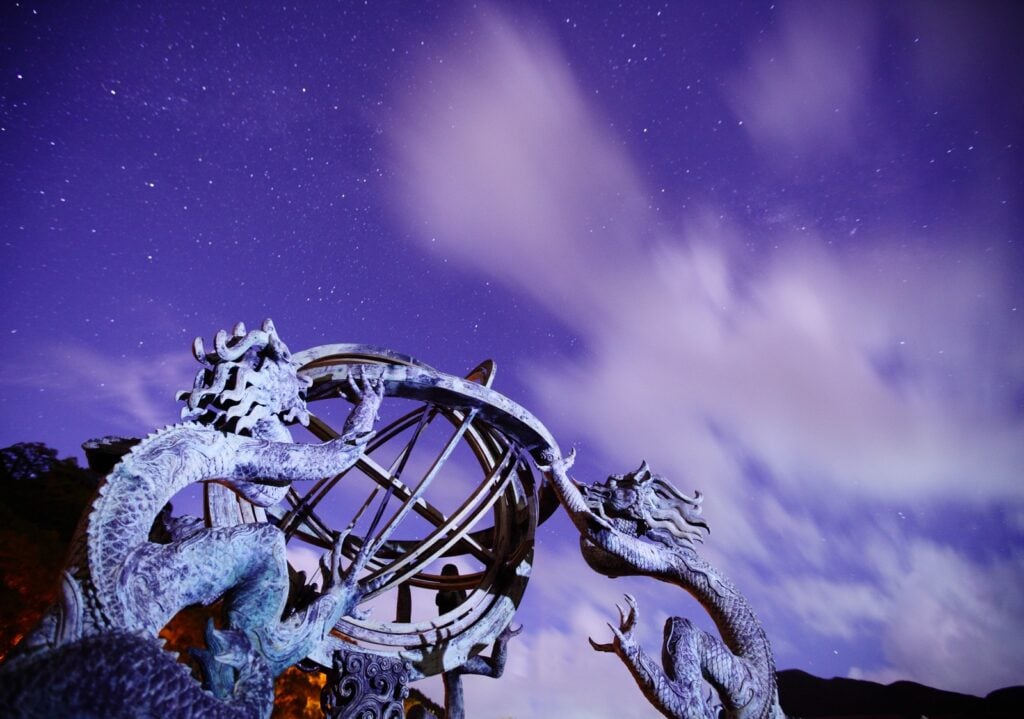

The kulshedra (also spelled kuçedra) is the great serpent-dragon of Albanian mythology, a monstrous, fire-breathing demon that brings drought, storms, and destruction. Usually described as a huge, many-headed serpent, she is the embodiment of chaos and natural disaster in Albanian folk belief. Her eternal enemy is the drangue, the winged hero who battles her in the sky, and the thunderstorm is understood as their fight.
Alongside the drangue, the kulshedra is the central figure of Albanian mythology’s great cosmic struggle between order and chaos. This guide explains what the kulshedra is, how she comes into being, the destruction she causes, and how she is finally defeated.
Quick Facts: The Kulshedra
- What it is: A giant, fire-breathing serpent-dragon of Albanian mythology
- Represents: Chaos, drought, storms, and natural disaster
- Appearance: A huge serpent, often with many heads, a long tail, and reddish hair or wool
- Origin: Believed to develop from a bolla, a serpent that lived unseen for many years
- Enemy: The drangue, the winged hero who defeats her
On This Page
- What Is the Kulshedra?
- How a Bolla Becomes a Kulshedra
- Her Powers and Destruction
- The Drangue: Her Eternal Enemy
- The Kulshedra in Albanian Folklore
- Frequently Asked Questions
What Is the Kulshedra?
The kulshedra is the great chaos-monster of Albanian mythology, a female serpent-demon of enormous size and power. She is usually pictured as a giant snake or dragon, in many tales with several heads (often seven, nine, or twelve), a long tail, and a body covered in reddish hair or wool. She breathes fire, and in some legends spews water strong enough to cause floods. Where the drangue is the protector, the kulshedra is the destroyer: she stands for everything wild, dangerous, and beyond human control.
How a Bolla Becomes a Kulshedra
One of the most distinctive parts of the legend is that the kulshedra is not born a monster. She begins as a bolla (also called a bullar), an ordinary but magical serpent. According to tradition, if a bolla lives long enough (many versions say twelve years) without being seen by a human being, it transforms into the fearsome, many-headed kulshedra. This idea, that a hidden creature grows into a monster over time, is a striking feature of the Albanian tradition.
Her Powers and Destruction
The kulshedra is a bringer of disaster:
- Drought. In the oldest legends, the kulshedra blocks or withholds water, causing drought, and demands sacrifice, often a young woman, before she will release it.
- Storms and floods. She breathes fire and stirs violent weather; some tales say she can cause floods and hailstorms.
- Terror. She torments villages, and only a hero, the drangue, can stand against her.
The Drangue: Her Eternal Enemy
The kulshedra’s counterpart is the drangue, the winged, semi-divine hero of Albanian mythology. When a storm gathers, Albanian folk belief held that the drangue was rising to battle the kulshedra in the sky, hurling lightning bolts, meteoric stones, and even uprooted trees at her. The thunder is the sound of their fight, and when the drangue wins, the storm breaks and the danger passes. This endless duel between hero and serpent is the central drama of Albanian mythology.
The Kulshedra in Albanian Folklore
The kulshedra belongs to the ancient, pre-Christian layer of Albanian belief, preserved for centuries in the oral tradition of the highlands. Scholars connect the drangue-versus-kulshedra story to a very old Indo-European motif: the storm-hero who slays the chaos-serpent, a pattern found in many mythologies across Europe and Asia. Along with tales such as the legend of Rozafa Castle and the beliefs collected in our guide to Albanian superstitions, the kulshedra is part of the deep mythological world that shaped Albanian culture.
How to Recognize a Kulshedra
Descriptions vary from village to village, but the tellers agree on enough for a portrait.
| Trait | What the stories say |
|---|---|
| Form | A gigantic serpent or dragon, often with seven, nine or twelve heads, a hairy body and, in some tellings, wings |
| Origin | Begins life as a bolla, a serpent that lives hidden for many years; if no one sees it in that time it matures into a kulshedra |
| What it does | Dries up springs and rivers, spoils crops, and brings hail, storms and floods; in some stories it demands human sacrifice to release the water |
| How it attacks | Breathes fire, and sprays a poisonous milk or urine that withers whatever it touches |
| Its enemy | The drangue, who strikes it with lightning and hurls trees and boulders; the summer thunderstorm is their battle |
| Its fate | Killed or driven off by the drangue, but never for good; the drought returns and so does she |
Regional Names and Variations
In the Gheg north the creature is the kulshedra and the young serpent is the bolla; in the Tosk south the same monster is usually the kuçedra, and the drangue who fights her is the drangoi. Some southern tales make her female in every detail, an old woman with pendulous breasts who nurses her brood, while northern tales stress the many heads and the storm. In stories from the Gjirokastër and Përmet regions she guards a spring and is defeated by a hero who tricks rather than fights her, which links her to the wider Balkan and Greek dragon-at-the-well tale. The word itself is thought to come from the Latin chersydrus, a kind of water snake, by way of the medieval Greek, a reminder of how long the story has been told in this landscape.
A Dragon Shared Across the Balkans
The kulshedra is the Albanian member of a family of Balkan dragons. Serbian and Bulgarian folklore has the ala or hala, a weather demon that brings hail and is fought by the zmaj, the good dragon, in exactly the drangue’s role. Greek folklore keeps the drakos who guards water. Behind all of them is the Indo-European storm myth of a sky hero and a serpent of chaos, the same pattern as Zeus and Typhon or Thor and the Midgard Serpent. What makes the Albanian version distinctive is how closely it stays tied to weather and drought, the two things a mountain farming village feared most. For the hero’s side of the battle, read the companion piece on the drangue; for more of the tradition, see E Bukura e Dheut and the guide to Albanian superstitions.
The Kulshedra in Song and Story
The oldest tellings survive in the epic songs of the northern highlands, the Kângë Kreshnikësh, where the heroes Muji and Halili fight monsters as well as men, and in the rhapsodies collected by the Franciscans of Shkodër in the early 20th century. The tale most often recorded is the one of the drought: a kulshedra sits on the spring above a village and lets the water flow only in exchange for a girl each year, until a drangue, or in some versions a hero armed with the drangue’s powers, kills her and the water runs free. That plot is shared with the Greek story of Saint George and with dragon-slayer tales across Europe, but the Albanian version keeps the weather at its center: the killing is a thunderstorm, and every summer storm is the story told again. Modern Albanian writers from Mitrush Kuteli to Ismail Kadare drew on the figure, and she appears today in children’s books, animated films and the names of sports teams.
Two details from the songs are worth knowing. The kulshedra is often said to have been born on the same night as her drangue, so that each has an appointed enemy from birth, and the highlanders read a particularly violent storm as the sign that a drangue had found his. And she is sometimes given a human weakness: in a few southern tales she can be bargained with, tricked or even fed, which is the seed of the friendlier dragon that appears in modern retellings for children.
She is, in the end, the weather with a face, which is why she has never gone out of fashion.
Frequently Asked Questions
What is a kulshedra?
The kulshedra (or kuçedra) is a giant, fire-breathing serpent-dragon in Albanian mythology that represents chaos, drought, and destruction. She is the enemy of the drangue, the hero who battles her.
What is the difference between a kulshedra and a drangue?
The kulshedra is the destructive serpent-monster; the drangue is the winged hero who protects people and fights her. She brings storms and drought; he defends the community and defeats her.
How does a kulshedra come to exist?
Tradition says a kulshedra develops from a bolla, a serpent that transforms into the many-headed monster after living for many years (often twelve) without being seen by a human.
What does the kulshedra represent?
She embodies the destructive forces of nature, drought, storms, and floods, and the chaos that the hero-figure of the drangue must hold back.
Related Reading
- The Drangue: Albania’s Winged Hero
- The Legend of Rozafa Castle
- Albanian Superstitions and Folk Beliefs
- Where Are Albanian People From?
Sources

Author: Val Demiri
Valbona is an editor and writer at ALB Connection, where she covers the people, businesses, and culture shaping the Albanian diaspora. A journalism graduate of the University of Iowa, her work spans community profiles, success stories, and features on Albanian life across the US, Europe, and beyond. She is drawn to stories that celebrate Albanian achievement and keep the community connected across borders.