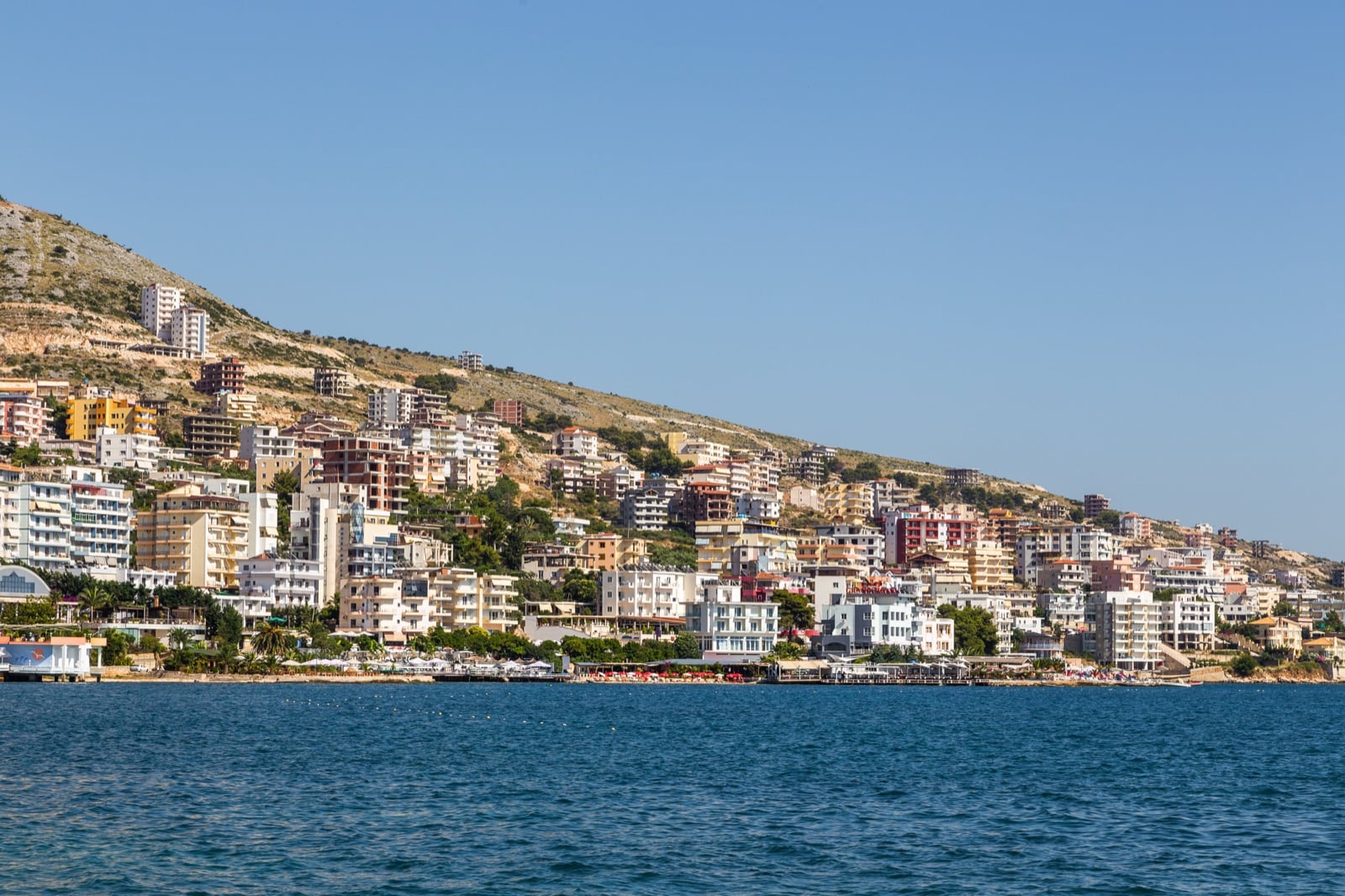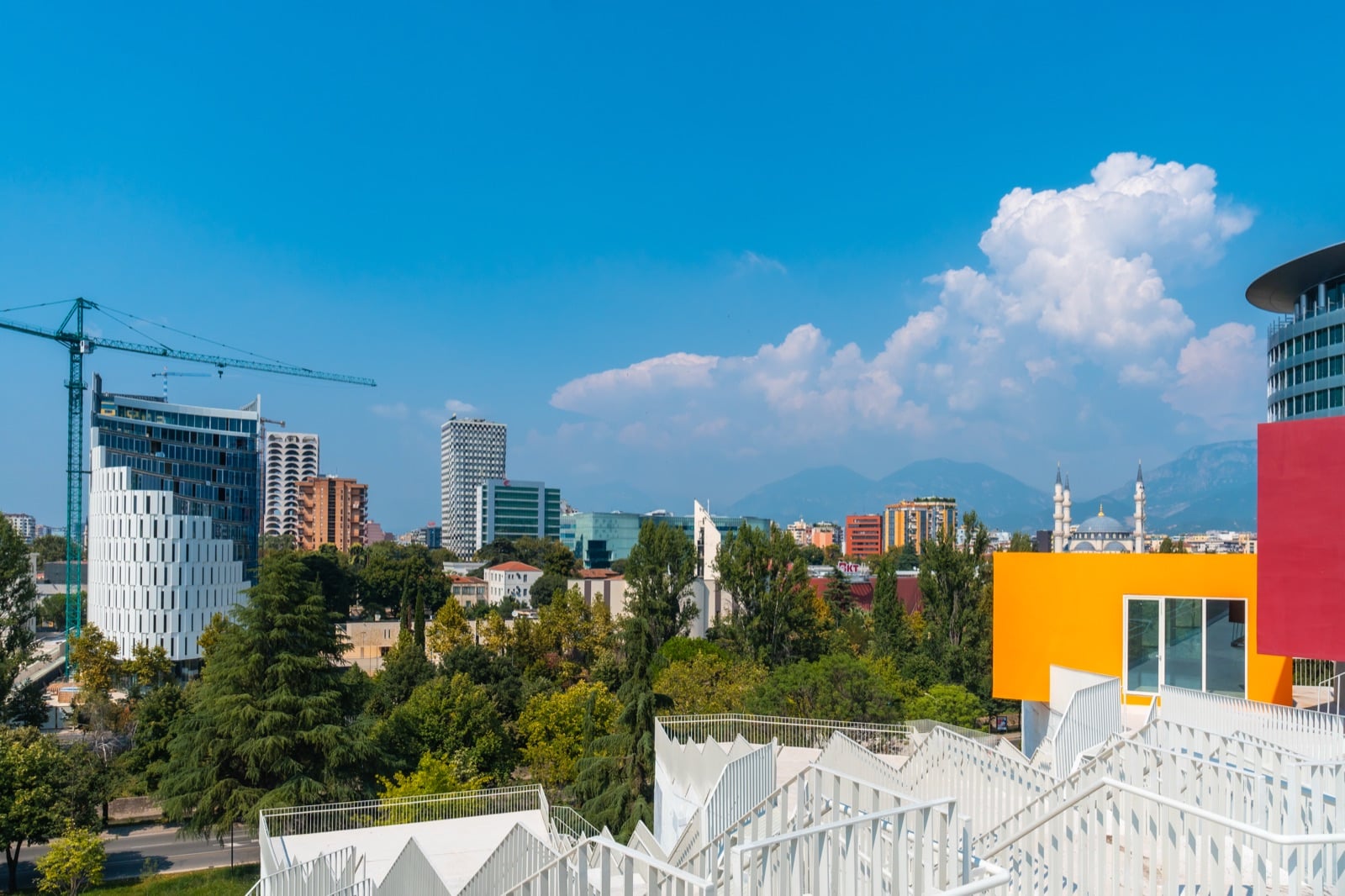
Short answer: No, Albania is not yet a member of the European Union. As of 2026, Albania is an official EU candidate country in active accession negotiations, closer than ever to membership, but still several years away. Here’s exactly where things stand, how Albania got here, and when full membership is realistically possible.
If you’re Albanian-American and someone in your family asks “shqipëria a është në BE?”, this is the article to bookmark.
Albania & the EU: Quick Facts
| Fact | Detail |
|---|---|
| Is Albania in the EU? | No (as of 2026) |
| Status | Candidate country, active accession negotiations |
| EU membership application | April 28, 2009 |
| Candidate status granted | June 24, 2014 |
| Accession negotiations opened | July 19, 2022 |
| First negotiation cluster opened | October 15, 2024 (Cluster 1: Fundamentals) |
| Official target year | 2030 (per Albanian government) |
| Realistic timeline | 2028 to 2032 if pace accelerates; later if it slows |
| Current EU members | 27 |
| Currency Albania uses | Albanian lek (not euro, euro adoption would come after EU membership) |
| Schengen? | Not yet, Schengen is separate from EU membership |
How Albania Got Here: The Full Timeline
1992 to 2008: Post-Communism & the First Steps
After the collapse of communism in 1991, Albania began the long road of rebuilding democratic institutions. Throughout the 1990s and early 2000s, the country signed a series of cooperation agreements with the European Union, culminating in the Stabilisation and Association Agreement signed on June 12, 2006, which entered force in 2009. This was the framework that opened formal political and economic ties with Brussels.
2009: Albania Formally Applies for EU Membership
On April 28, 2009, Albania submitted its official application for EU membership. The application kicked off a multi-year vetting process during which the European Commission evaluates whether a candidate country meets the conditions to even begin negotiations, known as the “Copenhagen criteria.”
2014: Candidate Status Granted
After five years of evaluation, the European Council granted Albania EU candidate country status on June 24, 2014. This is a significant diplomatic step, it formalizes Albania’s commitment to EU values and triggers ongoing reform monitoring, but it is not membership. Candidate countries can wait years (Turkey has been a candidate since 1999; North Macedonia since 2005).
2022: Accession Negotiations Officially Open
The next major milestone came on July 19, 2022, when EU foreign ministers formally opened accession negotiations with Albania (and simultaneously with North Macedonia). This was delayed for years by political vetoes from individual EU member states, primarily Bulgaria’s dispute with North Macedonia, which was procedurally bundled with Albania’s process. When that dispute was resolved, both countries finally got the green light.
2024 to 2026: Negotiation Clusters Begin to Open
Modern EU accession is structured around six negotiation clusters covering 35 policy chapters. Cluster 1, “Fundamentals”, is the most important and includes rule of law, judicial reform, anti-corruption, and democratic institutions. Albania opened Cluster 1 on October 15, 2024, a major breakthrough. The pace at which the remaining clusters open and close is now the central question for Albania’s accession.
When Could Albania Actually Join the EU?
The Official Target: 2030
Prime Minister Edi Rama has publicly committed to a 2030 EU membership target. This was reinforced by the EU’s New Growth Plan for the Western Balkans, which set aside €6 billion in funding for candidate countries that accelerate reforms, with the understood goal of bringing the Western Balkans into the EU by the end of this decade.
The Realistic Window: 2028 to 2032
EU accession analysts generally view 2030 as ambitious but possible. The realistic window is 2028 at the absolute earliest (only if everything goes perfectly) to 2032 or later (if reforms slip or if EU enlargement enthusiasm cools). For comparison: Croatia, the last country to join the EU (in 2013), took six years from opening negotiations to membership. Albania has been negotiating since 2022.
What Could Speed It Up, or Slow It Down
- Speed-up factors: Geopolitical pressure (war in Ukraine has accelerated EU enlargement appetite), continued domestic reform momentum, strong rule-of-law progress.
- Slowdown factors: Any backsliding on judicial independence, corruption scandals, or anti-EU political shifts in Brussels (e.g., new member-state vetoes).
What’s Still Required Before Membership
Open and Close All 6 Clusters
Albania must open, negotiate, and provisionally close all six clusters (covering 35 chapters). Each chapter requires Albania to align its laws with EU legislation (the “acquis communautaire”, roughly 200,000 pages of EU law). As of 2026, only Cluster 1 has been opened. Five more remain.
Pass Major Reform Benchmarks
The EU has specific “rule of law benchmarks” Albania must hit before chapters can close, particularly around judicial reform (Albania has been conducting a sweeping vetting of judges and prosecutors), anti-corruption investigations, organized crime prosecution, media freedom, and minority rights.
Unanimous Member-State Approval
Even after Albania completes negotiations, all 27 existing EU member states must ratify the accession treaty. Any single country can block. This is what delayed North Macedonia for years. Albanian diplomats spend significant effort on bilateral relations with potentially skeptical member states.
What EU Membership Would Actually Change for Albania
Free Movement, Work, and Study
EU membership would give Albanian citizens the right to live, work, and study anywhere in the EU without a visa or special permit, what’s known as the “four freedoms” (movement of people, goods, services, and capital). For Albanians who already have family in Germany, Italy, or Greece, this is the most immediate practical impact.
Currency: Not Immediately the Euro
EU membership does not automatically mean Albania switches to the euro. Adopting the euro is a separate process, countries must meet additional “convergence criteria” and join the Eurozone. Some EU members (Sweden, Denmark, Poland) keep their own currencies indefinitely. Albania would likely keep the lek for several years after joining the EU.
Schengen Travel
Albanian citizens already have visa-free travel to the Schengen Area for up to 90 days (since 2010), but full Schengen membership, meaning no border checks at all, is a separate process from EU accession. Bulgaria and Romania, both EU members since 2007, only fully joined Schengen by 2024 to 2025.
EU Funds & Cohesion Money
Once a member, Albania would qualify for substantial EU “cohesion” and “structural” funds, money targeted at infrastructure, agriculture, and economic catch-up for less-wealthy member states. Poland alone has received €230+ billion in EU funds since 2004. For a country of Albania’s size, the equivalent share would be transformative.
Where Albania Stands Compared to Other Candidates
The Western Balkans Six
Albania is one of six Western Balkans countries on the EU accession path:
- Montenegro: most advanced; negotiations since 2012, multiple chapters provisionally closed
- Serbia: negotiating since 2014, slowed by Kosovo question and Russia ties
- Albania: negotiating since 2022, opened Cluster 1 in 2024
- North Macedonia: negotiating since 2022 (paired with Albania), facing bilateral disputes with Bulgaria
- Bosnia and Herzegovina: candidate since 2022, negotiations not yet opened
- Kosovo: potential candidate, not yet recognized by 5 EU members
Among these six, Montenegro and Albania are considered the most likely to be next. EU officials have publicly suggested both could realistically be in by 2030 if reform momentum holds.
What Albanian-Americans Should Know
EU Membership Doesn’t Affect Your U.S. Status
Albania’s EU accession has no direct impact on your U.S. citizenship, green card, or immigration status. The U.S. and EU operate independently. However, EU membership could affect your Albanian dual citizenship rights, once Albania joins, your Albanian passport would give you the legal right to live and work in any of the 27 EU member states.
What It Means for Family Visits
For diaspora Albanians visiting Albania, EU membership eventually means more standardized regulations, closer alignment of consumer protections, food labeling, product safety, and traveler rights. Practical impact during a visit: minor at first, more noticeable over years as Albania adopts the full EU regulatory framework.
What It Means for Property & Business
Owning property in Albania is already legal for foreigners (with some restrictions on agricultural land). After EU accession, those restrictions would loosen further. Cross-border business activity between the U.S. diaspora and Albania would become easier as EU-standard banking, taxation, and corporate law take effect.
Frequently Asked Questions
Is Albania in the EU as of 2026?
No. Albania is a candidate country in active accession negotiations, but not yet a member. The earliest realistic membership year is 2028; more likely 2030 or beyond.
When will Albania join the EU?
The Albanian government’s official target is 2030. Most analysts view 2028 to 2032 as the realistic window. No firm membership date has been agreed by the EU.
Does Albania use the euro?
No. Albania uses the Albanian lek. Euro adoption is a separate process from EU membership and would come several years after joining the EU, if ever.
Can Albanians work in EU countries today?
Not freely. Albanians can travel visa-free to the Schengen Area for up to 90 days (since 2010) but need work permits to be employed. EU accession would change this, granting full freedom of movement.
Is Albania in the Schengen Zone?
No. Albania is not in Schengen. Albanian citizens have visa-free access to Schengen for short stays, but Albania itself is not part of the border-free area. Schengen membership would also come after EU accession.
What is Albania’s biggest obstacle to EU membership?
Rule-of-law reforms, particularly judicial independence and anti-corruption. The EU has invested significantly in Albania’s “justice reform vetting” (vetting all judges and prosecutors for past misconduct). Until this is complete and seen as durable, the EU is unlikely to greenlight final accession.
Will Kosovo join the EU at the same time as Albania?
No. Kosovo is at an earlier stage, recognized as a “potential candidate” but not yet a formal candidate. Five EU members do not recognize Kosovo’s independence, which complicates accession significantly. Realistic Kosovo membership is well beyond Albania’s.
Read Next
- Where Are Albanian People From? Illyrian Origins, Geography & Diaspora
- When Did Albania Gain Independence? November 28, 1912 Explained
- Albanian vs Kosovan: What’s the Actual Difference?
- Albanian Dual Citizenship: How It Works for Diaspora
- King Zog of Albania: The Self-Crowned Monarch Who Tried to Modernize a Nation
- Famous Albanian Women: 15 Trailblazers Shaping History

Author: Dardanë Halimi
Dardanë Halimi is a writer and communications professional with an M.A. in Writing, Rhetoric, and Technical Communication from James Madison University. Her work focuses on storytelling, digital content, higher education, and strategic communication, with experience writing for academic, nonprofit, and marketing organizations in both the United States and Kosovo.