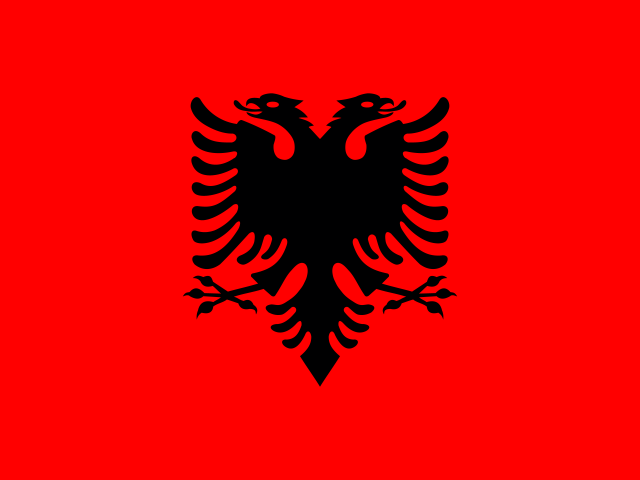
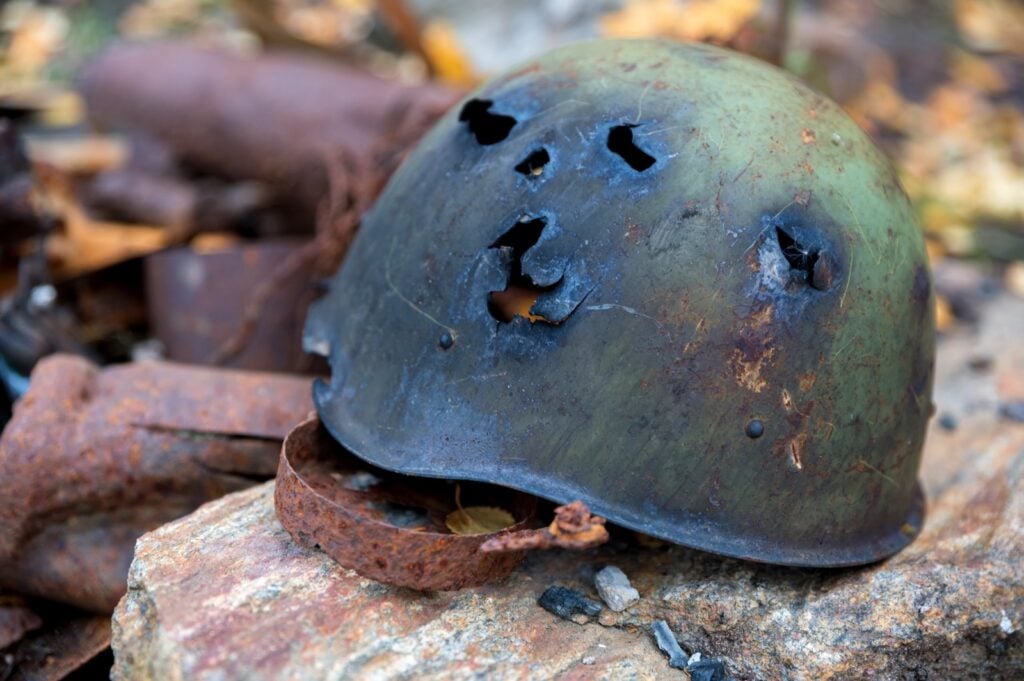
Albania in World War II was a country under foreign occupation, first Italian and then German, while rival Albanian resistance movements fought both the occupiers and each other. Out of this period came the communist takeover that would shape Albania for half a century, and one of the war’s most remarkable humanitarian stories: the survival of nearly the entire Jewish population sheltered by Albanians. This guide covers the occupation, the resistance movements, and the war’s lasting consequences.
Occupation Begins
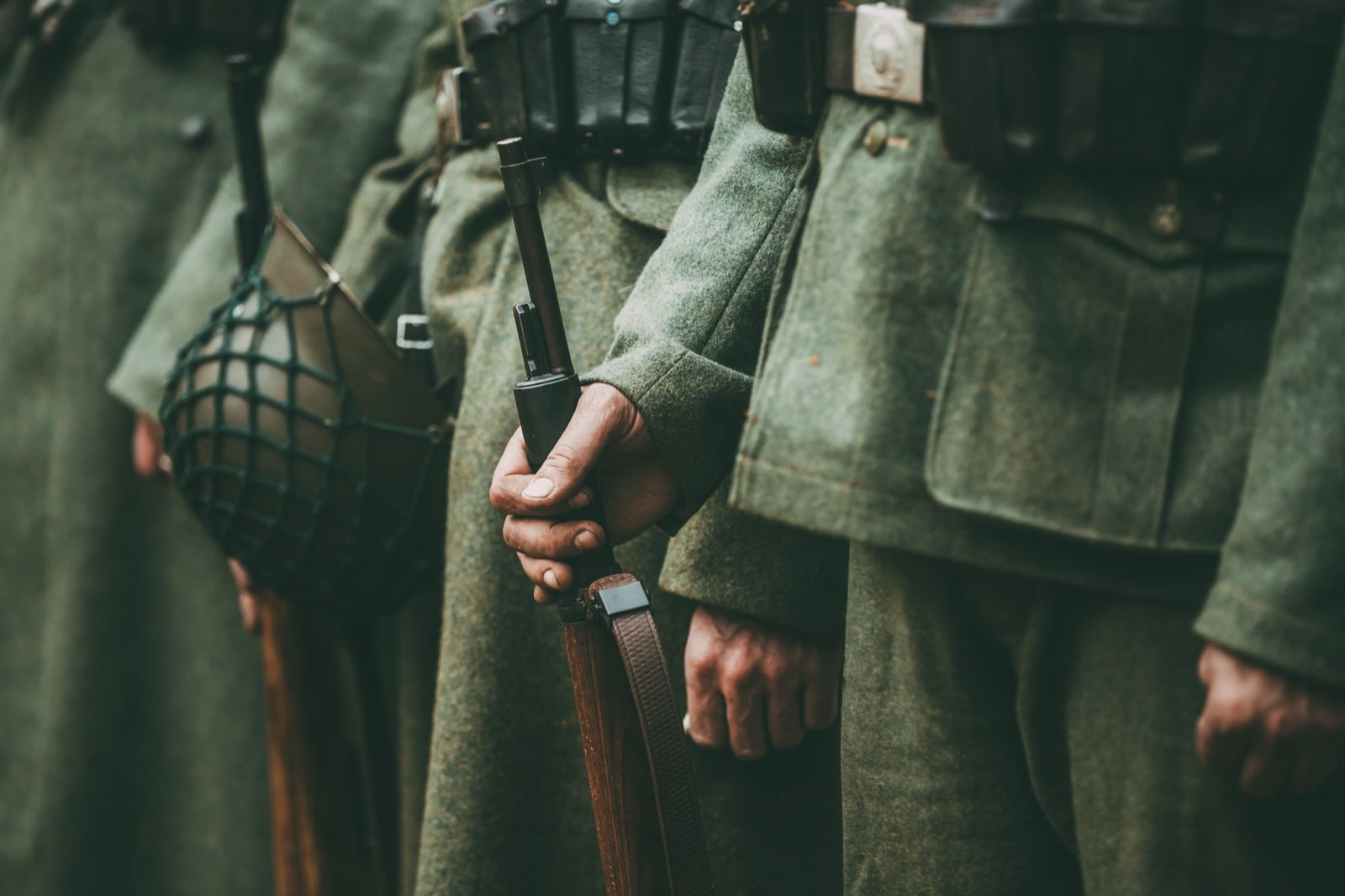
Albania’s war began before the wider conflict. In April 1939, Fascist Italy invaded and annexed the country, driving King Zog and the royal family into exile, as we cover in the Zogu dynasty. Albania became a protectorate under the Italian crown. When Italy surrendered to the Allies in 1943, Nazi Germany moved in and occupied the country for the remainder of the war.
The Resistance Movements
Albanian resistance to occupation was real but divided among competing movements, a division that would decide the country’s future:
- The National Liberation Movement (LNÇ), led by the communists under Enver Hoxha, which grew into the strongest and best-organized force.
- Balli Kombëtar (the National Front), a nationalist, anti-communist movement that also opposed the occupation but clashed with the communists over the shape of postwar Albania.
- Legaliteti, a royalist movement supporting the return of King Zog.
These groups fought the occupiers but increasingly fought one another, and the conflict took on the character of a civil war alongside the war of liberation. By late 1944 the communist-led partisans had prevailed.
The Communist Victory
The communist partisans emerged from the war as the dominant force, and in November 1944 they took control of the country as the Germans withdrew. Their leader, Enver Hoxha, became the ruler of Albania and would hold power for four decades, building the isolated communist state that later declared itself the world’s first atheist country. The wartime victory of the communists is the direct origin of the regime that followed.
The Rescue of Albania’s Jews
One of the most extraordinary stories of the war is that Albania was one of the very few places in Europe where the Jewish population grew during the Holocaust rather than being destroyed. Albanians, drawing on the traditional code of honor and protection known as besa, sheltered both local and refugee Jews, hiding them in homes and villages and refusing to hand them over. As a result, nearly all Jews in Albania survived the war. This act of collective protection is remembered as one of the finest chapters in Albanian history.
The Cost and the Legacy
The war left Albania devastated and set the stage for the communist era. It also reshaped the country’s borders and politics and hardened the divisions between the movements that had fought in it. The defeat of Balli Kombëtar and the royalists, and the victory of the communists, determined that Albania would spend the next 45 years as a one-party state, cut off from much of the world. The war’s humanitarian legacy, the rescue of the Jews, stands in lasting contrast to its political outcome.
Why It Matters
Albania in World War II is where the modern country was decided. The occupation, the rival resistance movements, and the communist victory set Albania on the path it would follow until 1991. And the rescue of its Jewish population gave the world a powerful example of the Albanian tradition of protecting the vulnerable. For the deeper background of the people, see where Albanian people come from.
Timeline: Albania at War, 1939 to 1944
| Date | Event |
|---|---|
| April 7, 1939 | Italy invades; King Zog flees and Victor Emmanuel III is proclaimed King of Albania |
| October 1940 | Italy attacks Greece from Albanian soil; the Greek counteroffensive pushes into southern Albania |
| 1941 | After the Axis defeat of Yugoslavia, most of Kosovo and western Macedonia are attached to Italian-run Albania |
| November 8, 1941 | The Communist Party of Albania is founded in Tirana with Yugoslav help; Enver Hoxha is among its leaders |
| September 1942 | The Peza Conference creates the National Liberation Movement, the communist-led resistance front |
| November 1942 | Balli Kombëtar, the nationalist and republican resistance, is founded |
| August 1943 | The Mukje agreement between the two movements collapses within weeks over Kosovo and the postwar order |
| September 8, 1943 | Italy surrenders; German troops occupy Albania and declare it independent under a collaborationist regency |
| November 1943 | Abaz Kupi forms Legaliteti, the royalist resistance |
| May 1944 | The Congress of Përmet sets up a communist-dominated provisional government |
| November 17, 1944 | Tirana is liberated after a three-week battle |
| November 29, 1944 | The last German units leave Shkodër; the date becomes Liberation Day |
The Three Resistance Movements Compared
| Movement | Politics | Leaders | Fate |
|---|---|---|---|
| National Liberation Movement (LNÇ) | Communist-led front | Enver Hoxha, Mehmet Shehu | Took power in November 1944 and ruled until 1991 |
| Balli Kombëtar | Nationalist, republican, wanted to keep Kosovo | Midhat Frashëri, Ali Këlcyra | Fought the communists in 1943 to 1944; leaders fled into exile |
| Legaliteti | Royalist, loyal to King Zog | Abaz Kupi | Defeated by the communists in late 1944; Kupi escaped abroad |
The civil war inside the war is the part most often left out. From the autumn of 1943 the communists fought Balli Kombëtar and Legaliteti as hard as they fought the Germans, and by the time the Germans withdrew there was no rival left to contest the peace. That is how a country liberated by its own resistance, without Soviet troops on its soil, ended up with one of Europe’s most rigid communist regimes; the rest of that story is in our guides to Enver Hoxha and Albania as the first atheist state. The rescue of the country’s Jews during these same years is told in full in our guide to Jews in Albania, publishing the following day.
Kosovo During the War
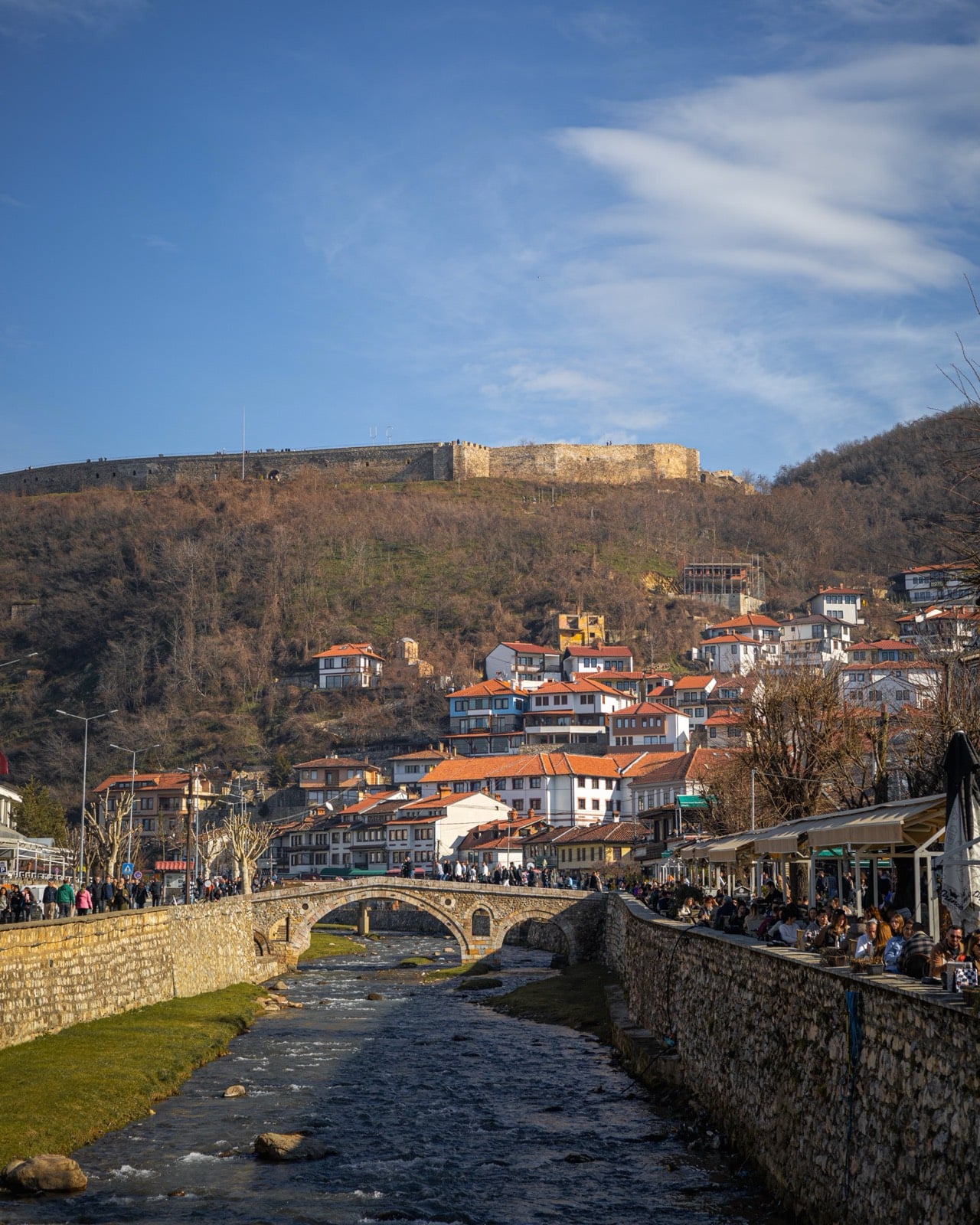
For Kosovar Albanians the war had a different shape. After the Axis destroyed Yugoslavia in April 1941, most of Kosovo and the Albanian districts of western Macedonia were joined to Italian-run Albania, and for the first time since 1912 Albanian schools, newspapers and officials returned to Prishtina and Prizren. That is why the communist resistance found little support there and why Balli Kombëtar, which promised to keep Kosovo Albanian, did. The Bujan Conference of the Kosovar communists in the winter of 1943 to 1944 resolved that Kosovo should join Albania after the war; Tito’s Yugoslav party repudiated the resolution, the Albanian party fell into line, and Kosovo returned to Yugoslavia in 1945 after a bitter repression of Albanian resistance. The wartime years are the origin of the Kosovo question that ran through the rest of the century, told in our guides to the Kosovo War and Kosovo and Albania.
The Cost
Official Albanian figures, compiled after the war, put the dead at about 28,000 in a population of little over a million, with tens of thousands wounded, imprisoned or sent to forced labor, and some 850 villages destroyed in reprisals. The figures come from a regime with reasons to inflate them, but the scale of destruction in the mountains, where the Germans burned villages in response to partisan attacks, is not in doubt. The war also emptied the country of its Italian, Greek and Jewish minorities in different ways, and left the communists with the only armed force in the land.
The one story from these years that Albanians tell with unmixed pride is the rescue of the Jews, told in full in our guide to Jews in Albania, publishing the following day. Every other part of the war is contested ground, argued between the descendants of partisans and of ballists to this day, in Albania and in the cafes of the Bronx and Detroit alike.
What both sides agree on is the scale of the change: Albania entered the war a monarchy under Italian tutelage and left it a communist state under Yugoslav tutelage, with the same borders and an entirely new ruling class.
The debate will not be settled here.
Read the sources below and judge for yourself.
The archives are open now, and the story is still being written.
Frequently Asked Questions
What happened to Albania in World War II?
Albania was occupied first by Fascist Italy and then by Nazi Germany, while rival Albanian resistance movements fought the occupiers and each other, ending with a communist takeover in 1944.
What was Balli Kombëtar?
Balli Kombëtar, the National Front, was a nationalist, anti-communist Albanian resistance movement that opposed the occupation but clashed with the communist-led partisans.
Did Albania protect its Jews in the Holocaust?
Yes. Albanians sheltered local and refugee Jews under the honor code of besa, and nearly the entire Jewish population in Albania survived the war.
Who took power in Albania after the war?
The communist partisans under Enver Hoxha, who ruled Albania for the next four decades.
Learn More
Continue with Enver Hoxha, what is besa, and the Zogu dynasty.
Sources
- Albania during World War II (Wikipedia)
- Albania (Encyclopaedia Britannica, history)
- Rescue in Albania, Yad Vashem
- Wikipedia: World War II in Albania
- Yad Vashem: Albania, historical background during the Holocaust

Author: Val Demiri
Valbona is an editor and writer at ALB Connection, where she covers the people, businesses, and culture shaping the Albanian diaspora. A journalism graduate of the University of Iowa, her work spans community profiles, success stories, and features on Albanian life across the US, Europe, and beyond. She is drawn to stories that celebrate Albanian achievement and keep the community connected across borders.