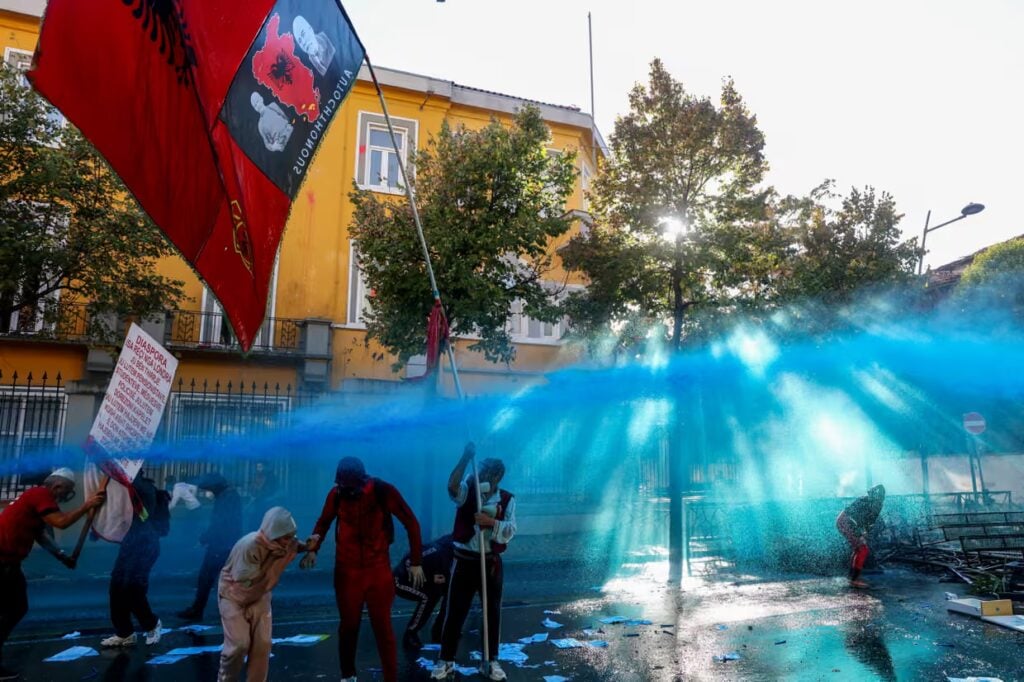

Student protests in Albania’s capital, Tirana, escalated into violent clashes with police on Wednesday, as fires broke out at the Ministry of Education and nearby banks. Demonstrators reportedly threw stones, overturned rubbish bins and damaged property, while police used tear gas and water cannons to disperse crowds. The unrest followed confrontations on Tuesday, marking another day of escalating tensions in the capital, reported Reuters.
Education Grievances Fuel Wider Protests
Students have raised concerns about university conditions, rising education costs, insufficient financial support and limited employment opportunities after graduation. Their demands have unfolded alongside a broader anti-government movement calling for Prime Minister Edi Rama’s resignation amid corruption allegations. The demonstrations also reflect wider public dissatisfaction with government accountability and the management of public resources, the Associated Press reported.
The protests have also drawn attention to a controversial coastal tourism development linked to Jared Kushner, the son-in-law of US President Donald Trump. According to Al Jazeera, opponents have raised concerns about transparency, environmental protection and the influence of politically connected investors, adding another issue to the wider demonstrations.
Government and EU Respond
Albanian officials condemned the violence while maintaining that peaceful demonstrations are a legitimate democratic right. The European Union’s delegation in Albania expressed concern about the escalation and allegations of excessive police force against protesters and journalists, calling for accountability and urging all sides to reduce tensions, The Guardian reported.
The clashes have raised further questions about how authorities will respond to students’ demands while protecting public safety and the right to peaceful assembly. The handling of the protests may also influence the broader debate over governance, corruption allegations and public trust in Albania’s institutions.
A Developing Situation
Although education remains a central concern for student demonstrators, the protests have increasingly intersected with wider opposition to the government. The combination of university-related grievances, political demands and confrontations with police has placed additional pressure on authorities to address public concerns and prevent further escalation.
As the situation develops, verified updates on injuries, detentions and the government’s response will be important for understanding the scale of the unrest and its potential political consequences.