Qifqi are crispy, golden rice balls that originated in the UNESCO-protected city of Gjirokastër in southern Albania. These delightful appetizers are made from seasoned rice bound with eggs and herbs, then pan-fried until they develop a satisfying crunch on the outside while remaining soft and fluffy inside.
Prefer to eat out? Find Albanian restaurants near you, searchable by city or ZIP code.
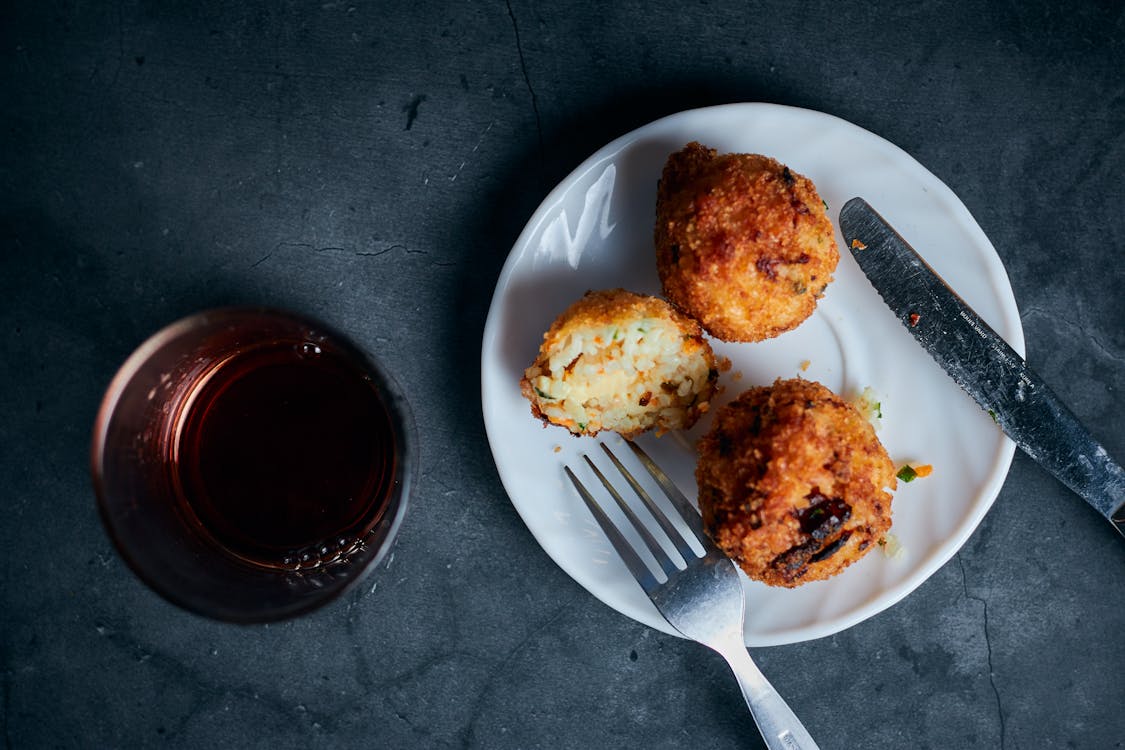
Qifqi (Albanian Rice Balls from Gjirokastër)
Ingredients
Method
- Cook the rice according to package directions, then spread it on a plate and let it cool completely. Refrigerating overnight is ideal.
- In a large bowl, beat the eggs. Add the cold rice, mint, parsley, feta (if using), salt, and pepper. Mix well until everything is evenly combined.
- With wet hands, form the mixture into balls about the size of a golf ball. Press gently to compact them.
- Heat oil or butter in a large non-stick skillet over medium heat.
- Carefully place the rice balls in the skillet, leaving space between them. Flatten slightly with a spatula.
- Cook for 3-4 minutes on each side until golden brown and crispy. Do not move them until the crust has formed.
- Drain on paper towels and serve warm with yogurt or a squeeze of lemon.
Notes
Qifqi: Gjirokastër’s Culinary Gift
Qifqi are one of the most distinctive dishes in Albanian cuisine, fried rice balls held together with eggs and herbs, from the UNESCO World Heritage city of Gjirokastër in southern Albania. The dish is so closely tied to the city that its special frying pan, the tigani i qifqive, has an entry in the national register of intangible cultural heritage.
The exact origins of qifqi are not documented. The national heritage register dates the craft of the qifqi pan to the time rice first came into use in the south of the country, and the recipe is a practical way to use cooked rice. Over time, Gjirokastër families developed their own variations, such as a pinch of dried oregano or red pepper flakes.
In Gjirokastër today, qifqi are a point of local pride. Many restaurants in the city’s stone-built old town include them on their menus, and for visitors they are an easy first taste of the city’s home cooking. Families from the region who settled abroad, including in the US, still make them at home.
Tips for Making Qifqi
The rice: This recipe uses long-grain rice, cooked according to the package directions. Spread it on a plate so it cools quickly, cold rice holds together best. Refrigerate it once it stops steaming, within 2 hours at most, and mix it with the eggs while it is cold.
Binding: Eggs are essential for holding the balls together. This recipe uses 3 eggs for the whole batch of rice. Some cooks add a tablespoon of flour for extra binding power.
Herbs: Mint is the traditional herb in qifqi, it provides the characteristic flavor. This recipe uses fresh mint and fresh parsley, dried mint is also common, and some families add dill. The herb flavor should be prominent, not subtle.
Forming the balls: Wet your hands to prevent sticking. Form balls about the size of a golf ball, they should be compact and tightly packed. If they fall apart, add another beaten egg.
Frying: Pan-fry in about 4 tablespoons of oil or butter in a large non-stick skillet over medium heat. Flatten each ball slightly with a spatula and cook until golden brown and crispy on both sides. Don’t move them until the crust has formed, 3 to 4 minutes per side.
Draining: Let qifqi drain on paper towels. Serve warm, they are best fresh from the pan.
Variations
Classic qifqi: Rice, eggs, mint, salt, and pepper, the simplest form from Gjirokastër’s traditional kitchens.
Qifqi me djathë: Adding crumbled feta cheese to the rice mixture creates a richer, saltier version.
Qifqi me spinaq: Finely chopped spinach mixed into the rice adds color and a mild green flavor.
Baked version: Form the balls, place on an oiled baking sheet, and bake at 400°F (200°C) until golden and set in the center. The texture is a little different from the traditional fried version.
Modern presentation: Some Albanian restaurants serve qifqi on a bed of yogurt sauce or alongside tarator for dipping.
Qifqi at a Glance
| Detail | This recipe |
|---|---|
| Course | Appetizer |
| Home region | Gjirokastër, southern Albania |
| Main ingredients | Cooked and cooled rice (oriz), eggs (vezë), fresh mint and parsley, optional feta |
| Cooking method | Pan-fried in oil or butter over medium heat, 3 to 4 minutes per side |
| Time | 20 minutes prep, 25 minutes cooking, 45 minutes total, plus cooling time for the rice |
| Yield | 15 pieces |
The Qifqi Pan: A Registered Gjirokastër Craft
In Gjirokastër, qifqi are traditionally fried in their own pan, the tigani i qifqive. Albania’s national register of intangible cultural heritage has an entry for the handicraft production of this pan, and it dates the craft to the time when rice first came into use in the south of the country.
According to the register, the pan is made of rolled copper with 5 or 7 round hollows instead of a flat bottom. The sides are about 4 cm high, the iron handle with a wooden grip is 35 to 40 cm long, and the finished pan is coated with tin. Making one takes a metalsmith 6 to 8 hours.
The Albanian National Tourism Agency’s gastronomy booklet gives the classic method: boiled rice, cooled, with eggs added one by one, then mint, ground black pepper and salt, portioned with a spoon and fried in olive oil in “a frying pan with holes.” Its rule of thumb is 5 to 6 eggs per 1 kg of rice. The booklet lists qifqi among the southern dishes that suit vegetarians, since no meat is used.
TasteAtlas adds that qifqi usually come with a green salad or ajvar and a glass of dhallë, a drink of yogurt, salt and water. The old town where the dish developed has been on the UNESCO World Heritage List since 2005, recognized for its two-story houses developed in the 17th century, its bazaar and its 18th-century mosque.
No Qifqi Pan? What Works in an American Kitchen
The recipe above shapes the rice by hand in a regular non-stick skillet, so no special equipment is needed. For the rounder, traditional shape, the closest match sold in the US is a cast-iron aebleskiver (Danish pancake) pan, usually with seven round wells. A takoyaki pan also works and gives smaller, bite-size pieces. Heat a little oil in each well over medium heat, spoon in the mixture, and turn each piece with a spoon or skewer once the underside is golden and releases easily.
- Mint: Albanian sources call for mint (nenexhik or mendër), and TasteAtlas specifies dried mint. If you only have dried, use about one third of the fresh amount, so roughly 2 teaspoons in place of 2 tablespoons.
- Feta: buy a block in brine and crumble it yourself. Pre-crumbled feta is drier and blends in less well. Our guide to Albanian cheese covers the white cheese used back home.
- Batches and heat: fifteen pieces will not fit in one skillet, so fry in batches with space between them. If the outside browns in under 3 minutes, the heat is too high for the egg in the center to set.
Storing and Reheating Qifqi Safely
Cooked rice needs a little care. FoodSafety.gov names rice and leftovers that have sat out too long at room temperature as typical sources of Bacillus cereus food poisoning. Its advice is to store cooked food in a wide, shallow container and refrigerate it as soon as possible. So when you cook the rice ahead, spread it out as the recipe says and refrigerate it once it stops steaming, rather than leaving it on the counter all evening.
- Raw egg: the mixture contains raw eggs, so do not taste it for seasoning. Fry one small test piece instead, and cook every piece until the center is fully set, not wet.
- Leftovers: USDA says to refrigerate them within 2 hours (1 hour if it is above 90°F), and gives 3 to 4 days in the refrigerator or 3 to 4 months in the freezer.
- Reheating: reheat to 165°F (74°C). A 350°F (175°C) oven or a dry skillet brings back the crust.
Frequently Asked Questions
What do qifqi taste like?
Imagine a crispy-on-the-outside, soft-on-the-inside rice ball with a pronounced minty freshness. The texture is similar to Italian arancini but lighter, and the mint gives them their characteristic flavor.
Can I use leftover rice?
Yes, leftover rice works well, as long as it was refrigerated within 2 hours of cooking and is no more than 3 to 4 days old. Day-old rice that has been refrigerated is slightly drier and firmer, which makes it easier to form into balls.
Why are qifqi only from Gjirokastër?
We aren’t entirely sure, and we found no source that explains it. Gjirokastër was a major Ottoman-era city with a strong cooking tradition of its own. The national heritage register ties qifqi to the city through the copper qifqi pan, a local craft.
Are qifqi similar to arancini?
There are similarities, both are fried rice balls, but the preparation differs significantly. Italian arancini use risotto rice with a cheese or meat filling and are breaded before frying. Albanian qifqi use plain rice bound with egg and herbs, with no breadcrumb coating and no stuffed center.
Related Albanian Recipes
Discover more unique Albanian appetizers:
- Speca me Gjizë, Stuffed peppers with cottage cheese
- Tarator, Cold yogurt-cucumber soup
- Petulla, Albanian fried dough balls
- Burani, Spinach and yogurt side dish
- What is Albanian Food?, Complete guide to Albanian cuisine
Sources
- Albanian National Register of Intangible Cultural Heritage: Qifqi’s pan
- Albanian National Tourism Agency: Albanian Gastronomy (PDF), Region of Southern Albania
- UNESCO World Heritage Centre: Historic Centres of Berat and Gjirokastra
- TasteAtlas: Qifqi
- FoodSafety.gov: Bacteria and Viruses (Bacillus cereus)
- USDA Food Safety and Inspection Service: Leftovers and Food Safety

Author: Dardanë Halimi
Dardanë Halimi is a writer and communications professional with an M.A. in Writing, Rhetoric, and Technical Communication from James Madison University. Her work focuses on storytelling, digital content, higher education, and strategic communication, with experience writing for academic, nonprofit, and marketing organizations in both the United States and Kosovo.