

The Principality of Albania was the first state that the newly independent Albania became: a monarchy, set up under the supervision of the Great Powers of Europe and ruled, briefly, by a German prince. Created in 1914, less than two years after Albania declared independence, it lasted only about six months before collapsing into the chaos of the First World War. Short-lived as it was, the Principality was Albania’s first experiment with statehood.
This guide explains how the Principality came about, who Prince Wilhelm of Wied was, why his reign lasted only months, and what it meant for Albania.
Quick Facts: The Principality of Albania
- Established: 1914, following Albanian independence and the Conference of London
- Form: A monarchy (principality) supervised by an International Control Commission
- Ruler: Prince Wilhelm of Wied, a German noble
- Length of his reign: About six months, in 1914
- Fell apart because of: Revolts, weak authority, and the outbreak of World War I
On This Page
- After Independence: A Principality
- Prince Wilhelm of Wied
- A Reign of Six Months
- Collapse and the First World War
- Legacy
- Frequently Asked Questions
After Independence: A Principality
When Albania declared independence in Vlorë in 1912 under Ismail Qemali, its survival was in the hands of the Great Powers, who were still deciding the country’s borders and future during and after the Balkan Wars. At the Conference of London, they agreed that Albania would exist, but as a principality under their supervision, run by an International Control Commission. In January 1914, Ismail Qemali handed power to that commission, clearing the way for a foreign prince to take the throne.
Prince Wilhelm of Wied
The Great Powers selected Prince Wilhelm of Wied, a German nobleman with no prior connection to Albania, to rule the new state. He arrived in the port city of Durrës in March 1914 to take up his throne. In Albania he was known as Princ Vidi. He inherited a country with almost no treasury, deep regional divisions, powerful rival leaders, and neighbors eager to interfere, an extraordinarily difficult inheritance for an outsider.
A Reign of Six Months
Wilhelm’s reign was troubled from the start. He struggled to establish authority over a fragmented country, faced revolts in central Albania, and had little money or military force of his own. Rival power brokers and foreign meddling undermined him at every turn. Within months, his government controlled little more than the area around Durrës.
Collapse and the First World War
The final blow was global. When the First World War broke out in the summer of 1914, the Great Powers who had created and guaranteed the Principality turned their attention to the wider conflict. With his support gone, Prince Wilhelm left Albania in September 1914, only about six months after arriving. Albania then descended into wartime chaos, occupied and fought over by various powers for the duration of the war.
Legacy
The Principality of Albania failed, but it was still a milestone: the first internationally recognized Albanian state and the country’s first taste of self-rule, however incomplete. After the war, Albania re-established itself, moving through a republic in the 1920s and then a kingdom under King Zog in 1928. The brief, chaotic principality was the difficult first chapter of that longer story.
The Principality in Dates
| Date | Event |
|---|---|
| July 29, 1913 | The Great Powers decide that Albania will be a neutral principality under their guarantee, run at first by an International Control Commission |
| November 1913 | Prince Wilhelm of Wied, a German officer and nephew of the Queen of Romania, accepts the throne |
| March 7, 1914 | Wilhelm lands at Durrës, which becomes the capital |
| May 1914 | Essad Pasha Toptani, the interior minister, is accused of plotting and expelled; a peasant uprising in central Albania under Haxhi Qamili spreads against the government |
| June 1914 | Dutch officers of the international gendarmerie lead the defense of Durrës; Colonel Lodewijk Thomson is killed |
| July 28, 1914 | The First World War begins and the Powers lose interest in Albania |
| September 3, 1914 | Wilhelm leaves Durrës after six months, never formally abdicating |
| 1914 to 1920 | The country is occupied piecemeal by Greek, Italian, Serbian, Montenegrin, Austro-Hungarian and French forces |
Why It Failed
The principality had almost nothing a state needs. Its borders had been drawn months earlier by foreign diplomats and were still disputed; Greek irregulars held much of the south and Serbian and Montenegrin troops had only just withdrawn from the north. Its treasury depended on a loan the Powers were slow to deliver. Its army was a gendarmerie of a few thousand men commanded by Dutch officers who did not speak the language. And its prince, chosen because he was acceptable to the Powers rather than known to Albanians, had no local following to set against Essad Pasha, who did. When the war in Europe removed the Powers’ attention, nothing held the structure up.
What Survived
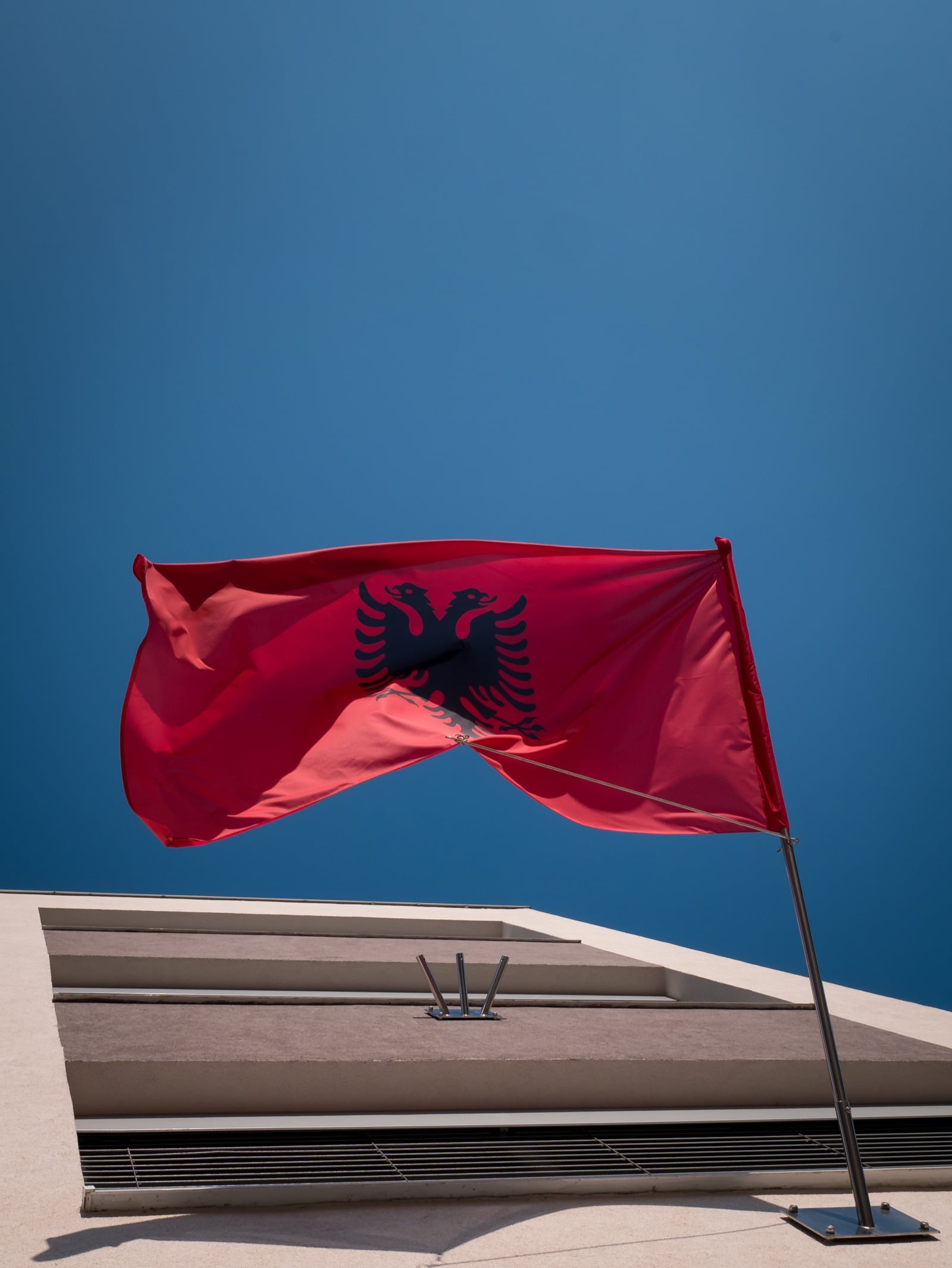
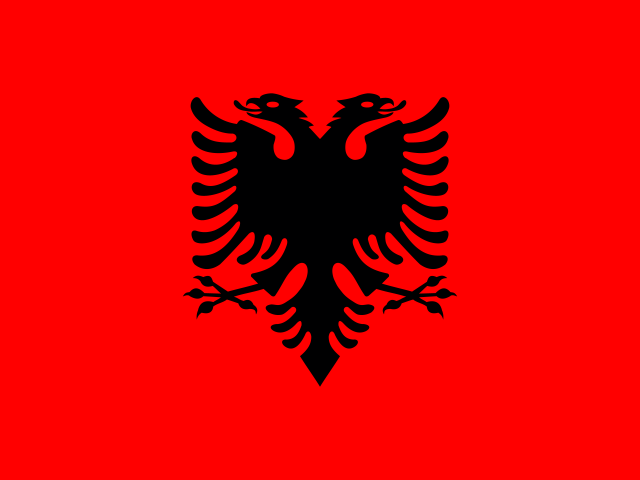
The idea of the state did. The flag, the borders of 1913 and the international recognition outlived the prince, and when Albanians gathered at the Congress of Lushnjë in January 1920 they rebuilt the government on the same foundation, moving the capital to Tirana. Wilhelm lived until 1945 and never returned. The Balkan settlement that produced his throne is explained in our guide to the Balkan Wars, and the years that followed in our guide to Albania in World War I, publishing the following day.
Essad Pasha Toptani, the Man Who Undid It
No figure of the period is more disputed. Essad Pasha, a landowner from the Toptani family of Tirana and an Ottoman general, commanded the defense of Shkodër in the Balkan Wars and surrendered it to Montenegro in April 1913, allegedly in exchange for support for his own ambitions. He then declared a Republic of Central Albania at Durrës, joined Wilhelm’s government as minister of the interior and war when the Powers made him, and was accused of arming the peasant revolt against it. Expelled in May 1914, he returned in October with Serbian and Italian backing to rule central Albania as his own domain, sided with the Entente during the war, and was still claiming to speak for the country at the Paris Peace Conference in 1920 when a young Albanian student, Avni Rustemi, shot him dead outside his Paris hotel. To some he was a traitor who sold Shkodër and wrecked the first Albanian state; to others a realist who understood that the state could not survive without a strong local hand. Either way, the Principality could not survive him.
The International Control Commission
| Body | What it was |
|---|---|
| International Control Commission | A board of one delegate from each Great Power plus one Albanian, set up in 1913 to organize the new state, write its statute and supervise its finances |
| The Organic Statute | The constitution drafted by the Commission in April 1914: a hereditary prince, a national assembly, and neutrality guaranteed by the Powers |
| The gendarmerie | The only armed force, organized by a Dutch military mission of about twenty officers under General de Veer and Colonel Thomson |
| The loan | A 75 million franc loan guaranteed by the Powers, most of which was never delivered before the war broke out |
The Commission and its Dutch officers were sincere and overwhelmed. Thomson was killed on the walls of Durrës in June 1914 fighting the peasant rebels, and his funeral was one of the few moments the young state’s Albanian and foreign servants stood together. When the Powers went to war with each other in August, the Commission simply dissolved, and with it the guarantee on which the whole arrangement rested.
Wilhelm’s six months are remembered in Albania with more affection than they deserve on the record, partly because he never abdicated and partly because everything that followed was worse. Durrës keeps a small memory of him in the Royal Villa on the hill, built later for Zog, and in the name of the Wied period that historians still use for the spring of 1914.
Frequently Asked Questions
What was the Principality of Albania?
It was the first state of independent Albania, a monarchy established in 1914 under the supervision of the Great Powers and ruled briefly by the German prince Wilhelm of Wied.
Who ruled the Principality of Albania?
Prince Wilhelm of Wied, a German nobleman chosen by the Great Powers, known in Albania as Princ Vidi. He ruled for only about six months in 1914.
Why did the Principality of Albania fail?
It had almost no money or army, faced revolts and powerful rivals, and lost its foreign backers when World War I broke out. The prince left in September 1914.
What happened to Albania after the Principality?
Albania fell into wartime chaos during World War I, then re-established itself afterward, becoming a republic in the 1920s and a kingdom under King Zog in 1928.
Related Reading
- When Did Albania Gain Independence?
- Ismail Qemali: Founder of Albania
- The Balkan Wars (1912-1913)
- King Zog of Albania
Sources

Author: Val Demiri
Valbona is an editor and writer at ALB Connection, where she covers the people, businesses, and culture shaping the Albanian diaspora. A journalism graduate of the University of Iowa, her work spans community profiles, success stories, and features on Albanian life across the US, Europe, and beyond. She is drawn to stories that celebrate Albanian achievement and keep the community connected across borders.