
TLDR:
- New York, Michigan, and Massachusetts are home to about 46% of all Americans reporting Albanian ancestry (ACS 2020 to 2024)
- The Bronx’s Belmont neighborhood is home to dozens of Albanian businesses and is known as “Little Albania”
- Albanian families are prominent Bronx landlords and pizzeria owners, though no verified ownership percentages exist
- Major Albanian business districts also exist in Detroit, Boston, Waterbury, Chicago, Philadelphia, and Jacksonville
- Albanian cultural centers, mosques, and churches anchor these communities across America
Where Are the Largest Albanian Business Hubs?
The largest Albanian business communities are in New York City (especially the Bronx), Metro Detroit, Greater Boston, Waterbury (Connecticut), Chicago, Philadelphia, and Jacksonville (Florida). New York, Michigan, and Massachusetts together account for nearly half (about 46%) of all Americans reporting Albanian ancestry in the 2020 to 2024 ACS; a 2015 Harvard Growth Lab study using 2012 data put the share at 58%. The Bronx alone hosts dozens of Albanian businesses, with concentrations along Arthur Avenue and Lydig Avenue. These hubs feature Albanian restaurants, grocery stores, real estate agencies, construction companies, and cultural centers.Why Albanian Business Hubs Matter
Albanian business hubs serve as economic engines and cultural anchors for the diaspora community. According to Harvard’s Growth Lab research, about 214,300 Albanian Americans lived in the United States in 2012, and the latest Census Bureau count of people reporting Albanian ancestry is 228,504 (ACS 5-year estimates, 2020 to 2024, Table B04006), with immigration waves spanning from the early 1900s through today. These business districts help preserve the Albanian language, traditions, and cuisine while providing newcomers with job opportunities, housing assistance, and community support. The concentration of Albanian businesses creates a multiplier effect where success breeds more success, with established entrepreneurs mentoring new arrivals and investing back into their communities.The Top 10 Albanian Business Hubs in America
1. New York City (The Bronx) – Little Albania
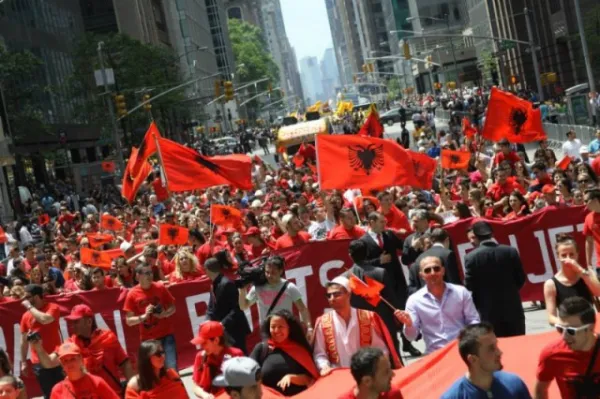
New York City is home to the largest Albanian American community, with 68,240 residents of Albanian ancestry across the New York metro area and 37,502 in the city itself (U.S. Census Bureau, ACS 5-year estimates, 2020 to 2024, Table B04006). The Bronx, particularly the Belmont, Morris Park, and Pelham Parkway neighborhoods, has earned the nickname “Little Albania” for its dense concentration of Albanian businesses. Arthur Avenue, historically known as the Bronx’s “Little Italy,” has transformed significantly. Today, Albanian businesses dominate the area, with restaurants like Çka Ka Qëllu on Hughes Avenue (listed in the MICHELIN Guide), bakeries, grocery stores, and import shops lining the streets. Lydig Avenue is another major Albanian commercial corridor. Albanian families are prominent Bronx landlords and pizzeria owners, though no verified ownership percentages exist. The community started in the 1960s and 1970s when Albanian immigrants, many arriving via Italy where they learned Italian, found work in Italian-owned businesses. Their linguistic and cultural similarities to Italians helped them integrate and eventually establish their own businesses. Notable features include Albanian community festivals, dozens of family-owned businesses serving Albanian cuisine and imported goods, and nearby Our Lady of Shkodra Albanian Catholic Church, which began in the Bronx and is now in Hartsdale, Westchester County.2. Metro Detroit, Michigan – Hamtramck and Macomb County
Michigan has the second-largest Albanian population of any state and the fourth-highest share (about 0.26% of residents), with 26,598 residents of Albanian ancestry statewide (ACS 5-year estimates, 2020 to 2024, Table B04006; margin of error plus or minus 2,378). Hamtramck was about 3% Albanian in the 2000 Census (635 of 22,976 residents), but the latest estimate is just 26 (margin of error plus or minus 32), as families moved north into Macomb County. Albanians began arriving in the Detroit area in 1912, with groups settling in east Detroit, northwest Detroit, and Grosse Pointe. Today, Macomb County has 12,164 residents of Albanian ancestry, the most of any U.S. county, with 6,729 in Oakland County and 5,024 in Wayne County (ACS 5-year estimates, 2020 to 2024). The Detroit Albanian community has strong roots in construction, automotive industry support services, and restaurant ownership. Albanian businesses here benefit from the city’s affordable real estate and industrial opportunities, with many Albanian families building multi-generational businesses.3. Greater Boston and Quincy, Massachusetts
Massachusetts hosts approximately 21,625 residents of Albanian ancestry (ACS 5-year estimates, 2020 to 2024; margin of error plus or minus 1,972), with significant communities in Worcester, Boston, and Quincy. According to Harvard’s research, the Massachusetts Albanian community is the best educated, best employed, and has the highest earnings among the three largest state populations. Worcester has 3,979 residents of Albanian ancestry (margin of error plus or minus 710), Boston 1,929, and Quincy 1,846 (ACS 5-year estimates, 2020 to 2024). Community groups such as the Albanian Boston Community Center (Cunat E Bostonit) provide community connection and cultural preservation. Albanian businesses in Greater Boston span restaurants, professional services, construction, and retail. The community’s high education levels translate to strong representation in healthcare, technology, and finance sectors alongside traditional business ownership.4. Waterbury, Connecticut – The Brass City’s Albanian Hub
Connecticut has about 10,825 residents of Albanian ancestry (ACS 5-year estimates, 2020 to 2024; margin of error plus or minus 1,709), with Waterbury (2,131) serving as the major hub. The city’s Albanian-American Cultural and Islamic Center “Hasan Prishtina” anchors the community, offering religious services, language education, and cultural preservation programs. Waterbury’s Albanian community includes restaurants, grocery stores like European Food Products, and various service businesses. About 0.30% of Connecticut residents report Albanian ancestry, the second-highest share of any state after Massachusetts (0.31%), concentrated primarily in Waterbury and neighboring towns such as Watertown, Wolcott, and Southington. The community here maintains strong connections to both Catholic and Muslim Albanian traditions, with cultural centers serving both religious communities.5. Chicago and Northern Illinois
Illinois hosts approximately 15,370 residents of Albanian ancestry (ACS 5-year estimates, 2020 to 2024; margin of error plus or minus 1,995), primarily concentrated in Chicago and its Cook and DuPage County suburbs. According to historical records, by 1914 about 1,000 Albanians resided in greater Chicago and northern Illinois. Albanian businesses in Chicago include restaurants throughout the city, with particular concentrations in neighborhoods that historically housed immigrant communities. Albanians have been instrumental in the pizzeria and restaurant industry in New York, Boston, Chicago and other large cities. Today’s Albanian business owners in Chicago span industries from hospitality to technology, with strong networks connecting community members across professional sectors.6. Greater Philadelphia, Pennsylvania
Philadelphia and its suburbs host thousands of Albanian Americans, and the Philadelphia metro area counts 9,098 residents of Albanian ancestry (margin of error plus or minus 1,605), the fifth-largest metro total in the country. Small-area estimates for suburbs such as Berwyn are too uncertain to rank, because the margins of error are larger than the estimates. Philadelphia proper has 4,226 residents of Albanian ancestry (margin of error plus or minus 1,302), about 0.3% of the city’s population. The Greater Philadelphia Albanian business community includes restaurants, construction companies, and professional services. The community’s geographic spread across the metro area creates multiple nodes of Albanian business activity instead of a single concentrated district.7. Jacksonville, Florida – The Albanian Sunbelt Hub
Jacksonville has the most Albanian Americans in Florida with 4,162 residents of Albanian ancestry (ACS 5-year estimates, 2020 to 2024, with a large margin of error of plus or minus 2,590), about one-quarter of the Florida total of 17,470 and 0.4% of Jacksonville’s population. Florida’s Albanian community includes both business owners and retirees, with Jacksonville serving as the primary hub. The Tampa Bay Area is Florida’s other major Albanian community: the Tampa-St. Petersburg-Clearwater metro area has 5,283 residents of Albanian ancestry (margin of error plus or minus 1,150), statistically level with the Jacksonville metro area (5,153, plus or minus 2,686). Albanian mosques in Clearwater and Dunedin serve the Muslim Albanian community, while restaurants and service businesses cater to the broader population.8. Yonkers and White Plains, New York (Westchester County)
Westchester County has significant Albanian populations, with Yonkers home to 3,517 residents of Albanian ancestry (margin of error plus or minus 1,036) out of 8,932 in Westchester County as a whole; White Plains has about 200. These suburban communities complement New York City’s Albanian hub, with many business owners commuting between the city and suburbs. Westchester is home to Our Lady of Shkodra Albanian Catholic Church in Hartsdale, a major religious and cultural center for the Albanian American community. The area’s Albanian businesses benefit from the county’s affluence while maintaining strong connections to Bronx-based suppliers and community networks.9. Northern New Jersey – Garfield, Clifton, and Paterson
New Jersey hosts approximately 18,304 residents of Albanian ancestry (ACS 5-year estimates, 2020 to 2024; margin of error plus or minus 2,221), the fourth-largest state total, led by Bergen County (6,228) and Passaic County (2,598). Garfield (1,189) and Lodi (587) have the largest city-level estimates, followed by Clifton (498). The city of Paterson itself now has fewer than 100 residents reporting Albanian ancestry; the community lives mainly in the surrounding Bergen and Passaic County suburbs. The proximity to New York City creates an integrated Albanian business ecosystem spanning both states. Many Albanian families live in New Jersey while owning or working in businesses in New York, taking advantage of New Jersey’s more affordable housing costs.10. Secondary Growing Hubs: Cleveland, Texas, California, and Arizona
Several emerging Albanian business communities are growing across America: Cleveland, Ohio: The Cleveland metro area has 3,058 residents of Albanian ancestry (ACS 5-year estimates, 2020 to 2024; margin of error plus or minus 742), particularly in Rocky River, Lakewood, and the West Side suburbs. The Encyclopedia of Cleveland History puts the community far higher, at approximately 20,000 (Case Western Reserve University, 2020). Texas: Dallas-Fort Worth (2,179 residents of Albanian ancestry) and Houston (1,679) are the main centers of a statewide community of 5,275 (ACS 5-year estimates, 2020 to 2024). California: San Diego County has 1,161 residents of Albanian ancestry (margin of error plus or minus 455), the largest county total in California, with communities in the Sacramento Valley (Carmichael area) and Los Angeles (Pasadena). The Inland Empire (Riverside/San Bernardino) includes Kosovar Albanians who, according to Wikipedia’s Albanian Americans article, entered the US at March Joint Air Reserve Base in Riverside. Arizona: The Greater Phoenix area, including Scottsdale, has 2,251 residents of Albanian ancestry in the Phoenix metro area (ACS 5-year estimates, 2020 to 2024; margin of error plus or minus 906) and features an Albanian cafe. These growing communities represent the Albanian diaspora’s geographic expansion beyond traditional East Coast and Midwest hubs.What Makes Albanian Business Hubs Thrive?
Several factors contribute to successful Albanian business districts: Historical Immigration Patterns: Many Albanians who came to New York in the 1960s and 1970s passed through Italy first, where some learned Italian and developed cultural connections. This led them to settle in Italian-American neighborhoods, eventually establishing their own business districts. Family and Community Networks: Albanian business success relies heavily on family support and community connections. New arrivals often work for established Albanian businesses before opening their own. Real Estate Investment: Many Albanian entrepreneurs, especially in the Bronx, started as building superintendents, gradually purchasing properties. This real estate foundation provides both business locations and passive income. Diverse Industry Presence: Albanian businesses span restaurants, construction, real estate, retail, professional services, and technology, creating economic resilience. Cultural Preservation: Business hubs also serve as cultural centers where Albanian language, cuisine, music, and traditions are preserved and passed to younger generations.How to Connect with Albanian Business Hubs
If you’re looking to find Albanian businesses or connect with Albanian communities: Visit Albanian Business Districts: The Bronx’s Arthur Avenue and Lydig Avenue, Metro Detroit’s Macomb County suburbs, or other concentrated areas offer the fullest Albanian business experience. Use the ALB Connection Directory: Browse the ALB Connection business directory to find Albanian-owned businesses by location and category across America. Attend Cultural Events: Albanian Independence Day (November 28), religious celebrations, and community festivals offer opportunities to meet business owners and community members. Join Albanian Cultural Centers: Most major hubs have Albanian cultural centers, mosques, or churches that welcome community members and provide networking opportunities. Support Albanian Restaurants: Albanian restaurants serve as community gathering places and often connect customers with other Albanian businesses and services. Connect on Social Media: Follow hashtags like #AlbanianBusiness, #LittleAlbania, and location-specific tags to discover businesses and events.The Future of Albanian Business Hubs
Albanian business communities continue evolving. Second and third-generation Albanian Americans are entering professional fields while maintaining business ownership traditions. Technology enables Albanian entrepreneurs to serve both local communities and customers nationwide through e-commerce. New immigration waves from Albania, Kosovo, and other Albanian-populated regions continue replenishing these communities, while established Albanian Americans expand into new geographic areas and industries. The success of Albanian business hubs demonstrates how immigrant communities can maintain cultural identity while fully participating in the American economy. These districts serve as models for other diaspora communities building economic and social infrastructure in the United States.Resources and Next Steps
Ready to explore Albanian business communities? Here are helpful resources:- Browse Albanian businesses by state in the ALB Connection directory
- Read Success Stories from Albanian Business Owners across America
- Learn about Albanian Business Culture and Values
- Explore Albanian restaurants by location
- Discover Albanian professional services
- Local Albanian cultural centers and mosques in your area
- Albanian American associations and business groups
- Regional Albanian heritage organizations
Conclusion
Albanian business hubs across America represent more than commercial districts. They’re living communities where language, culture, and traditions thrive while Albanian entrepreneurs contribute to local economies and create opportunities for future generations. From the Bronx’s “Little Albania” with its dozens of Albanian-owned businesses to Detroit’s established communities and Boston’s highly educated professionals, Albanian Americans have created vibrant economic and cultural centers. These hubs welcome anyone interested in Albanian culture, cuisine, and community. Whether you’re exploring Albanian restaurants, seeking Albanian business partners, or connecting with your heritage, these business hubs offer authentic experiences and meaningful connections. Visit, support, and celebrate the thriving Albanian business communities shaping America’s economic and cultural landscape. Ready to discover Albanian businesses in your area? Browse our directory of Albanian entrepreneurs across the US. Share your Albanian business success story with our community. Subscribe for more insights on Albanian business hubs and cultural communities.Frequently Asked Questions
Where is the largest Albanian community in America?
New York City has the largest Albanian American community, with 37,502 residents of Albanian ancestry in the city and 68,240 across the metro area (ACS 5-year estimates, 2020 to 2024), spread across Queens, the Bronx, Staten Island, and Brooklyn. The best-known business district is in the Bronx neighborhoods of Belmont, Morris Park, and Pelham Parkway. The Bronx’s Arthur Avenue and Lydig Avenue areas are known as “Little Albania” and host dozens of Albanian businesses. New York, Michigan, and Massachusetts together account for about 46% of all Americans reporting Albanian ancestry.
What cities have the most Albanian businesses?
Major centers of Albanian business include New York City (especially the Bronx), Metro Detroit in Michigan, Boston and Quincy in Massachusetts, Waterbury in Connecticut, Chicago, Philadelphia, and Jacksonville in Florida. These cities host concentrated Albanian business districts with restaurants, grocery stores, construction companies, real estate agencies, and professional services catering to Albanian communities.
Why did Albanians settle in the Bronx?
Many Albanians who settled in the Bronx arrived via Italy, where they learned Italian and developed cultural connections. The Bronx’s Italian neighborhoods like Belmont offered familiar language and culture, making integration easier. Albanians found work in Italian restaurants and businesses, eventually purchasing properties and opening their own establishments. The area’s affordable real estate and existing immigrant communities made it ideal for Albanian settlement.
What percentage of Bronx buildings do Albanians own?
Albanian families are prominent apartment building owners in the Bronx, but no verified ownership share exists; the one-third figure circulates without a traceable source. Many Albanian immigrants started as building superintendents during the Bronx housing crisis of the 1970s, gradually purchasing properties. This real estate foundation helped Albanian families build wealth while creating housing opportunities for new Albanian arrivals. Many Bronx pizzerias are Albanian-owned, though the often-repeated 35% figure has no traceable source.
Are there Albanian business associations in these hubs?
Yes, most major Albanian hubs have cultural centers and community organizations that support businesses. Examples include the Albanian-American Cultural and Islamic Center in Waterbury, the Albanian Boston Community Center (Cunat E Bostonit), Our Lady of Shkodra Albanian Church in Westchester, and various Albanian American associations across states. Community festivals and events in the Bronx also bring business owners together.
What types of businesses do Albanians typically own in these hubs?
Albanian businesses in major hubs typically include restaurants serving Albanian cuisine, bakeries, grocery stores and import shops, pizzerias, construction companies, real estate agencies and property management, professional services (legal, accounting, financial), retail stores, and hospitality businesses. Albanians have been particularly successful in the restaurant industry, real estate, and construction sectors across all major hubs.
How can I find Albanian businesses near me?
Find Albanian businesses near you by using the ALB Connection business directory and searching by location and category. You can also search social media hashtags like #AlbanianBusiness plus your city name, visit Albanian cultural centers or mosques that maintain business lists, attend Albanian community events and festivals, or visit known Albanian business districts like the Bronx’s Arthur Avenue if you’re in that area.
Do Albanian business hubs welcome non-Albanian customers?
Yes, Albanian business hubs warmly welcome all customers regardless of background. Albanian culture emphasizes hospitality, and business owners take pride in introducing others to Albanian food, products, and culture. Many Albanian businesses in these hubs serve diverse customer bases while maintaining authentic Albanian offerings. The restaurants, shops, and services cater to everyone interested in experiencing Albanian culture or quality products and services.
More on Albanian business and entrepreneurship
- Why supporting Albanian businesses matters
- How to find Albanian businesses near you
- Investing in Albanian businesses
- Albanian tech companies and innovation
- Core values of Albanian entrepreneurs
- Albanian talent: an underrated workforce

Author: Dardanë Halimi
Dardanë Halimi is a writer and communications professional with an M.A. in Writing, Rhetoric, and Technical Communication from James Madison University. Her work focuses on storytelling, digital content, higher education, and strategic communication, with experience writing for academic, nonprofit, and marketing organizations in both the United States and Kosovo.